

US Tariff Reduction Sparks Optimism for Madhya Pradesh Textile Exporters
The recent reduction in United States tariffs on Indian goods to approximately 18 percent is being hailed as a significant positive development for textile exporters in Madhya Pradesh. This move is expected to enhance price competitiveness and potentially revive order flows in labor-intensive segments such as garments and made-ups, providing a much-needed boost to the state's export economy.
Improved Competitive Edge in Global Markets
Industry representatives have highlighted that India's new tariff level is now lower than that of several key regional competitors, including Vietnam, Bangladesh, China, Thailand, Pakistan, and Indonesia. This creates a relative export advantage for Indian products in the US market. While the 18 percent rate is notably below previously proposed reciprocal tariffs, it remains higher than the historical average tariff of about 3 percent historically applied to textile products.
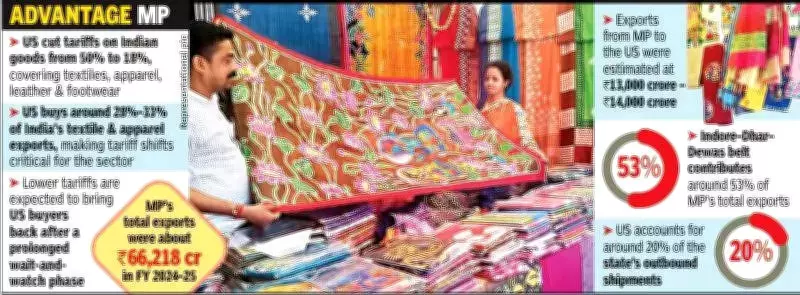
The United States is the single largest export destination for Madhya Pradesh, accounting for nearly 20 percent of the state's outbound shipments, which were valued at approximately Rs 66,218 crore in the fiscal year 2024-25. Exports from Madhya Pradesh to the US are estimated to be in the range of Rs 13,000 to 14,000 crore, with the Indore-Dhar-Dewas industrial belt contributing close to 53 percent of the state's total exports.

Industry Leaders Express Confidence in Revival
Vivek Vishnoi, Chief Financial Officer at Biba Fashion Ltd and Director at Kashida Apparels Pvt Ltd, emphasized the impact of the tariff cut. "The tariff reduction improves price competitiveness in the US market and can support the revival of orders, better capacity utilization, and margin improvement. The diversified global sourcing strengthens India's position, though sustained gains will depend on execution and cost discipline," he stated. Kashida Apparels operates a major manufacturing facility for the Biba ethnic wear brand in Dhamnod, Madhya Pradesh, which is among the key production bases linked to this export momentum.
R S Goswami, President of the Federation of Madhya Pradesh Chambers of Commerce and Industry, noted that several US buyers who had adopted a wait-and-watch approach during the high-tariff phase are now expected to resume sourcing from India. "Earlier, US tariffs of around 50 percent almost dried up exports, with only essential items moving. The revised 18 percent level will revive buyer interest and order flows. US exports that slowed under earlier high tariffs are expected to recover, benefiting textiles, leather, chemicals, engineering goods, handloom, and handicrafts," he explained.
Major Players and Expanded Export Categories
Major textile and apparel players operating in the region include Biba Fashion, Pratibha Syntex, Vardhman Textiles, Arvind, and several integrated garment units in Pithampur and upcoming PM MITRA park clusters. The revised tariff structure covers a wide basket of export categories, extending beyond textiles and apparel to include:
- Leather and footwear
- Plastic and rubber products
- Organic chemicals
- Home décor and artisanal goods
- Select machinery and industrial equipment
Strategic Advantages and Future Outlook
The tariff cut is particularly advantageous for Madhya Pradesh, where the US accounts for around 20 percent of the state's outbound shipments. With total exports from the state estimated at about Rs 66,218 crore in FY 2024-25, and exports to the US ranging from Rs 13,000 to 14,000 crore, the Indore-Dhar-Dewas belt's contribution of approximately 53 percent underscores its critical role in the state's export landscape.
This development is expected to bring US buyers back after a prolonged period of hesitation, as the lower tariffs make Indian products more attractive compared to those from competitors. The move is seen as a confidence-building measure that can drive exports, investment, and employment growth in Madhya Pradesh, provided there is sustained focus on quality, compliance, and logistics.

In summary, the reduction in US tariffs to around 18 percent represents a pivotal moment for Madhya Pradesh's textile and export sectors. By improving price competitiveness and reviving order flows, it sets the stage for enhanced economic activity and stronger integration into global value chains, benefiting both large manufacturers and smaller players in the region.





