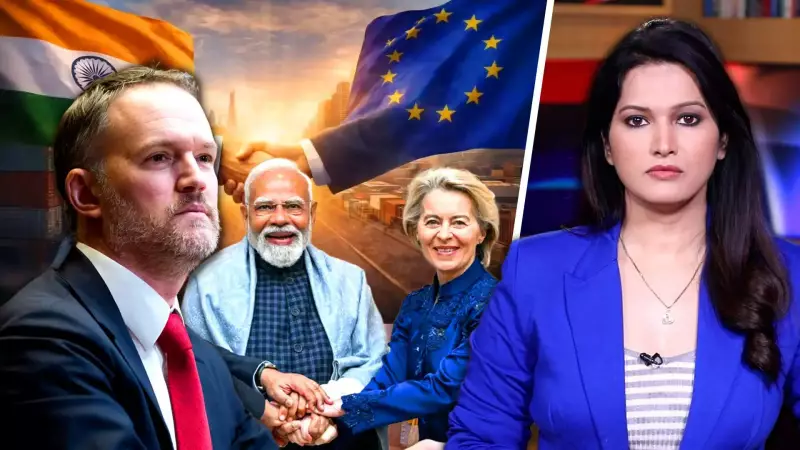
US Trade Chief Admits India Gains Strategic Advantage in EU Free Trade Agreement
In a significant development for global trade dynamics, US Trade Representative Jamieson Greer has made a rare public admission that India emerges as the primary beneficiary from the landmark free trade agreement with the European Union. This acknowledgment comes as India and the EU finalize what trade experts are calling the "mother of all trade deals," marking a pivotal moment in India's economic diplomacy.
Unprecedented Market Access for Indian Exports
The comprehensive trade agreement establishes remarkable opportunities for Indian businesses across European markets. Under the terms of the deal, tariffs will be eliminated on an impressive 99 percent of Indian exports destined for European Union countries. This creates unprecedented access to a consumer base of nearly two billion people worldwide, representing one of the most substantial market openings in recent trade history.
In reciprocal arrangements, India has agreed to reduce duties on the majority of European imports, creating a balanced framework for enhanced bilateral trade. The agreement's scope extends beyond traditional goods to include services, positioning Indian companies across multiple sectors for substantial growth in European markets.

Enhanced Mobility for Indian Professionals
Beyond tariff reductions, the agreement includes provisions that may significantly ease mobility for Indian professionals seeking opportunities within European countries. This aspect of the deal could provide India with a long-term strategic workforce advantage, allowing skilled Indian workers greater access to European employment markets while facilitating knowledge transfer and professional development.
The mobility clauses represent a forward-looking component of the agreement that acknowledges the growing importance of services and skilled labor in global trade relationships.
Shifting Global Trade Alliances
Greer's comments suggest that Europe's turn toward India reflects broader realignments in international trade relationships. According to the US trade chief, European nations appear to be seeking stronger economic partnerships with India as the United States adopts more assertive trade policies under President Donald Trump's administration.
This development signals a potential reconfiguration of traditional trade alliances, with India positioned as an increasingly attractive partner for major economic blocs seeking alternatives to current US trade approaches.
India's Emergence as a Rule-Maker in Global Trade
For India, this agreement represents more than just economic opportunity—it marks a fundamental shift in the country's role within the global trading system. Rather than merely responding to international trade rules established by others, India is now actively shaping the architecture of global commerce through strategic agreements like this EU partnership.
The successful negotiation of this comprehensive trade deal cements India's position at the center of the emerging economic order, demonstrating the country's growing influence in determining the rules that will govern international trade in the coming decades.
This development comes at a time when global trade relationships are undergoing significant transformation, with India emerging as a pivotal player capable of balancing relationships between major economic powers while advancing its own strategic interests.