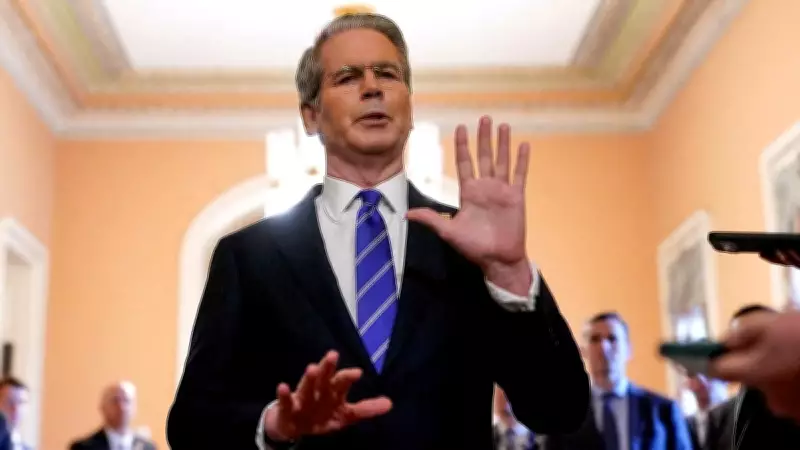
In a significant diplomatic statement, US Treasury Secretary Bessent has openly criticized European nations, labeling their approach to trade negotiations with India as "very disappointing." This remark came during a recent press interaction where journalists questioned the Secretary about the substantial trade agreement currently being negotiated between the European Union and India.
Context of the Critical Statement
The Treasury Secretary was specifically responding to inquiries about what has been described as a "massive" trade deal between Europe and India. This comprehensive free trade agreement represents one of the most significant economic partnerships currently under development, potentially reshaping global trade dynamics and market access between two major economic blocs.
American Concerns About Exclusion
Bessent's primary concern centered on whether this burgeoning trade relationship between India and European nations poses a threat to American economic interests. The Secretary highlighted that both India and European countries appear to be moving forward with free trade negotiations without Washington's direct participation or oversight, creating potential challenges for US trade strategy and market positioning.

The timing of these comments is particularly noteworthy, coming at a moment when international trade alliances are undergoing significant realignment. The India-EU trade deal has been in negotiation for several years, with both sides recently accelerating discussions to finalize terms that would reduce tariffs, streamline regulations, and enhance economic cooperation across multiple sectors.
Broader Implications for Global Trade
This public expression of disappointment from a senior US official signals potential tensions in transatlantic economic relations. The statement suggests that Washington may perceive the India-EU negotiations as progressing in a manner that could marginalize American economic influence in key markets.
Observers note that such candid criticism from the Treasury Secretary reflects deeper concerns about the shifting landscape of international trade agreements, where traditional alliances are being reconfigured as nations pursue bilateral and multilateral deals that serve their specific economic interests.
India's Strategic Trade Positioning
For India, the European Union represents one of its largest trading partners, making this potential agreement strategically important for expanding market access for Indian goods and services. The deal could significantly boost exports in sectors including pharmaceuticals, information technology, textiles, and agricultural products.
The negotiations have focused on addressing long-standing trade barriers while creating frameworks for enhanced investment flows and intellectual property cooperation. Both sides have expressed optimism about reaching a mutually beneficial agreement that would strengthen economic ties between the world's largest democracy and one of its most significant trading blocs.
Potential Impact on US-India Relations
While Bessent's comments specifically targeted European nations, they also indirectly highlight concerns about India's trade strategy. The United States has its own complex trade relationship with India, marked by both cooperation and periodic disputes over market access, tariffs, and intellectual property rights.
This development raises important questions about how major economies will navigate competing trade interests in an increasingly multipolar global economy. As nations pursue agreements that best serve their domestic economic priorities, traditional alliances may face new strains and require careful diplomatic management.
The Treasury Secretary's remarks underscore the competitive nature of international trade diplomacy, where economic partnerships are constantly being negotiated, evaluated, and sometimes criticized as nations seek to protect and advance their economic interests in a rapidly evolving global marketplace.