

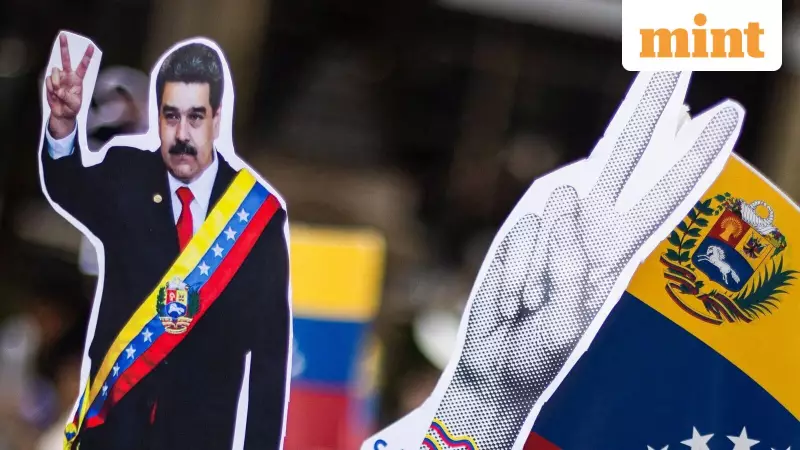
In a bold geopolitical manoeuvre with far-reaching consequences for the global energy landscape, former US President Donald Trump's initiative to seize control of Venezuela's oil industry is sending shockwaves through the OPEC cartel. This strategic play threatens to upend the delicate balance in an already oversupplied market, forcing member nations into a difficult corner as they grapple with sinking prices and dwindling revenue.
A New Challenge for a Struggling Cartel
OPEC, alongside allies like Russia, is already locked in a complex struggle to manage the market. The group recently agreed to pause any output increases for the first quarter of this year. However, Trump's long-championed target of $50 per barrel and his push for greater American oil dominance now introduce a disruptive new variable. According to sources familiar with the matter, Trump's sweeping plan involves rehabilitating Venezuela's dilapidated oil fields and marketing its output, effectively putting the United States in charge of production from a founding OPEC member.
Analysts agree that reviving Venezuela's industry will require massive investment and time. Yet, even a modest near-term increase in production could exacerbate the global supply glut. Some Gulf OPEC delegates believe that with regulatory changes to attract American investors, Venezuela could pump an extra 2 million barrels per day within one to three years, a significant jump from its current output of less than 1 million barrels.

The Geopolitical Ripple Effect
The implications extend far beyond simple barrel counts. A JPMorgan analysis suggests that combined reserves in Guyana (where US firms dominate), Venezuela, and American producers could give the US sway over roughly 30% of global oil reserves. "This shift could give the U.S. greater influence over oil markets, potentially keeping oil prices within historically lower ranges, enhance energy security, and reshape the balance of power," the bank noted.
This power shift places OPEC in a bind. Cutting supply to prop up prices risks hurting revenue and market share, and could strain relations with the unpredictable US administration. "The onus is on everyone to manage their own interests but at the same time not poke the bear," said David Oxley of Capital Economics.
Reactions within OPEC are mixed. While some Gulf members see a potential silver lining if US action diverts Venezuelan crude away from China, forcing Beijing to seek more Gulf oil, others are cautious. Saudi Arabia, for instance, is adopting a wait-and-see approach, reasoning that legal and infrastructural hurdles mean a full Venezuelan recovery will take years.
Budgetary Pressures and Market Realities
The sustained low-price environment strains producers worldwide. While Saudi Arabia can produce crude for under $10 a barrel, Capital Economics estimates the kingdom needs prices above $100 to eliminate its fiscal deficit. Riyadh's ambitious Vision 2030 diversification plan and domestic spending commitments are adding pressure amid a growing budget deficit.
The situation is equally tense for other players. A sustained drop below $50—the profitability threshold for many US shale firms—could cripple an industry that has strongly supported Trump. Ironically, many American drillers are already ignoring calls to boost output, prioritising Wall Street's demand for capital discipline. Meanwhile, Russia's sanctions-hit industry would face added pressure from more Venezuelan barrels.
As it stands, Brent crude trades around $63 a barrel, with the US benchmark near $59, both down about a fifth from last year. JPMorgan has downgraded its 2025 forecast, predicting Brent will average $58. The message from analysts is clear: low prices are here to stay, and Trump's Venezuela gambit only solidifies that trend, marking a significant erosion of OPEC's once-formidable market clout.






