In a dramatic escalation, US forces captured Venezuela's President Nicolás Maduro on Saturday, January 3, 2026. Following the military action, US President Donald Trump declared that Washington would seize control of Caracas's critical oil sector. He announced plans for American oil majors to inject billions of dollars to revive the country's crippled petroleum industry and repair its broken infrastructure.
Venezuela's Oil Paradox: Largest Reserves, Meagre Output
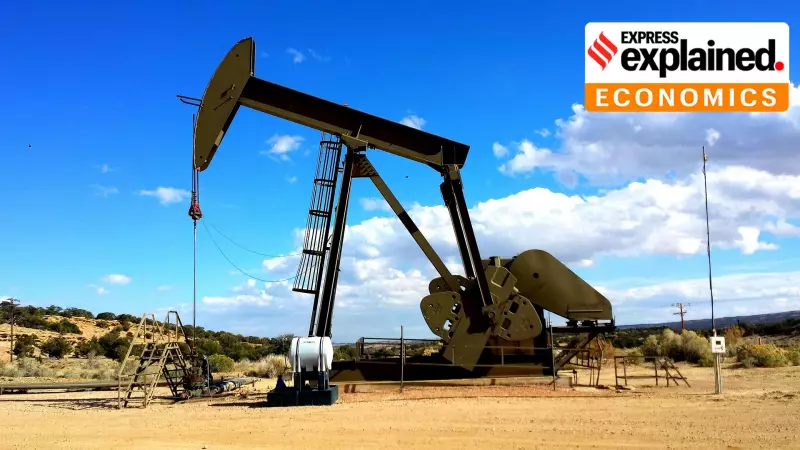
Venezuela holds the world's largest proven oil reserves, estimated at over 300 billion barrels. This staggering figure represents about one-fifth of the global total, surpassing even Saudi Arabia. However, the country's current production tells a different story. It pumps out roughly 1 million barrels per day (bpd), contributing to less than 1% of the world's daily output, which exceeds 100 million bpd.
This vast gap between potential and reality stems from a perfect storm of severe economic crisis, a debilitating lack of investment in oil infrastructure, and stringent US sanctions on its energy sector. Trump's stated goal is to leverage American corporate prowess to unlock this potential, pumping more Venezuelan oil into global markets, including the United States, to benefit American companies.

Global Market & Price Impact: Muted Now, Bearish Later
In the immediate term, energy experts do not foresee a major spike in international oil prices due to the Venezuela developments. The market remains well-supplied amid relatively soft global demand, and Venezuela is currently only a marginal supplier. This was evidenced when previous US actions, like blockades and tanker seizures, failed to significantly move prices.
The long-term outlook, however, could be bearish for prices. If the US successfully gains control and revitalizes Venezuela's oil industry, it could unleash a significantly larger supply onto the world market. This increased flow would likely exert downward pressure on oil prices, though tangible effects would take years to materialize given the massive infrastructure overhaul required.
India's Position: Shielded Near-Term, Hopeful Long-Term
For India, the world's third-largest crude oil consumer importing over 88% of its needs, the near-term direct impact appears minimal. Indian refiners currently do not import Venezuelan crude. With upward price pressure expected to be muted, no major immediate pain point is anticipated.
However, India has significant long-term interests at stake. If the US action leads to a suspension of sanctions on Venezuela's oil sector, it could reopen a valuable supply source for Indian refiners. Prior to US sanctions in 2019, Venezuela was India's fifth-largest oil supplier, providing close to 16 million tonnes of crude. Companies like Reliance Industries (RIL) were regular buyers, with imports sporadically resuming during brief sanction waivers, only to halt again under US pressure.
More critically, it could resolve a major financial headache for ONGC Videsh, the overseas arm of state-owned ONGC. The company has over $500 million in stuck dividends from its shareholding in two Venezuelan projects—San Cristobal (40% stake) and Carabobo 1 (11% stake). ONGC Videsh has sought US approvals to operate these projects under the "Chevron model," which allows controlled operations in sanctioned Venezuela, but clearances are pending. A sanctions-free Venezuela would allow recovery of these funds and open doors for future Indian investment in the country's energy sector.
As the situation evolves, the Indian oil industry is watching closely. The coming weeks and months will be crucial in determining whether Trump's bold move transforms Venezuela from an oil pariah into a revitalized global supplier, reshaping energy flows and offering new opportunities for energy-hungry economies like India.