

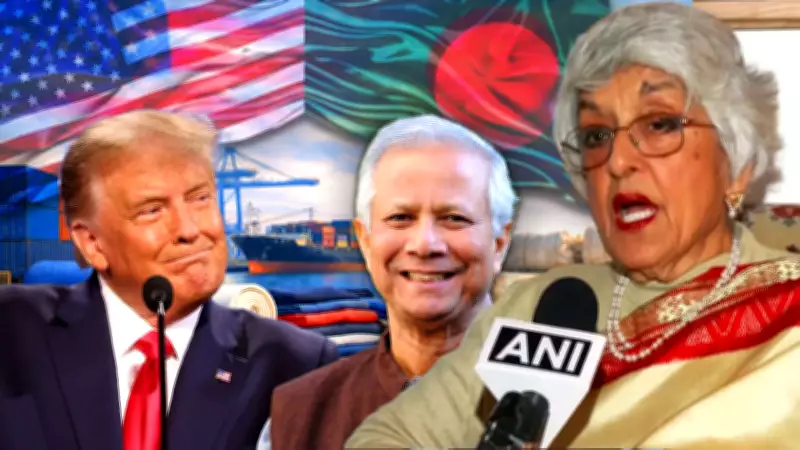
Former Envoy Veena Sikri: India Need Not Fear Bangladesh-US Trade Agreement
Former Indian envoy Veena Sikri has expressed strong confidence that the recently discussed reciprocal trade agreement between Bangladesh and the United States will not significantly harm India's economic or strategic interests. In a detailed analysis, Sikri emphasized India's enduring competitive advantages in the regional trade landscape.
Conditional Benefits and India's Supply Chain Dominance
Sikri pointed out that any potential zero-tariff benefits Bangladesh might secure from the United States would likely come with stringent conditions. These conditions are expected to mandate the importation of American raw materials, particularly cotton and man-made yarn, to qualify for preferential treatment.
However, she highlighted that India remains a far more reliable and cost-effective supplier for Bangladeshi manufacturers. India offers several critical advantages:

- Competitive pricing that undercuts many international alternatives
- Faster delivery times due to geographical proximity and established logistics
- Proven supply chain reliability over decades of trade relations
- Cultural and business familiarity that facilitates smoother transactions
Concerns Over Bangladesh's Boeing Aircraft Purchase
In a separate but related concern, Sikri voiced apprehension about Bangladesh's reported acquisition of Boeing aircraft. She questioned the financial wisdom of such a substantial purchase, particularly given Bangladesh's economic position.
Sikri warned that financing these large aircraft deals through external borrowing could create significant financial strain. She specifically mentioned the possibility of Bangladesh seeking funds from international financial institutions like the International Monetary Fund (IMF), which could lead to:
- Increased national debt levels
- Potential weakening of Bangladesh's overall economic stability
- Reduced fiscal flexibility for other development priorities
- Long-term repayment burdens that could affect economic growth
Broader Implications for Regional Trade Dynamics
The former envoy's analysis suggests that while Bangladesh may pursue trade diversification with the United States, India's position as a primary trading partner remains fundamentally secure. Sikri's perspective underscores several important realities:
First, trade agreements often include complex conditions that may limit their practical benefits. Second, established trade relationships built on geographical proximity and mutual economic benefit are difficult to disrupt. Third, large-scale purchases requiring external financing carry significant economic risks that must be carefully managed.
Sikri's comments reflect a nuanced understanding of South Asian trade dynamics, recognizing both the potential for new agreements and the enduring strength of existing economic relationships. Her analysis provides reassurance about India's continued trade relevance while offering cautionary insights about the financial decisions of neighboring nations.






