

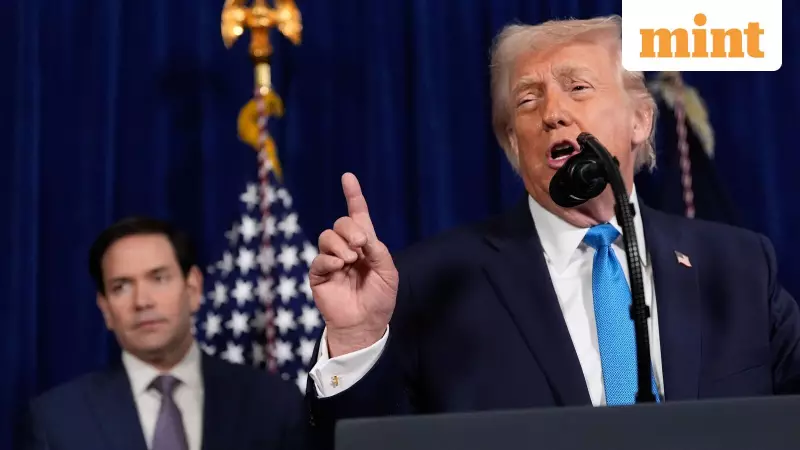
The recent US military action in Venezuela has sent shockwaves across the globe, with President Donald Trump announcing on Saturday a controversial plan to access and sell the South American nation's enormous oil reserves. This move, part of an effort to overthrow President Nicolas Maduro, is however not expected to result in a swift increase in global crude oil production, according to industry specialists.
Vast Reserves, Limited Near-Term Potential
Despite holding the title for the world's largest proven oil reserves, Venezuela's story is one of untapped potential and steep decline. Reports from Reuters and CNBC, citing expert analysis, indicate that a significant production boost is not on the immediate horizon. The country's output has been in a freefall for years, a situation that worsened after the government nationalized assets, leading to the exodus of major international oil companies like Exxon Mobil and ConocoPhillips following legal disputes.
Analysts stress that simply investing money, as touted by Trump, is insufficient. Any firm considering operations in Venezuela would face a daunting array of challenges. These include severe security risks, crumbling infrastructure, legal uncertainties surrounding the US operation to arrest Maduro, and the looming threat of prolonged political instability.

A Long and Uncertain Road for Investors
The path to reviving Venezuela's oil sector is fraught with uncertainty. David Goldwyn, an energy consultant and former top official in the Obama administration, told CNBC that predicting the return of US investment is difficult, even though Venezuela is an OPEC founder. He drew parallels to other nations, stating, "Everything we have learned about government transitions from Iraq, from Afghanistan... is that transitions are hard."
He emphasized that no company will commit billions for long-term projects without clarity on the governing rules and a stable government in place. Echoing the sentiment on security, Mark Christian of CHRIS Well Consulting told Reuters that US firms will not return without concrete guarantees of safety.
However, a glimmer of hope exists for the longer term. Energy strategist Thomas O'Donnell told Reuters that if a peaceful transition with minimal resistance is achieved, a significant production ramp-up could occur in five to seven years, but only after infrastructure is repaired and investments are secured.
Will Oil Prices Surge? Experts Say Unlikely
Just as Venezuela's production is unlikely to spike soon, experts speaking to CNBC also downplay the prospect of a near-term surge in oil prices due to these events. Arne Lohmann Rasmussen of Global Risk Management noted that the markets have already accounted for the Venezuelan conflict in their pricing.
He pointed out that Venezuela's current contribution to global output is a mere 1%, which limits its immediate impact on the supply-demand balance. "Despite this being a huge geopolitical event that you would normally expect to be positive or push up oil prices," Rasmussen said, "the bottom line is there’s still too much oil in the market, and that’s why oil prices will not go ballistic."
In conclusion, while the geopolitical landscape has been dramatically altered, the economic and logistical realities on the ground suggest that Venezuela's vast oil wealth will remain a complex challenge, not a quick fix, for global energy markets.






