West Asia Conflict Delivers Major Blow to Tamil Nadu's Coir Export Industry
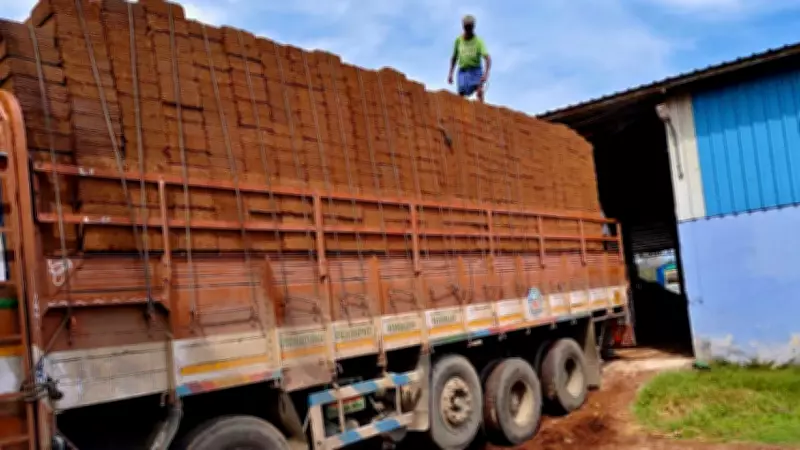
The ongoing military tensions in West Asia involving Israel, the United States, and Iran have severely disrupted international trade routes, dealing a devastating blow to the coir pith and coir fibre export sector based in Tamil Nadu. Manufacturers and exporters in the Pollachi region and surrounding areas of Coimbatore district are facing unprecedented shipping delays, mounting financial losses, and significant operational uncertainty.
Critical Shipping Hubs Closed, Consignments Stranded at Sea
Exporters report that international cargo movement has been thrown into complete disarray following the closure of two crucial Gulf transit ports that previously served as essential hubs for onward shipments to the European Union and numerous other global destinations. With vessels unable to berth at these strategic ports, multiple consignments have been left stranded at sea, disrupting delivery schedules and creating widespread uncertainty throughout the supply chain for both buyers and sellers.
K Sethu, also known as Palanisamy, the General Secretary of the Federation of Tamil Nadu Coir Association, provided detailed insight into the crisis. He explained that the Pollachi region hosts approximately 500 to 700 manufacturing units specializing in coir pith and coir fibre, with many operations heavily dependent on export markets. Currently, exporters are completely unable to dispatch finished goods for shipping, resulting in severe financial stress for manufacturers, traders, and associated businesses.

Massive Economic Impact: Rs 3,000 Crore Annual Trade at Risk
Palanisamy emphasized the substantial economic scale of the coir industry, noting that Pollachi-based coir products are exported to more than 125 countries worldwide, generating annual export revenue exceeding Rs 3,000 crore. Within this total, approximately Rs 500 crore worth of business is directly linked to Gulf markets. He specifically cited Iran as a long-standing destination where coir pith is extensively utilized for soilless agriculture applications.
To illustrate the magnitude of the current disruption, Palanisamy detailed that one tonne of coir pith typically sells for about Rs 40,000, with a standard shipping container carrying approximately 22 tonnes. He revealed that his own most recent consignment remains stuck on a vessel at sea, with absolutely no clarity regarding when it might eventually reach its intended destination.
The association leader issued a stark warning, stating that more than Rs 200 crore worth of coir pith and coir fibre are currently stagnating in warehouses across Pollachi and surrounding areas. Prolonged shipping delays could easily translate into catastrophic financial losses for the entire manufacturing ecosystem.
Peak Production Season Coincides with Export Crisis
S K Gowthaman, Founder President of the National Coir Federation and a former Coir Board member, highlighted the unfortunate timing of this disruption. He explained that January through June represents the peak production season for coir manufacturers because summer conditions allow producers to effectively dry pith material. This period of maximum output is now coinciding with severe export restrictions.
Gowthaman noted that exports had previously suffered an approximate 40% decline due to United States tariff impositions, though shipments to the US market had begun showing improvement following recent relaxations. However, the West Asia conflict has now badly impacted exports to the European Union and Gulf Cooperation Council (GCC) countries, which together account for roughly 60% of total shipments.
This dual market disruption has forced exporters to urgently explore alternative destinations, including Australia, New Zealand, Singapore, Cambodia, and Malaysia, though establishing new trade routes requires significant time and logistical adjustments.

Industry Seeks Government Intervention
An official from the Coir Board indicated that manufacturers have not yet formally approached the board regarding the Gulf shipment issues. The official added that any industry representation would be promptly forwarded to the Union government for necessary diplomatic and logistical intervention to resolve the crisis.
The situation remains fluid, with industry stakeholders anxiously monitoring geopolitical developments while simultaneously scrambling to mitigate mounting losses and preserve their international market presence.