

Former US President Donald Trump's renewed interest in acquiring Greenland is driven more by a desire to counter Chinese and Russian influence in the Arctic than by a realistic plan to secure rare earth elements, according to industry experts. Despite the island's vast estimated deposits of 1.5 million tons of these critical minerals, formidable environmental, logistical, and geological challenges make commercial mining a distant, if not impossible, prospect.
Geopolitics Over Geology: The Real Motive
Trump has openly prioritized breaking China's dominance over the global supply of rare earths—essential for electric vehicles, wind turbines, and advanced weaponry. His administration invested hundreds of millions and took stakes in several companies. However, his recent comments reveal a stronger geopolitical motive. "We don't want Russia or China going to Greenland," Trump stated at the White House, adding, "if we don't take Greenland, you can have Russia or China as your next door neighbor."
Tracy Hughes, founder of the Critical Minerals Institute, argues the fixation is more about military strategy than mineral supply. "The hype far outstrips the hard science and economics behind these critical minerals," Hughes said, describing it as "geopolitical posturing" rather than a realistic solution for the tech sector.

Why Mining Greenland's Rare Earths is a Monumental Task
The obstacles to extracting rare earths in Greenland are immense and multifaceted:
- Extreme Remoteness & Infrastructure: Diogo Rosa, a researcher at the Geological Survey of Denmark and Greenland, highlights the lack of basic infrastructure. "Even in the south where it's populated, there are few roads and no railways," he notes, meaning any venture must build its own access, power generation, and import expert manpower.
- Fragile Arctic Environment: Patrick Schroder of Chatham House warns of pollution risks from toxic chemicals used to separate minerals, which could clash with Greenland's growing tourism industry. The presence of radioactive uranium alongside rare earths adds another layer of complexity.
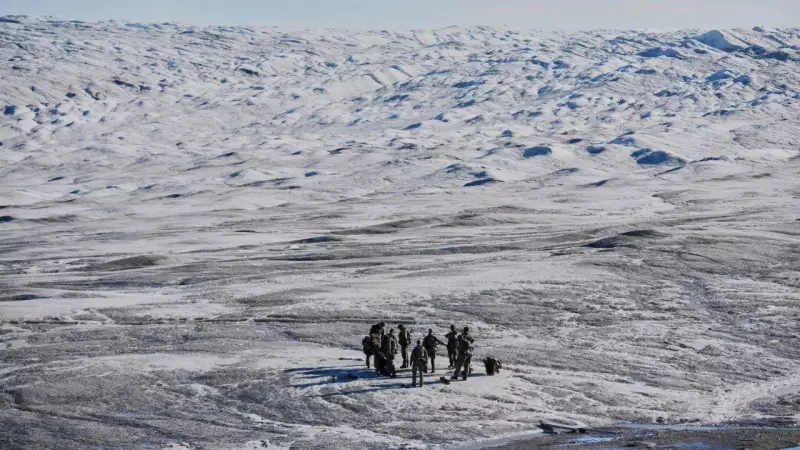
- Difficult Geology & Unproven Technology: Greenland's rare earths are trapped in a complex rock called eudialyte, unlike the more common carbonatites found elsewhere. No one has ever developed a profitable process to extract rare earths from eudialyte. The harsh climate, with ice covering much of the land and freezing northern fjords, further complicates operations.
David Abraham, a rare earths expert and author, advises focusing on easier targets: "If we're in a race for resources... then we should be focusing on the resources that are most easily able to get to market."
The Global Race: More Promising Alternatives Exist
While companies like Critical Metals have seen stock surges after announcing a pilot plant in Greenland, over a dozen projects on the island remain in the exploratory stage, needing hundreds of millions in funding. The business itself is notoriously tough, with China historically flooding the market to depress prices and eliminate competition.
Industry leaders suggest the US should accelerate investments in more advanced projects. The US government has already invested in MP Materials, which runs America's only rare earth mine, and in lithium mining and recycling firms. Scott Dunn, CEO of Noveon Magnetics, whose Texas plant produces over 2,000 metric tons of magnets annually from non-Chinese elements, said such investments are key but changing the math is slow when over 90% of supply is Chinese.
Professor Ian Lange from the Colorado School of Mines offers a stark analogy: "Everybody's just been running to get to this endpoint. And if you go to Greenland, it's like you're going back to the beginning." Proven projects in the US, Australia, and other allied nations are seen as faster, more reliable bets to diversify the critical minerals supply chain away from China.






