CBSE Class 12 Board Exams to Transition to On-Screen Marking from 2026
For students across India, the CBSE Class 12 Board exam represents a pivotal moment in their academic journey. It is a stage where school routines transform into consequential milestones, with marks that do not merely close a chapter but decisively shape what opens next. College admissions, course selections, scholarship opportunities, eligibility cut-offs, and often a young aspirant's first genuine sense of direction hinge on these results. Consequently, evaluation in Class 12 is an extremely sensitive and critical exercise, where even minor marking errors can alter rank lists, narrow future options, or erode student confidence.
CBSE's Strategic Move to On-Screen Marking for Enhanced Accuracy
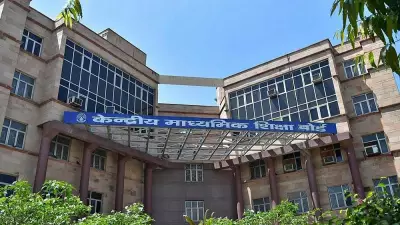
In a significant step to bolster accuracy, consistency, and oversight in the marking process, the Central Board of Secondary Education (CBSE) has announced the rollout of On-Screen Marking (OSM) for Class 12 answer scripts, effective from the 2026 examinations. Meanwhile, Class 10 evaluation will continue with traditional methods for the time being. This decision follows a pilot project conducted by the Board in 2014 for Class 10 answer scripts, highlighting the Board's ongoing commitment to refining assessment mechanisms. In high-stakes exams of this scale, how answers are evaluated is as crucial as student performance itself.
What On-Screen Marking Entails in Practice
CBSE's Class 12 Board exams in 2026 will maintain a familiar experience inside the examination hall. Students will continue to write with pens in the same stitched answer booklets under standard invigilated conditions, with no changes at this stage. The transformative shift begins only after the exam concludes.

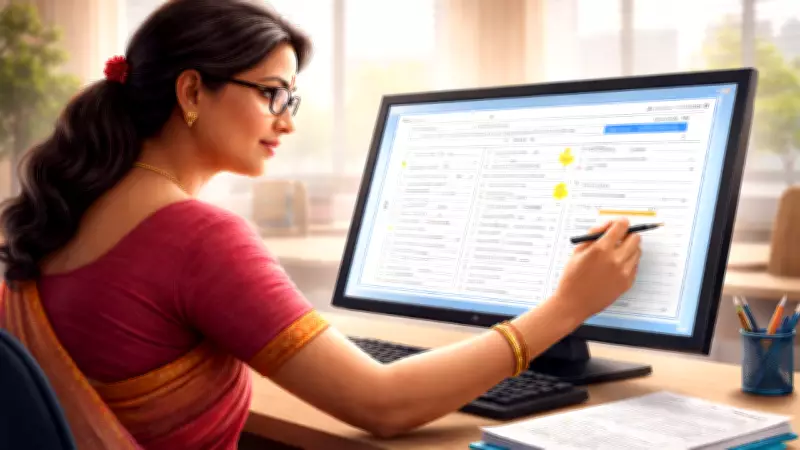
Once a student submits their answer script, it will no longer traverse the old paper-intensive route of sealed bundles being dispatched to evaluation centers for manual checking. Instead, it enters a more controlled digital ecosystem through OSM. Essentially, OSM relocates the checking process to a computer screen. The answer booklet is first scanned and uploaded to a secure central platform. Examiners then log in with authorized credentials, access the digitized scripts, and award marks directly on screen, eliminating the need to handle physical copies.
How On-Screen Marking Will Operate: A Detailed Overview
As emphasized, students will notice no difference during the exam. The change unfolds quietly within the system, requiring preparation from teachers and schools. The foundation of this transition lies in the identification, training, and integration of examiners into the digital platform.
CBSE has instructed all affiliated schools to update comprehensive records of their Class XI and XII teachers on the Online Affiliated School Information System (OASIS) portal. This data, encompassing subject expertise and contact details, forms the pool from which examiners are selected and granted access to the evaluation system.
Once this database is established, teachers are onboarded digitally. Login credentials are sent to their registered email addresses, complemented by OTP-based authentication on their mobile numbers. This process ensures that only verified examiners can access the platform. Upon initial login, teachers must secure their accounts and familiarize themselves with the system before evaluation commences.
A key aspect of the rollout is the emphasis on thorough preparation. Multiple rounds of mock evaluation are integrated into the process, including a large-scale, synchronized "mass mock" where teachers log in at scheduled times to practice assessing sample answer scripts. This mock system aims to ensure examiners are comfortable navigating the digital interface, entering marks, and operating within the system before real answer books appear on screen.

When actual evaluation begins, it transitions entirely to the Digital Evaluation Platform. Digitized scripts are allocated to teachers through the platform, with examiners logging in to check answer books on computer screens instead of physical bundles. Teachers receive answer books in small batches; upon completion of one batch, the system automatically allots the next. Marks are entered question-wise, and the software handles totalling and tabulation automatically, meaning examiners still judge answer quality, but arithmetic is removed from manual processes.
CBSE has also mandated that institutions ensure technical readiness, including functional computer systems, stable internet connectivity, and uninterrupted power supply. Additionally, a dedicated dashboard allows principals to monitor teacher logins, completion of mock sessions, and readiness for live evaluation. In essence, responsibility for smooth execution is now shared between the Board and schools.
Impact on Students and Potential Improvements with OSM
Under OSM, script handling becomes more structured. Once digitized, each stage—from allocation to evaluation—is tracked within the system. Marks are entered directly into the platform, with automatic calculation of totals, reducing the likelihood of arithmetic errors that have historically been a common reason for student verification requests.
The system also enhances procedural completeness. Since answers are checked on screen and marks are entered question-wise, the risk of oversight, such as unchecked or skipped responses, diminishes. Evaluation flow becomes more standardized across examiners.
Practically, OSM can accelerate processes by eliminating the need for physical transportation of answer books and organization of large evaluation centers. While timelines depend on various factors, the OSM structure is designed to minimize delays stemming from logistics.
However, it is crucial to recognize what OSM does not alter. Answer quality remains judged by teachers; examiners still read student responses, interpret them against marking schemes, and decide on marks. This human element of evaluation persists unchanged. A digital system can organize processes and reduce clerical errors, but it does not standardize judgment in a machine-like manner. Thus, OSM improves process accuracy, not the fundamental nature of assessment.