JEE Main 2026 Shift 2 Paper Analysis: A Comprehensive Review
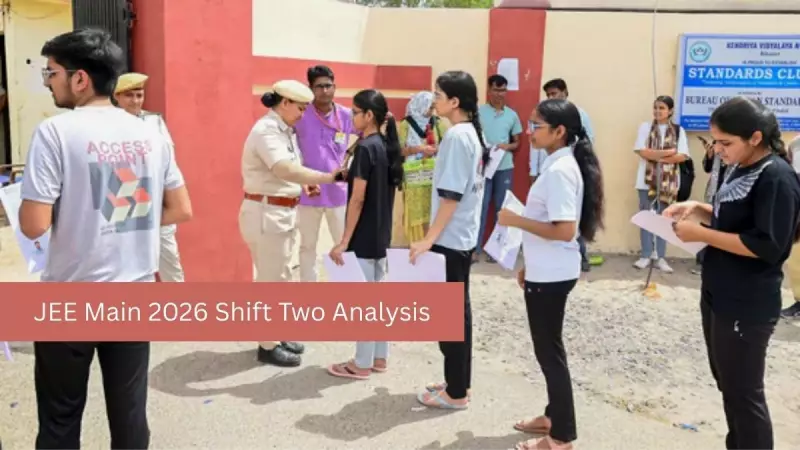
The Joint Entrance Examination (JEE) Main 2026 has completed its second shift, and students across India are eagerly awaiting the results. This crucial engineering entrance exam, conducted by the National Testing Agency (NTA), plays a pivotal role in determining admissions to prestigious institutions like the Indian Institutes of Technology (IITs) and National Institutes of Technology (NITs). The shift two paper has sparked discussions among aspirants and educators alike, with many analyzing its difficulty level and content.
Difficulty Level Assessment
According to preliminary feedback from students and expert reviews, the JEE Main 2026 Shift 2 question paper was rated as moderate to difficult. The overall structure maintained a balance between conceptual understanding and application-based problems, but certain sections posed significant challenges.
In Physics, the questions leaned towards advanced topics, requiring a deep grasp of fundamentals. Chemistry saw a mix of organic, inorganic, and physical chemistry, with some students reporting tricky numericals. Mathematics, often a deciding factor, included complex problems in calculus and algebra, testing time management skills.

Key Highlights from the Question Paper
The paper followed the standard pattern with multiple-choice questions and numerical value types. Here are some notable aspects:
- Physics: Emphasis on modern physics and electromagnetism, with fewer direct formula-based questions.
- Chemistry: Organic chemistry reactions were prominently featured, alongside stoichiometry calculations.
- Mathematics: A focus on integration, differential equations, and probability, with lengthy problem-solving steps.
Students noted that the difficulty varied across subjects, making it essential to have a well-rounded preparation strategy. The time pressure was palpable, as many found it challenging to complete all sections within the allotted duration.
Student Reactions and Expert Opinions
Post-exam, social media platforms and coaching centers buzzed with reactions. While some students expressed confidence in their performance, others highlighted the paper's unpredictability. Experts from leading coaching institutes provided a detailed analysis, suggesting that the cutoff marks might see a slight increase due to the paper's complexity.
"The shift two paper was designed to test analytical skills rather than rote learning," remarked a senior educator. "It aligns with the NTA's goal of fostering critical thinking among engineering aspirants."
Implications for Future Shifts and Preparation
As JEE Main 2026 continues with subsequent shifts, this analysis serves as a valuable reference for upcoming candidates. Students are advised to:
- Focus on strengthening weak areas, particularly in high-weightage topics.
- Practice time-bound mock tests to improve speed and accuracy.
- Review previous years' papers and shift analyses to anticipate trends.
The NTA is expected to release the official answer key and results in the coming weeks, which will provide further clarity on performance metrics. Until then, aspirants should stay updated with reliable sources and avoid speculation.
In summary, the JEE Main 2026 Shift 2 question paper has set a benchmark for difficulty, underscoring the competitive nature of India's engineering entrance landscape. With diligent preparation and strategic planning, students can navigate these challenges successfully.