UPSC Essentials Daily Quiz: History and Culture MCQs for Week 142
UPSC Essentials presents its daily subject-wise quiz initiative designed to help aspirants revise crucial static syllabus topics. Today's quiz focuses on History and Culture, covering significant themes like India's freedom struggle, Republic Day significance, Padma Awards, and key personalities relevant for UPSC Prelims 2026. Each question includes comprehensive explanations to enhance understanding and retention.
Quiz Overview and Importance
These quizzes are meticulously crafted to test knowledge on static portions of the UPSC syllabus, providing a structured revision tool. By attempting today's quiz on History and Culture, candidates can assess their preparation level and identify areas needing improvement. Links to previous quizzes are available at the article's end for continuous learning.
Question 1: Irwin Declaration (1929)
With reference to the Irwin Declaration of 1929, consider the following statements:

- It faced strong opposition in Britain due to prevailing pro-Empire sentiment among the British public.
- India was considered the Crown Jewel of the British Empire, making any promise of self-governance politically sensitive.
- The onset of the global economic recession increased Britain’s dependence on India’s resources and market.
- It was rejected by Indian leaders due to a lack of any assurance regarding Dominion Status.
Which statements best explain why the Irwin Declaration failed?
Explanation: In 1929, Viceroy Irwin announced India would gain dominion status, but this declaration faced backlash in Britain. The British public's pro-Empire views and India's status as the Empire's Crown Jewel made reforms contentious. Additionally, the global recession heightened Britain's reliance on India's economy. Under pressure, Irwin retracted his promise, leading to increased unity in the Congress and a shift toward demands for complete independence. Thus, statements 1, 2, and 3 are correct.
Question 2: Freedom Fighters' Sacrifice
Consider the passage describing three freedom fighters who entered Calcutta's Writers' Building in December 1930, killing Lt Col N.S. Simpson and sacrificing their lives.
Who were these revolutionaries?
Explanation: The trio comprised Benoy Basu, Badal Gupta, and Dinesh Gupta. They targeted Simpson for his brutal treatment of Indian prisoners. Post-incident, Badal Gupta consumed potassium cyanide, while Benoy Basu and Dinesh Gupta shot themselves. Basu died later, and Dinesh Gupta was executed. Their sacrifice is commemorated in B.B.D. Bagh, named after their initials.
Question 3: Nehru Report of 1928
Consider these statements about the Nehru Report:
- It was a memorandum drafted by the All Parties Conference under Jawaharlal Nehru's chairmanship, appealing for dominion status.
- Within the Congress, it lacked universal support, especially from young leaders like Subhash Chandra Bose.
- The Balfour Declaration of 1926 defined dominions, granting status to countries like Canada and Australia.
Which statements are correct?
Explanation: The Nehru Report, drafted under Motilal Nehru, demanded dominion status in response to the Simon Commission. However, leaders like Bose and Jawaharlal Nehru opposed it, favoring complete independence. The Balfour Declaration did define dominion status for nations like Canada. Thus, statements 2 and 3 are accurate.
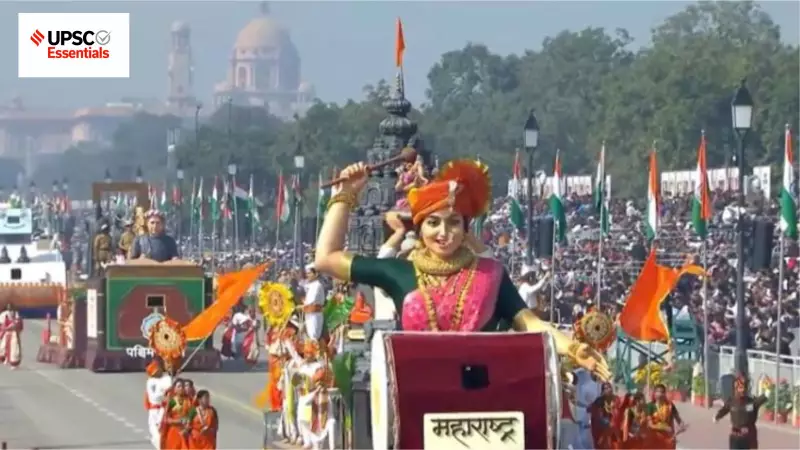
Question 4: Republic Day Significance
Why was January 26 chosen as India's Republic Day?
Explanation: January 26 marks the 1930 declaration of Purna Swaraj by the Indian National Congress, initiating the final push for independence. Although the Constitution was adopted in 1949, this date symbolizes the struggle for complete self-rule, making it a fitting choice for Republic Day.
Question 5: Padma Awards 2026
The Centre released the Padma Awards list, with six recipients in the Foreigners/NRI/PIO/OCI category. Match the names with their fields:

- Nori Dattatreyudu – Medicine
- Vijay Amritraj – Sports
- Prateek Sharma – Art
- Lars-Christian Koch – Literature and Education
- Liudmila Viktorovna Khokhlova – Medicine
- Vladimer Mestvirishvili – Sports
Which pairs are correctly matched?
Explanation: The correct matches are Nori Dattatreyudu (Medicine), Vijay Amritraj (Sports), and Vladimer Mestvirishvili (Sports). Other recipients have different fields, such as Lars-Christian Koch in Art and Liudmila Viktorovna Khokhlova in Literature and Education.
Conclusion and Further Resources
This quiz aids in revising essential History and Culture topics for UPSC Prelims. For more practice, explore previous quizzes on International Relations, Polity, Science, Economy, and Environment. Consistent engagement with such resources can significantly boost preparation and confidence for the examination.