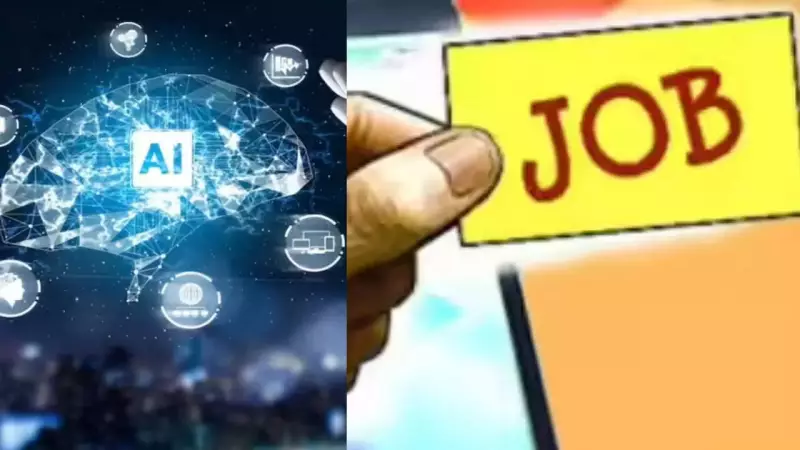
A profound paradox is gripping India's professional workforce. At a time when a significant majority is actively looking for new opportunities, an even larger share feels deeply uncertain about how to secure them in the near future. This tension between ambition and anxiety defines the current employment landscape, which is being rapidly reshaped by artificial intelligence and automation.
The Confidence Crisis in a Competitive Market
Fresh data from LinkedIn reveals a startling statistic: 84% of professionals in India feel unprepared to find a new job in 2026. This sentiment exists alongside another striking figure: 72% of them are actively seeking new roles right now. The root of this anxiety isn't a lack of drive, but the challenge of navigating a hiring process that has become more opaque, lengthy, and impersonal.
Competition has intensified dramatically. Since early 2022, the number of applicants per open position in India has more than doubled. Consequently, 76% of job seekers report that finding a new role has become tougher over the past year. The strain is felt on both sides; nearly 74% of recruiters say it has become harder to find qualified talent, highlighting a growing mismatch between employer needs and candidate offerings.

AI: The Source of Disruption and the Tool for Navigation
While 87% of professionals are comfortable using AI in their work, many remain unsure of how it is deployed in recruitment. The process itself is a pain point, with 77% citing too many stages and 66% finding it increasingly impersonal. With slow recruiter responses and a lack of feedback, nearly half of all applicants admit they don't know how to make their application stand out.
Yet, in a twist, AI is also emerging as a crucial coping mechanism. A significant 94% of Indian job seekers plan to use AI in their job search, and 66% say it boosts their confidence for interviews. AI is thus transforming from a mere productivity aid into a psychological support tool, helping individuals regain a sense of control.
"AI is now a foundational part of how careers are built and how talent is evaluated across India’s job market," explains Nirajita Banerjee, LinkedIn Career Expert and Senior Managing Editor for LinkedIn India News. She emphasises that professionals need clarity on how skills translate to opportunities and how hiring decisions are made. "When used with purpose, AI tools can bridge that gap."
Shifting Trajectories and Rising Roles
This market mismatch is prompting a widespread rethink of career paths. Approximately one-third of Gen X job seekers are considering entirely new functions or roles, while a similar proportion of Gen Z is looking beyond their current industry. Parallelly, LinkedIn data notes the rapid growth of the "founder" identity, signalling a move towards entrepreneurship as an alternative to traditional employment.
LinkedIn's "Jobs on the Rise" list for India provides a clear snapshot of where demand is headed. Topping the list is Prompt Engineer, followed by AI Engineer and Software Engineer, underscoring the sustained appetite for AI and digital expertise. However, growth is also evident in sales, brand strategy, cybersecurity, and advisory roles, alongside sectors like veterinary services, solar consulting, and behavioural therapy.
To address these challenges, LinkedIn is rolling out AI-powered job search features globally, allowing users to search in natural language and discover roles they might have overlooked. Job match tools are also being enhanced to help candidates understand their best fit, shifting focus from the volume of applications to their relevance.
The overarching picture is not just of a competitive market, but of a transitional one where the rules are being rewritten faster than they can be learned. The professional unease stems less from jobs disappearing and more from not knowing how to become visible and valued in a system increasingly mediated by algorithms. The defining skill deficit for 2026 may therefore be interpretive—learning to read the new signals of work and responding to them with clarity and confidence.