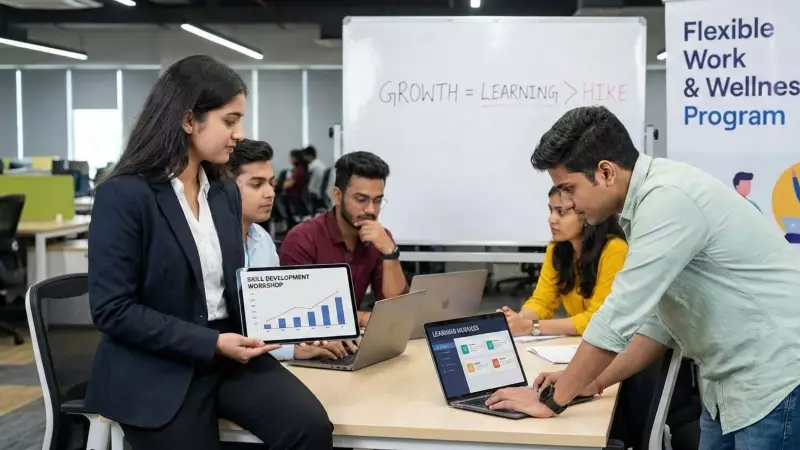
Majority of India's Gen Z Professionals Choose Skill Development Over Pay Raises
A recent employment survey reveals a significant shift in workplace priorities among India's youngest professionals. According to data from Naukri's comprehensive report, 57 percent of Gen Z employees in corporate India now define career growth primarily through skill acquisition rather than traditional markers like salary hikes or promotions.
Learning Takes Priority in Career Advancement
The "Gen Z Work Code" report, based on responses from over 23,000 professionals across more than 80 industries, shows a clear hierarchy in how this generation evaluates professional progress. While 57 percent associate growth with learning new skills, only 21 percent prioritize salary increases. A mere 12 percent view promotions as the primary advancement marker.
This preference for learning becomes particularly strong in creative sectors. In design and advertising fields, an impressive 78 percent of respondents equate professional growth directly with upskilling opportunities.

Work-Life Balance Emerges as Critical Factor
Beyond skill development, the report highlights another crucial consideration for Gen Z professionals. Exactly half of all respondents identify work-life balance as the most critical factor in job decisions after salary considerations. This percentage rises to 60 percent among those with five to eight years of work experience.
The data suggests that flexible schedules, reasonable workloads, and protected personal time are now viewed as essential components of long-term employability. Young professionals see these factors working alongside skill development to create sustainable careers.
Recognition Preferences Shift Toward Tangible Growth
The survey also examines how Gen Z perceives workplace recognition. An overwhelming 81 percent of respondents prefer recognition in the form of growth opportunities rather than verbal appreciation or public praise. Only 9 percent find praise alone meaningful.
Interestingly, preferences evolve with income levels. Among higher earners in the Rs 15-25 lakh annual bracket, interest in monetary rewards rises to 28 percent, compared to just 8 percent at entry-level salaries. However, even at higher income levels, preferences continue to center around tangible career progression.
Stress Factors and Workplace Concerns
The report provides valuable insights into workplace stress among Gen Z professionals. The absence of work-life balance emerges as the top stressor, cited by 34 percent of respondents. Lack of growth opportunities follows closely at 31 percent.
In contrast, micromanagement affects only 16 percent of Gen Z respondents, significantly lower than the 25 percent reported among Millennials. Toxic colleagues impact 19 percent of young professionals, placing interpersonal issues below structural concerns like workload and growth stagnation.
Experience Modifies Priorities
The survey data reveals that expectations shift modestly with professional experience. Among Gen Z professionals with higher years of work exposure, the proportion prioritizing salary hikes increases to 25 percent. This indicates that compensation remains relevant as careers progress, though it never becomes the dominant consideration.
Implications for Future Workforce Strategies
The findings point toward a workforce that views skill accumulation as central to career security in today's rapidly changing job market. For a majority of India's Gen Z professionals, growth at work is increasingly defined by what they can learn today to remain relevant tomorrow.
Organizations aiming to attract and retain Gen Z talent may need to reconsider their employment strategies. The report suggests placing structured learning opportunities, flexible work practices, and clear growth pathways at the center of workplace policies. Relying solely on pay increments appears insufficient for this generation that values continuous learning, balance, and meaningful recognition.

This generation has come of age during economic uncertainty, rising education costs, and growing skepticism about traditional career paths. While often labeled the "side-hustle generation," their approach to work demonstrates a sophisticated understanding of long-term career sustainability through skill development and balanced work environments.