In a world where the cost of living seems to be the only thing on an unstoppable rise, professionals everywhere are re-evaluating their careers. The quest for a job that offers true financial comfort and security feels more urgent than ever. For many, the answer might not be in another degree or a promotion, but in the skies. A recent online revelation about the staggering salary of a commercial airline pilot has sent shockwaves across the internet, particularly in India, where high-paying, stable careers are highly sought after.
Viral Reddit Post Reveals Staggering Pilot Paycheck
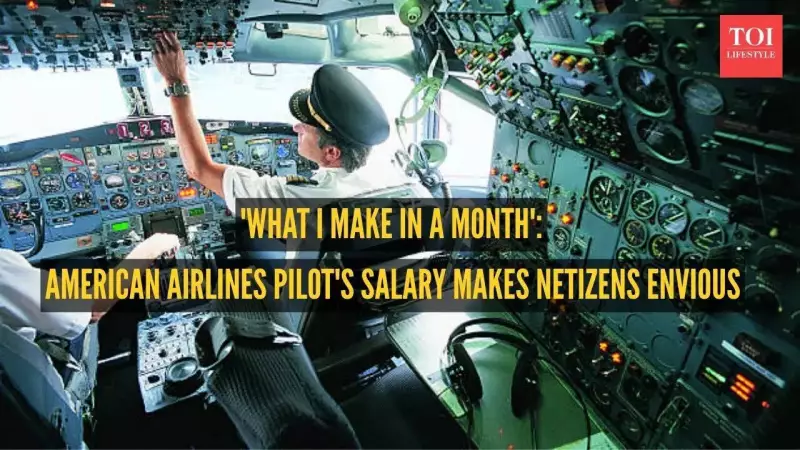
The eye-opening discussion began on the social platform Reddit. A post detailed the earnings of a captain for American Airlines, flying a Boeing 737 out of Miami International Airport. The figures were nothing short of astonishing. The pilot earns over $360 per hour, culminating in an annual salary of approximately $457,000.
What makes this even more remarkable are the legal restrictions on flight hours. Federal regulations limit pilots to a maximum of 1,000 hours of flying per year. This means the pilot achieved this massive income by working an average of under 20 hours per week in the cockpit. Furthermore, commentators noted that this specific pilot's earnings are not even at the top of the scale. According to travel publication One Mile at a Time, a pilot flying a larger aircraft like the Boeing 777 could command up to $447 per hour, pushing their potential yearly earnings even higher before benefits.

Netizens React with Envy and Career Pivots
The revelation triggered a wave of reactions, mixing envy, shock, and serious introspection about career paths. Many users expressed disbelief at the hourly rate compared to their own professions.
One Reddit user starkly compared, "Dude makes what I make in a month in a day." Another lamented the disparity with skilled engineering roles, stating, "$360/hr is craziness. I design the planes and engines you're flying and I make just over 1/5 of that with 15 years of experience and a master's degree."
The post also prompted many to consider a drastic career shift. "Damn is a career change at 33 into this even possible?" pondered one user. Others defended the high salary, citing the immense responsibility. A user reasoned, "Pilot messes up, pilot dies. ATC messes up, pilot dies. Mechanic messes up, pilot dies. Engineer messes up, pilot dies. If anything, that justifies the point even more." Another pointed to simple economics: "Supply and demand works with people too. If there is a limited supply of qualified pilots, then naturally they will get paid more."
The Reality Check: The Long and Costly Path to the Cockpit
While the end salary is incredibly attractive, the journey to the left seat of a major airline like American Airlines is long, challenging, and expensive. It is not a quick career switch.
Aspiring pilots must invest significantly in training and certifications. As explained by a Redditor, "You’re looking at $100k+ for all of your certifications and ratings." The timeline can vary dramatically, "from 9 months to 10 years depending on how much money and time you have."
The big paychecks are not immediate. Newly certified pilots typically start at regional airlines or in cargo operations, where starting salaries, while good, are far from the half-a-million-dollar mark. A first-year First Officer (FO) at a regional carrier might earn around $150,000 a year, a solid income but a stepping stone. They must accumulate thousands of flight hours before being eligible for positions at major airlines with larger aircraft.
Experts advise that anyone dreaming of this career pivot should plan for a slow and steady transition, potentially while maintaining their current day job, due to the high upfront costs and time investment required.
The viral salary slip serves as a powerful reminder of the value placed on specialized, high-responsibility skills in the global market. For those in India and elsewhere feeling the grind of rising costs, it highlights an unconventional but lucrative path where demand, strong unions, and critical expertise converge to create one of the world's most well-compensated professions.