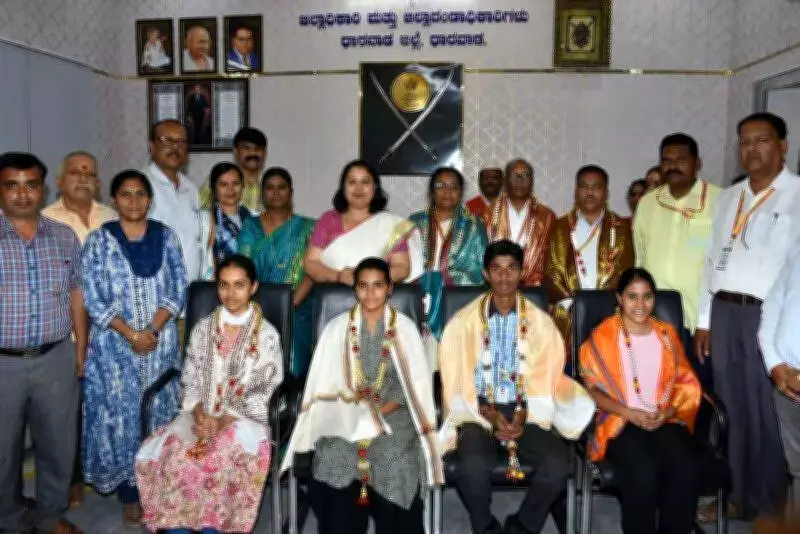
The SSLC examination 2026 results signal a clear academic upswing across the Kittur Karnataka region, with all nine educational districts under the North-West Karnataka division registering improved pass percentages over the previous year. The trend points to a combination of targeted academic interventions, tighter monitoring, and increased teacher engagement beginning to yield measurable outcomes.
Top Performers and District-Wise Analysis
The region also found representation at the very top of the state merit list. Prarthana Nagappa Biradar Patil from a government high school in Katageri (Athani taluk, Chikkodi district) and Soujanya Basavaraj Kandkur of Oxford English Medium School in Nagarabetta of Muddebihal taluk (Vijayapura district) secured 625 out of 625, underlining that both rural government institutions and private schools are contributing to academic excellence.
A closer look at district-wise performance indicates not just improvement, but structural consolidation. Uttara Kannada retained its stronghold at third position with an impressive 98%, while Sirsi improved its standing to sixth rank with 97.2%. Haveri emerged as one of the biggest gainers, jumping from 13th to 7th place with 96.8%.

Mid-Tier and Lower Districts Progress
Mid-tier districts also showed steady progress. Bagalkot climbed to 14th (95.4%) from 16th, while Gadag, despite a marginal shift, maintained stability with 95.2%. Vijayapura made a notable leap from 34th to 22nd position (94.1%), and Chikkodi inched forward to 23rd from 26th (94%), indicating narrowing disparities across districts.
Dharwad, often described as the state's education hub, demonstrated one of the most significant recoveries. The district moved up from 18th to 12th rank, with pass percentage surging to 95.5% from a low of 79.9% in 2025. Officials attribute this sharp rise to focused initiatives such as Mission Vidyakashi and Mission-40, which emphasised remedial coaching, student tracking, and performance-oriented planning.
Systemic Improvements and Future Outlook
Education department officials credit the turnaround to sustained institutional efforts rather than one-off interventions. According to additional commissioner Ishwar Ullagaddi and DDPI Girish Padaki, structured programmes, continuous assessment mechanisms, and proactive teacher participation played a decisive role in improving outcomes.
The 2026 results, therefore, mark more than just a statistical improvement—they reflect a systemic shift in academic management across Kittur Karnataka. If the momentum is sustained, the region could further strengthen its position in the state's educational landscape in the coming years.