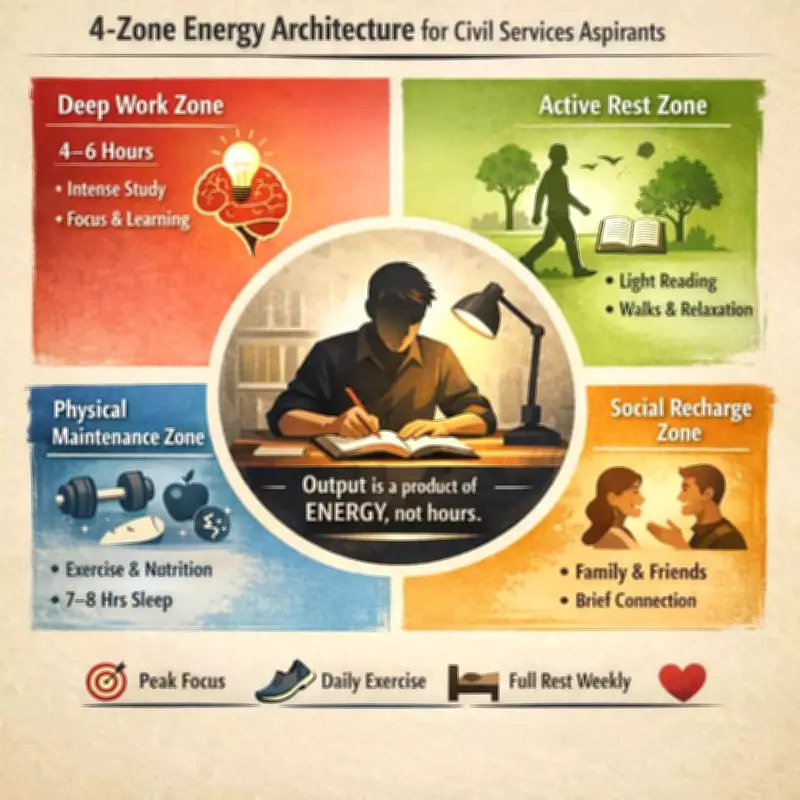
4-Zone Energy Architecture: A Smart Daily System to Boost Productivity for UPSC
Most aspirants preparing for Civil Services examinations fall into a common and detrimental trap: they measure their success primarily in terms of the number of hours studied rather than the quality of their intellectual output. However, a fundamental truth underpins effective learning: output is a product of energy, not merely time spent. You can sit with books for ten hours and still retain significantly less information than someone who studies for just five hours with high focus, mental clarity, and strategic energy management.
Rethinking Success: From Hours to Energy
The traditional approach of logging endless study hours is increasingly being recognized as inefficient and counterproductive. The 4-Zone Energy Architecture proposes a paradigm shift, advocating for a smarter daily system designed to maximize an aspirant's cognitive and physical energy levels. This framework is not just about studying less; it's about studying smarter by aligning work with natural energy rhythms.
The Core Principle: Energy Over Time
At its heart, this architecture challenges the old adage of "more hours equals more success." Research into cognitive performance suggests that sustained focus and high-quality output are directly linked to an individual's energy state. Mental fatigue can drastically reduce retention and analytical abilities, meaning those long, draining study sessions may actually hinder progress. The system emphasizes creating a daily schedule that protects and cultivates peak energy periods for the most demanding intellectual tasks.

Practical Framework for Competitive Exams
This practical framework is specifically tailored for the rigorous demands of exams like the UPSC, but its principles apply to all competitive test preparation. The goal is to improve three critical areas:
- Focus: Achieving deeper concentration during study blocks.
- Consistency: Maintaining a steady, sustainable pace without burnout.
- Exam Output: Translating prepared knowledge into high-scoring performance under pressure.
By structuring the day into distinct zones dedicated to different types of work and recovery, aspirants can move from a grind of long hours to a rhythm of high-energy performance, ultimately enhancing their productivity and their chances of success.