Beyond the Books: The Real Test of JEE Main 2026
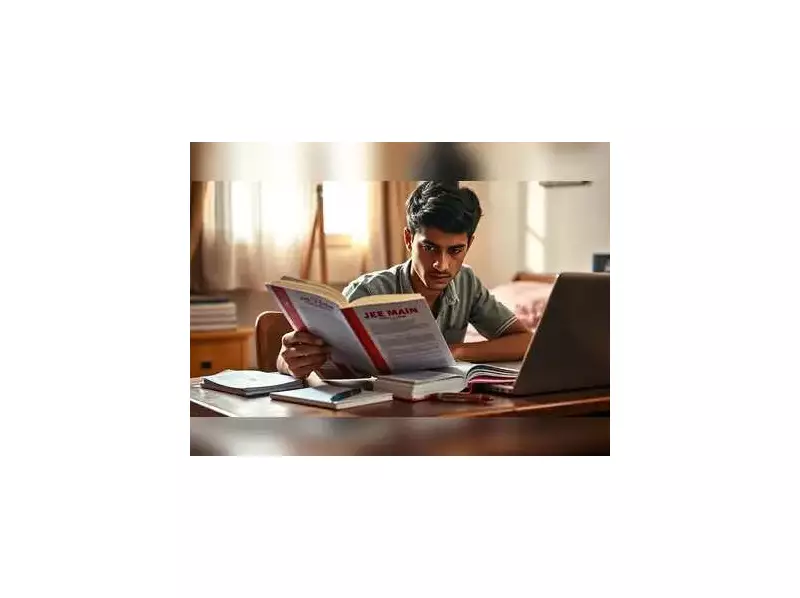
Every year, India sees countless students with furrowed brows and anxious expressions. The reason is familiar to all: the JEE Mains examination season has arrived. The intense focus on securing an IIT seat, depicted vividly in shows like Kota Factory, reflects a daily reality for millions of aspirants across the country.
JEE Main is far more than a standard entrance test. It represents a rigorous examination of ambition itself. The national obsession with engineering careers is well-known. While opinions on this phenomenon vary, one outcome is undeniable: competition among JEE hopefuls has reached unprecedented levels.
Exam Dates and Structure for 2026
The National Testing Agency has scheduled JEE Main 2026 across two sessions. The first session will run from January 21 to January 29, 2026. The second session follows between April 2 and April 9, 2026. With lakhs of candidates competing across multiple shifts, the difference between success and disappointment can be incredibly narrow.

Seasoned educators consistently emphasize that success no longer depends solely on syllabus completion. The true challenge lies in how students perform under pressure. Critical factors include question selection, time management, and mental composure during the crucial three-hour window.
Amit Mahajan, a senior professor at PhysicsWallah, articulates this reality with striking clarity. He states, "In those few hours, the syllabus remains unchanged, and so does your intelligence. What truly shifts is your decision-making ability. That is precisely what JEE Main evaluates."
Drawing from extensive analysis of previous papers and student performances, Mahajan highlights a crucial insight. "After reviewing years of JEE Main data, one pattern emerges clearly. Most errors do not occur during preparation phases. They happen inside the examination hall itself."
This distinction between preparation and actual performance forms the core of effective JEE Main strategy.
Understanding the JEE Main 2026 Exam Pattern
The Joint Entrance Examination (JEE) Main is conducted annually for admissions to B.E., B.Tech, B.Arch, and B.Planning programs nationwide. The examination comprises two primary papers.
- Paper 1 targets B.Tech and B.E. aspirants. It is computer-based, lasting three hours (four hours for Persons with Disabilities candidates). The paper includes 25 questions each in Physics, Chemistry, and Mathematics.
- Each subject contains 20 multiple-choice questions and 5 numerical-value questions. Candidates must attempt all 75 questions, totaling 300 marks.
- Scoring follows a specific pattern: four marks for each correct answer, with one mark deducted for incorrect responses. Unanswered questions attract no negative marking.
Paper 2 divides into two streams:
- Paper 2A (B.Arch) includes Mathematics and Aptitude tests conducted online, plus a drawing test in offline mode.
- Paper 2B (B.Plan) is fully computer-based, covering Mathematics, Aptitude, and Planning sections.
Both Paper 2 variants allow three hours for completion, with maximum marks set at 400 each.
While understanding this structure is essential, Mahajan argues that structure alone cannot secure top ranks. Strategic execution makes the real difference.
Accuracy Trumps Ambition Every Time
A persistent myth surrounding JEE Main suggests that attempting every question demonstrates seriousness. Mahajan dismantles this belief directly. "Stop chasing perfection and start chasing accuracy," he advises.
He explains further, "The paper is not designed for complete solution. If you enter planning to attempt all questions, you have already lost valuable time." Students determined to solve all 90 questions often sacrifice both time and precision.
"Toppers do not necessarily solve more problems. They simply waste less time and understand what to skip," Mahajan observes. In JEE Main, judgment consistently outweighs brute force. "This is not a race to attempt every question. It is a test of judgment."
He emphasizes strategic thinking: "Every minute spent stuck on a difficult question steals time from three easier ones."

Reading the Paper Like a Navigational Map
Mahajan advises candidates to resist immediately diving into calculations. "Use the paper like a map, not a maze," he stresses. The initial ten minutes should feel calm rather than chaotic.
Strategically scanning the paper, "like examining a chessboard," helps identify scoring opportunities early. He recommends prioritizing direct formula-based questions, clean diagrams, and standard reactions or concepts. Simultaneously, students should consciously avoid lengthy algebra, messy calculus, and questions appearing tricky at first glance.
Physics: Avoiding Self-Inflicted Errors
Despite its formidable reputation, Physics in JEE Main is not designed to confuse students. "JEE Main Physics isn't trying to trick you; students often trick themselves," Mahajan notes.
He urges focus on high-yield areas including Mechanics, Current Electricity, Optics, and Thermodynamics. When calculations become excessively complicated, it often signals a flawed approach. "If your calculation is exploding, you've probably chosen the wrong method," he cautions.
In moments of uncertainty, "when memory fails, units and dimensions can save you."
Chemistry: The Emotional Stabilizer
For many aspirants, Chemistry serves as an anchor during the exam. Mahajan calls it "the confidence booster" and "your emotional stabilizer." The reason is straightforward: numerous questions are direct, NCERT-based, and conceptually familiar.
Completing Chemistry early provides benefits beyond mere marks. "Finishing Chemistry early gives you something priceless: psychological breathing room," Mahajan explains. "When your mind feels calm, your accuracy improves significantly."
Mathematics: Discipline Over Brilliance
According to Mahajan, Mathematics rewards discipline rather than flashes of genius. "Maths needs discipline, not drama," he states. In JEE Main, "Mathematics is less about brilliance and more about control."
He advises selecting problems that appear structured, have clear steps, and do not demand heavy algebra. Crucially, "leaving a tough Maths question is not giving up. It's choosing efficiency over ego."
The Reality of Smart Guessing
With negative marking in effect, guessing can prove costly. Mahajan is unequivocal: "Smart guessing is a skill, not a gamble." He warns that "one wrong guess can cancel out a correct answer."
His advice remains clear: "Guess only when logic provides an edge. Otherwise, silence is safer than risk."
Managing Panic in the Examination Hall
Even well-prepared students experience moments of panic. Mahajan normalizes this reality. "Every serious student panics at least once," he says. "The key is not to stop the panic, but to move despite it."
His practical strategy: "Solve a small, easy question. Let momentum replace fear. Your brain follows your actions."
Letting Go of Half-Solved Questions
Emotional attachment to partially solved problems can be dangerous. "A question that is 'almost done' feels emotionally valuable," Mahajan explains. However, "JEE Main only values final answers."
If a question consumes disproportionate time, "walk away," he advises, because "marks don't care about effort but only outcomes."
Ending the Paper with Composure
The final minutes are not meant for last-minute heroics. "End Calmly. Not Desperately," Mahajan urges. Those moments should involve checking responses, avoiding careless errors, and maintaining steadiness.
As he reminds students, "no miracles happen in the last 2 minutes. But mistakes often do."
The Final Mindset for Success
As JEE Main 2026 approaches, Mahajan distills his message into a mindset rather than mere method. "Your calm is your competitive edge," he asserts. "You don't need new formulas today. You need clarity. You don't need more speed. You need better choices."
Preparation, he insists, has already fulfilled its role. "Your preparation has already done its job. Now, let your mindset do the rest."
In an examination where lakhs of students know identical formulas and concepts, composure ultimately separates ranks. As Mahajan concludes, "Walk in steady. Think sharp. Let your calm speak for your confidence."