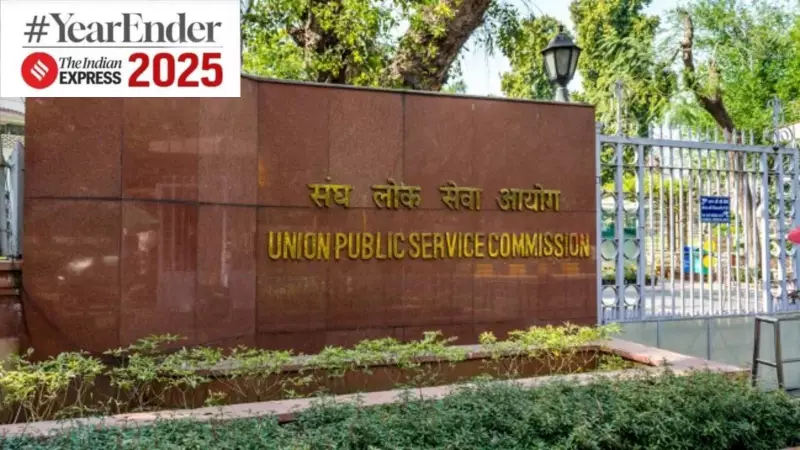
As the year 2025 concludes, the Union Public Service Commission (UPSC) has remained a pivotal force in shaping India's administrative landscape and the aspirations of millions. The year was marked by significant milestones, policy reforms, controversies, and inspiring success stories that directly impacted civil service candidates across the nation.
Major Headlines and Policy Shifts
The year began with the Commission gearing up for its centenary celebrations. Having been established on October 1, 1926, the UPSC announced year-long festivities from October 1, 2025, to October 1, 2026, to commemorate a century of selecting the country's top bureaucrats.
In a landmark move to enhance transparency, UPSC Chairperson Dr. Ajay Kumar held a live interaction with aspirants on October 1, 2025. This unprecedented session addressed numerous candidate concerns. A key topic was the Civil Services Aptitude Test (CSAT). Dr. Kumar clarified that CSAT is a qualifying paper requiring only 33% marks and does not affect the final merit ranking. He emphasized its balanced structure across language, quantitative ability, and logical reasoning, designed to be cleared by candidates from diverse academic backgrounds.

On the technological front, the Commission launched a new registration portal integrated with Aadhaar-based authentication. This system aims to streamline the application process, offering seamless and permanent identity verification for all future examinations.
Controversies and Reforms
The year was not without its share of controversy. Probationary IAS officer Pooja Khedkar, from the 2023 Maharashtra cadre, found herself in the midst of a major scandal. Allegations surfaced regarding the misuse of her official position and the submission of fraudulent disability and Other Backward Class (OBC) certificates during her candidacy. The issue came to light after a report from Pune Collector Suhas Diwase, citing misconduct including the unauthorized use of a beacon light on a private vehicle.
In a significant reform for inclusivity, the Centre introduced stricter guidelines for scribes used by Persons with Disabilities (PwDs) in competitive exams. The new rules, issued by the Ministry of Social Justice and Empowerment, mandate examining bodies to create their own vetted pools of scribes within two years, phasing out the 'own scribe' system to prevent potential malpractices and ensure exam integrity.
Another innovative initiative was the rebranding of the Public Disclosure Scheme into 'Pratibha Setu.' This platform connects candidates who reach the interview stage but are not finally recommended with verified employers from government ministries, PSUs, and private organizations, opening alternative career pathways for high-caliber talent.
Results, Representation, and The Road Ahead
The Civil Services Examination (CSE) 2024 results were announced on April 22, 2025. Shakti Dubey secured the top rank (All India Rank 1), followed by Harshita Goyal. The recruitment included 180 vacancies for the Indian Administrative Service (IAS), distributed across categories.
However, an analysis of participation data revealed ongoing challenges. Female representation in the CSE remains below 40%, with the 2021 annual report showing only 32.98% women in the prelims and a mere 15.66% (201 women) in the final list. Transgender candidate participation was also noted to be exceptionally low.
As UPSC steps into its 100th year, 2025 has been a defining period of adaptation, addressing controversies, and implementing reforms aimed at fairness and transparency. For the vast community of aspirants, these developments set the tone for the evolving nature of one of the world's most challenging competitive examinations.