Are you gearing up for the UPSC Civil Services Preliminary Examination scheduled for 2026? Consistent revision of static syllabus topics is crucial for success. As part of its ongoing initiative, UPSC Essentials presents a focused subject-wise quiz designed to help aspirants assess their preparedness and reinforce key concepts in Environment and Geography.
Why This Quiz Matters for UPSC Aspirants
This curated set of multiple-choice questions targets high-yield areas from the static portion of the GS syllabus. Regular practice with such quizzes aids in identifying weak spots, improving recall, and building exam temperament. Today's edition features important themes ranging from critically endangered species and global mountain ranges to unique amphibians and international environmental alliances.
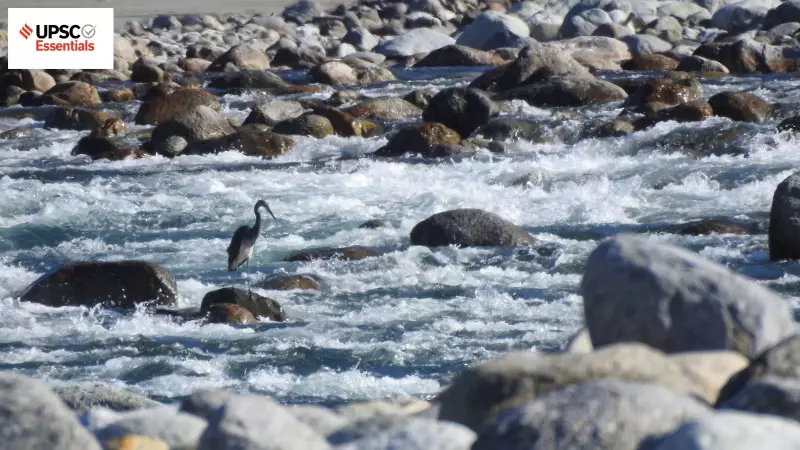
Question 1: The Elusive White-Bellied Heron
This question tests knowledge about one of the planet's rarest avian species. Candidates were presented with three statements concerning the white-bellied heron and asked to determine how many were correct.

The statements were: 1. It is listed as a schedule-II species under the Wildlife Protection Act. 2. The bird is ‘vulnerable’ as per the IUCN Red List. 3. In India, it is only found in Arunachal Pradesh.
The correct analysis reveals that only statement 3 is accurate. Contrary to statement 1, the white-bellied heron enjoys the highest level of protection in India, listed under Schedule-I of the Wildlife Protection Act, 1972. Statement 2 is also incorrect because the International Union for Conservation of Nature (IUCN) categorizes this bird as 'Critically Endangered', a step above 'Vulnerable', on its Red List.
Statement 3 holds true. The species has an extremely restricted distribution within India, currently confined to specific districts in Arunachal Pradesh, including Lohit, Anjaw, and Changlang, and within protected areas like the Namdapha and Kamlang tiger reserves. With an estimated global population of fewer than 250 individuals, its conservation is a pressing concern, often highlighted in questions related to India's biodiversity hotspots.
Question 2: Tracing the Andes Mountain Range
A classic map-based question asked aspirants to identify the South American countries through which the Andes mountain range passes. The options included Argentina, Bolivia, Paraguay, Chile, Venezuela, and Brazil.
The correct combination is Argentina, Bolivia, Chile, and Venezuela. The Andes, the world's longest continental mountain range, runs along the western edge of the continent. It traverses seven countries: Venezuela, Colombia, Ecuador, Peru, Bolivia, Chile, and Argentina. Paraguay and Brazil, while located in South America, are not part of this mountain chain. This question underscores the importance of clear geographical knowledge, especially concerning continental physiography and tectonic features, a recurring theme in the Prelims.
Question 3: Habitat of the Galaxy Frog
This biodiversity question focused on the unique habitat of the Galaxy frog, described as one of the world's rarest and most dazzling amphibians. The options pointed to different ecosystems within India.
The right answer is that they live exclusively under rotten logs in Kerala’s Western Ghats. Scientifically known as Melanobatrachus indicus, these small, silent frogs are endemic to the Western Ghats, a global biodiversity hotspot. Listed as Vulnerable by the IUCN, they face threats from habitat loss and, recently, from disruptive photo-tourism. Such questions test an aspirant's understanding of endemism, species-specific microhabitats, and conservation challenges within India's key ecological zones.
Question 4: Facts about the International Solar Alliance (ISA)
This question evaluated knowledge about a key global initiative in climate governance. Three statements about the ISA were provided for evaluation.
The statements were: 1. It was a collaborative initiative between India and the US. 2. It was conceptualised at COP21 in Paris in 2015. 3. Only countries between the Tropics of Cancer and Capricorn can join.

Only statement 2 is correct. The International Solar Alliance was launched as a joint effort by India and France, not the US. While it was initially envisioned for sun-rich countries lying between the two tropics, its membership was expanded in 2020. Now, all United Nations member states are eligible to join. The alliance, headquartered in Gurugram, India, remains a pivotal topic for questions on India's role in international environmental diplomacy and renewable energy cooperation.
Question 5: Locating High-Altitude Forest Areas
A geography question asked aspirants to identify the mountain range where the high-altitude forest areas of Margan Top, Chuharnag, and Sinthan Top are located.
The correct answer is the Pir Panjal mountains. These popular trekking destinations are part of the Pir Panjal range in the Himalayas, which connects the Kashmir Valley to regions like Rajouri and Doda. Knowledge of such specific locations is vital for map-based questions in the UPSC Prelims, which often test awareness of India's physical geography, including mountain passes, ranges, and regional topography.
Conclusion: Strategic Revision is Key
This quiz underscores the diverse nature of Environment and Geography questions in the UPSC Prelims. Success requires a blend of factual accuracy, conceptual clarity, and the ability to interlink topics like conservation status, geographical distributions, and international agreements. Aspirants are advised to integrate such daily quizzes into their study routine, use them for active recall, and thoroughly revise the explanations to solidify their understanding. Consistent engagement with static syllabus topics through varied question formats remains one of the most effective strategies for cracking the UPSC Civil Services Examination.