Boost Your UPSC Prelims 2026 Prep with This International Relations Quiz
Are you gearing up for the UPSC Civil Services Prelims 2026? It is time to check your progress and revise crucial topics through this engaging quiz on International Relations. This initiative helps you tackle the static part of the syllabus effectively. Written by Nitendra Pal Singh from New Delhi on January 18, 2026, this quiz offers a quick way to test your knowledge.
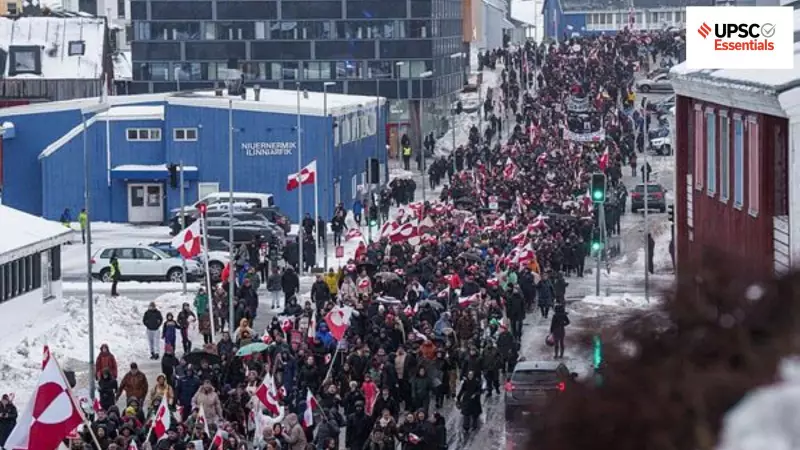
Imagine a crowd marching to the US consulate in Nuuk, Greenland, to protest against Trump's policies. This scene highlights the geopolitical importance of Greenland, a topic featured in today's questions. Let us dive into the quiz and see how well you fare.
Question 1: Where is Greenland Located?
Consider these statements about Greenland's location:

- Baffin Bay lies to the east of Greenland.
- The Greenland Sea is to the north of Greenland.
- Iceland is to the south-west of Greenland.
- The Labrador Sea is to the south of Greenland.
How many statements are correct?
Answer: Only one statement is correct. The Labrador Sea is indeed to the south of Greenland. The Greenland Sea is to the east or northeast, not the north. Iceland sits to the southeast, not southwest. Baffin Bay is to the west, not east. Understanding Greenland's location is vital for grasping Arctic geopolitics, including new sea routes and strategic competitions between nations like the US and Russia.
Question 2: Who is Latin America's Top Aid Provider?
Which country provided an estimated $303 billion in financing across Latin America from 2000 to 2023?
Answer: China is the correct choice. Research shows China has surpassed the United States in trade and investment in most of the region. For every dollar the US lent or gave in aid between 2014 and 2023, China offered three dollars. This shift highlights China's growing economic influence in Latin America, a key trend in global affairs.
Question 3: Which Nations Belong to Mercosur?
Identify the full members of Mercosur from this list: Argentina, Bolivia, Venezuela, Brazil, Chile.
Answer: Argentina, Bolivia, and Brazil are full members. Venezuela is suspended indefinitely. Chile is an associate member, not a full one. Mercosur, a major South American trade bloc, often features in questions about regional integration and trade agreements.
Question 4: The Nile River Water Dispute
Which countries are locked in a long-running dispute over Nile River waters?
Answer: Ethiopia and Egypt are the key players. The US has offered to mediate, stressing that no country should control the Nile to harm others. This issue underscores the importance of water security and diplomacy in Africa.
Question 5: Facts About the CSPOC Conference
Evaluate these statements on the Conference of Speakers and Presiding Officers of the Commonwealth:
- India recently hosted the 28th CSPOC in New Delhi.
- It was established in 1969 by the then Speaker of the Canadian House of Commons.
- It is an autonomous entity with formal affiliation to the Commonwealth Parliamentary Association.
How many are correct?
Answer: Only two statements are correct. India did host the 28th CSPOC, and it was founded in 1969 as stated. However, the CSPOC is autonomous and has no formal ties with the Commonwealth Parliamentary Association. This topic reflects India's role in parliamentary diplomacy.
Use this quiz to sharpen your skills and stay ahead in your UPSC journey. Keep revising and stay updated with current affairs to excel in the exam.