Are you gearing up for the UPSC Civil Services Preliminary Examination 2026? Regular revision of static syllabus topics is key to success. The Indian Express's UPSC Essentials initiative brings you a focused subject-wise quiz, this time on the Economy, to help you assess your preparation level and reinforce critical concepts. Today's edition, Week 144, covers a diverse range of topics from India's nuclear energy potential to global trade dynamics and agricultural statistics.
Question 1: Mapping India's Thorium Wealth
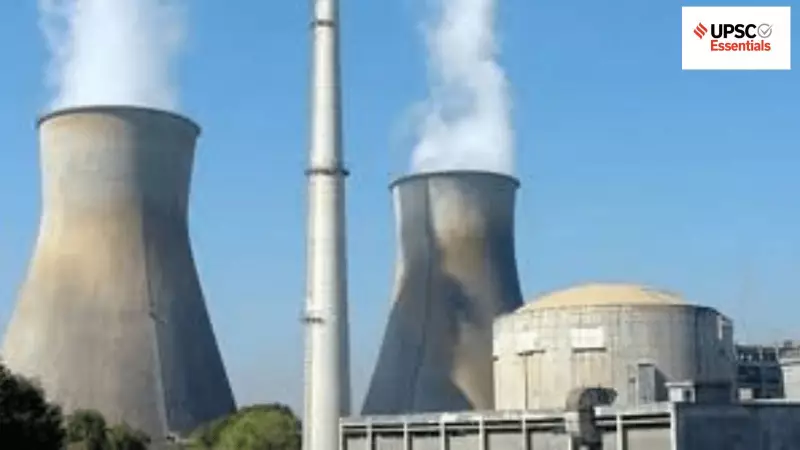
India's ambitious three-stage nuclear power programme is strategically designed to eventually harness the country's vast thorium reserves for long-term energy security. A question in the quiz tests knowledge of where these reserves are located.
The correct answer identifies that India's abundant thorium reserves are found in the coastal sands of Kerala, Tamil Nadu, Odisha, Andhra Pradesh, Maharashtra, and Gujarat, as well as in the inland riverine sands of Jharkhand and West Bengal.

It is crucial to understand that thorium is not directly fissile but is 'fertile.' It can be converted into fissile uranium-233 in reactors. The progress in the second stage, involving Fast Breeder Reactors (FBRs), has been slower than anticipated, delaying the full utilization of this domestic resource.
Question 2: Tracking India's Trade Performance
Staying updated on key economic reports is vital for the UPSC exam. This question asks about the publisher of the 'Trade Watch Quarterly' report, which analyses India's trade trends.
The report is released by NITI Aayog. A recent edition highlighted a concerning 59.2% rise in India's trade deficit with its FTA partner countries between April and June of the previous year. While imports grew, exports declined. However, a silver lining was the stellar 47% year-on-year surge in electronics exports, indicating deeper integration into global supply chains.
Question 3: Venezuela's Oil Paradox and India
This question connects global energy geography with current affairs, focusing on Venezuela. It presents three statements for evaluation.
The analysis reveals that only the first statement is correct: Venezuela possesses the world's largest oil reserves. Contrary to the second statement, it accounts for less than 1% of global production. The third statement is also incorrect; Venezuelan crude is heavy and can be processed sustainably by only a handful of complex Indian refineries, not all. Experts suggest that while US intervention in Venezuela may open a new, politically acceptable source for India in the medium to long term, near-term impact remains limited.
Question 4: India's Mango Economy
This segment tests knowledge of India's horticulture sector, specifically regarding mangoes. Candidates must evaluate four given statements.
The facts confirm that India is the world's largest mango producer, accounting for over 50% of global production. It is also true that there are around 1,000 varieties of mango in India, with about 30 cultivated commercially. However, the largest producer within India is Uttar Pradesh, not Maharashtra. Furthermore, the major importers of Indian mangoes are Gulf countries, the UK, and the US, not Nordic nations. Therefore, only two statements are correct.
Question 5: Global Inflation Hotspots
The final question addresses global macroeconomic instability, asking which country witnessed inflation skyrocket to over 52% with high food inflation by 2025.
The correct answer is Iran. The country experienced severe economic turmoil, with inflation rising by at least 30% to surpass 52%, and average monthly food inflation touching 7%. The Iranian rial lost more than half its value, leading to widespread protests and subsequent government measures like ending subsidies and initiating direct cash transfers.

Why This Quiz Matters for UPSC Aspirants
This Economy quiz exemplifies the integrated approach required for the UPSC Prelims. It blends static knowledge from the syllabus—like mineral distribution and agricultural data—with contemporary issues such as trade reports, global energy politics, and international economic crises. Regularly attempting such quizzes helps candidates identify weak areas, improve answer accuracy in statement-based MCQs, and stay abreast of how static facts interlink with current developments. Consistent revision through these focused tests is a proven strategy to solidify one's preparation for the challenging UPSC examination.