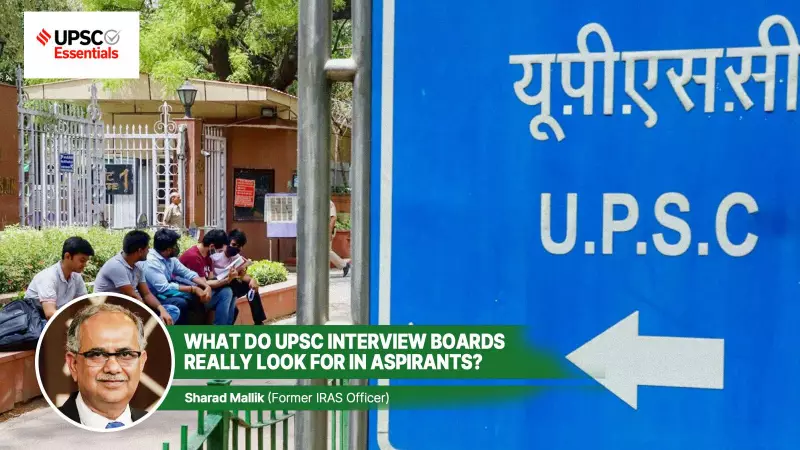
Securing a top score in the UPSC Civil Services Personality Test, often considered the final frontier for aspirants, hinges on far more than just factual knowledge. In an exclusive interview for UPSC Essential's Interview Special Series, former Indian Railway Accounts Service (IRAS) officer and seasoned mentor Sharad Mallik decodes the nuanced evaluation process that distinguishes candidates who score an impressive 180 marks and above.
The Hallmarks of a High Scorer: Beyond Bookish Knowledge
According to Sharad Mallik, who has mentored countless aspirants through mock interviews, candidates crossing the 180-mark threshold stand out primarily due to their personality and composure. The interview is not an assessment of what you know, but of who you are. These top performers exhibit exceptional emotional stability, clarity of thought under pressure, and a balanced, nuanced perspective.
They remain remarkably calm, composed, and unflappable throughout the 30-minute interaction, never appearing nervous, defensive, or rattled even when probed or challenged. High self-awareness is another critical trait; they understand their strengths and weaknesses and communicate with simplicity and clarity, avoiding jargon or overly complex language. Crucially, they handle moments of uncertainty gracefully, are never arrogant, and maintain a consistently positive and authentic attitude.

Decoding the Emotional Intelligence Assessment
Mallik emphasizes that the UPSC board actively seeks candidates with high emotional intelligence (EQ), as it is fundamental for effective public service, crisis management, and team leadership. However, this assessment is never done through direct questioning. Instead, board members evaluate EQ indirectly through a candidate's behaviour, reactions, tone, and choice of words.
The board may intentionally interrupt, challenge views, ask uncomfortable personal questions, or pose tricky hypothetical scenarios. Through this, they observe if the candidate remains calm, avoids defensiveness, relies on logic, and stays respectful. A steady tone, a natural smile, and the ability to acknowledge differing viewpoints are positive indicators.
Honesty is paramount when discussing past failures, gap years, or setbacks. Similarly, while addressing sensitive socio-political issues, language must be respectful, empathetic, and non-judgmental, reflecting a citizen-centric and compassionate outlook. Cynicism, negativity, elitism, or harsh opinions are typically viewed unfavourably.
The One Game-Changing Piece of Advice
When asked for one key advice that could significantly elevate an aspirant's performance, Sharad Mallik's counsel was profound in its simplicity. He urges candidates to enter the interview room with a calm and authentic mind, not a rehearsed one. This, he states, matters more than any over-prepared content.
Aspirants should not aim to deliver perfect answers to every question. They must stay relaxed, not fear being wrong, and not hesitate to honestly say "I don't know." The goal is to smile naturally, listen carefully, and respond like a genuine person rather than reciting a memorised script. Authenticity combined with calmness builds trust with the board, and trust is what ultimately gets rewarded with a high score.
Sharad Mallik's insights, drawn from over three decades of government service and post-retirement mentoring, underscore that the UPSC Personality Test is a holistic appraisal of character and temperament. For aspirants, mastering this delicate balance between knowledge, composure, and authenticity could be the key to unlocking a top rank.