For UPSC aspirants, staying updated with current affairs is not just a task but a strategic necessity. The Indian Express UPSC Key for December 2, 2025, provides a crucial compilation of significant news stories, dissecting their relevance for both the Preliminary and Main examinations. This edition covers a wide spectrum, from cybersecurity and public health to federal finance and strategic minerals.
Cybersecurity Push: The Mandate for Sanchar Saathi App
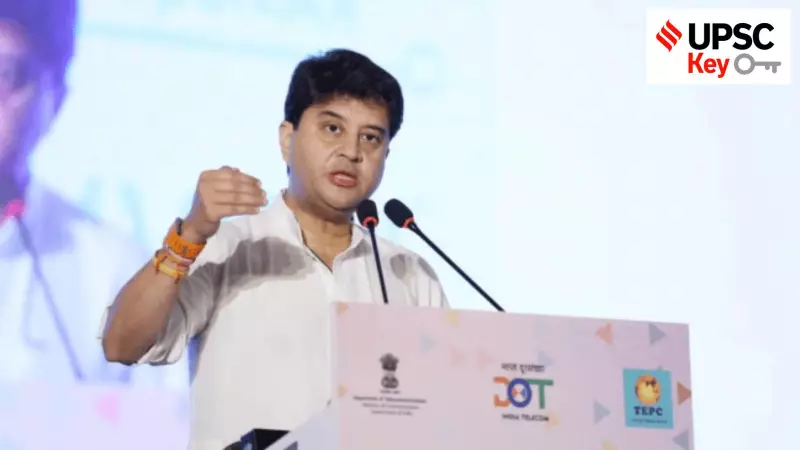
A significant development in the realm of cybersecurity and governance emerged as the Department of Telecommunications (DoT) issued a directive to smartphone manufacturers. The government has asked companies to pre-install its 'Sanchar Saathi' application on all new devices sold in India. Crucially, the directive states that users should not be able to delete this application. Smartphone makers, including major players like Apple, Samsung, Xiaomi, Oppo, and Vivo, have been given a three-month window to comply, though industry pushback is anticipated.
The Sanchar Saathi app, launched in January 2025, is a citizen-centric initiative that allows users to track and block lost or stolen phones using the device's unique International Mobile Equipment Identity (IMEI) number. It also features 'Chakshu', a facility to report suspected fraudulent communications via calls, SMS, or platforms like WhatsApp. Till August 2025, the app had crossed 50 lakh downloads from official app stores, where it remains optional for now.

A senior government official described this move as part of a broader strategy to strengthen cybersecurity and anti-spam measures. This strategy also includes a recent DoT directive to online messaging platforms like WhatsApp and Telegram to implement SIM binding. This measure would require these apps to access the International Mobile Subscriber Identity (IMSI) on the SIM card, ensuring the service cannot run without the original registered SIM present in the device.
The context for this push is alarming cyber threat statistics. A Kaspersky report from February 2025 found that one in every three internet users in India was targeted by web-borne threats in the previous year, with over 4.4 crore threats detected. In response, India has been evolving its cyber infrastructure with initiatives like the National Cyber Coordination Centre (NCCC), Cyber Surakshit Bharat, and the National Critical Information Infrastructure Protection Centre (NCIIPC). The nodal agency, CERT-In (Indian Computer Emergency Response Team), was constituted to respond to computer security incidents.
Public Health: WHO Classifies Obesity as a Global Crisis
In a major public health update, the World Health Organisation (WHO) released its first-ever guidelines on the use of GLP-1 medicines to combat obesity, which it has termed a 'global health crisis'. The WHO recommends the long-term use of these drugs for adults (except pregnant women) but emphasizes they must be part of a comprehensive treatment plan that includes intensive behavioural therapy. The guidelines frame obesity as a chronic disease requiring lifetime care.
The scale of the crisis is staggering. Currently, one billion people globally live with obesity, including 188 million school-aged children and adolescents. UNICEF's 2025 Child Nutrition Global Report highlighted a pivotal shift: for the first time, obesity has surpassed underweight as the most common form of malnutrition among school-aged children and adolescents worldwide.
The situation in India is particularly concerning. National Family Health Survey (NFHS) data shows the percentage of overweight children under five more than doubled from 1.5% in 2005-06 to 3.4% in 2019-21—a 127% increase. India has broken into the top five countries for adult obesity, and UNICEF predicts the country will be home to over 27 million obese children and adolescents (5-19 years) by 2030, accounting for 11% of the global burden.
While the WHO has included GLP-1 drugs in its list of essential medicines to improve access, it notes that high costs, limited production capacity, and supply-chain issues remain significant barriers. The agency has proposed manufacturing generic versions and implementing pre-qualification to aid procurement.

Aviation Security: The Rising Threat of GPS Spoofing
Parliament was informed about a growing threat to aviation safety: incidents of GPS spoofing and GNSS (Global Navigation Satellite System) interference. Spoofing involves transmitting counterfeit signals to deceive an aircraft's navigation systems, potentially leading to incorrect position data. Such incidents have been reported near several Indian airports, including Delhi, Kolkata, Amritsar, Mumbai, Hyderabad, Bangalore, and Chennai.
These threats have been rising globally, especially around conflict zones. In response to recent incidents around Delhi's Indira Gandhi International Airport, the Directorate General of Civil Aviation (DGCA) issued a directive on November 10, 2025, mandating that airlines, pilots, and air traffic controllers report such occurrences within 10 minutes. The Ministry of Communications stated that its Wireless Monitoring Organisation (WMO) and the Airports Authority of India (AAI) are working to locate the source of these signals.
The government assured that the AAI is implementing advanced cybersecurity solutions for its IT networks in line with guidelines from NCIIPC and CERT-In to combat global threats like ransomware and malware. This highlights the intersection of physical security and cybersecurity in critical infrastructure.
Fiscal Federalism: The Debate Over States' Financial Space
An editorial page article by C. Rangarajan and D.K. Srivastava reignited the debate on fiscal federalism, arguing for protecting states' fiscal space. The authors noted that while the 14th Finance Commission increased states' share in the divisible pool of central taxes from 32% to 42%, enhancing their fiscal space, concerns have resurfaced in recent years.
Their analysis shows that during the 15th Finance Commission period, states' aggregate revenue receipts relative to combined central and state receipts fell slightly. This was due to a reduction in tax devolution share and a dip in states' own revenue receipts. The authors point to the Union government's increased reliance on non-shareable cesses and surcharges, which shrink the divisible tax pool, and the rigid conditionalities of Centrally Sponsored Schemes (CSS) as key pressure points.
Looking ahead, the implementation of GST 2.0 with extensive rate reductions and the discontinuation of the GST compensation cess may further strain states' GST revenues. The article calls on the 16th Finance Commission to address these concerns and for the Centre to refrain from raising non-sharable levies, advocating for a fair system that balances equity and contribution.
Strategic Autonomy: India's Push for Rare-Earth Permanent Magnets
In a significant move to counter China's dominance and secure strategic supply chains, the Union Cabinet approved a Rs 7,280-crore scheme to promote the manufacturing of Rare Earth Permanent Magnets (REPMs) in India. These high-strength magnets are critical for electric vehicles, renewable energy systems, defence, aerospace, and electronics. China controls over 90% of both the manufacturing and processing of raw materials for these magnets, wielding it as leverage in trade tensions.
India's demand for REPMs is projected to double by 2030, yet the country currently meets almost all its requirements through imports, with over 90% coming from China in 2024-25. The new scheme aims to establish 6,000 metric tonnes per annum of integrated REPM manufacturing capacity, to be allocated among five beneficiaries. It focuses on sintered NdFeB (Neodymium-Iron-Boron) magnets, supporting the final stages of production from oxide to metal to alloy to magnet.
This initiative is part of India's broader National Critical Minerals Mission (NCMM), launched with a proposed outlay of Rs 16,300 crore to secure supply chains for 30 identified critical minerals. It aligns with global efforts like the Quad's Critical Minerals Initiative and the G7's Critical Minerals Action Plan, aiming to diversify supply chains and reduce strategic dependencies.
Environment: Why North Indian Cities Bear the Brunt of Pollution
A new analysis by Climate Trends, assessing air quality in 11 major Indian cities from 2015 to November 2025, confirmed that no major urban centre recorded safe air quality levels during this period. Delhi consistently had the worst air, though its annual mean AQI has dipped since a peak in 2016. Northern cities like Delhi, Lucknow, and Varanasi experience significantly worse air quality compared to southern and western cities like Chennai, Mumbai, and Bengaluru.
The primary reason is geography. Northern cities in the Indo-Gangetic Plain are landlocked and surrounded by the Himalayas, which trap pollutants and prevent dispersion. In winter, the problem intensifies due to temperature inversion, where a layer of warm air acts as a lid, trapping cooler, pollutant-laden air near the surface. Dense urban structures further reduce wind speeds.
The Supreme Court, addressing the issue, remarked that air pollution cannot be treated as a "customary" case heard only in winter, emphasizing the need for continuous monitoring and long-term solutions.
Prelims Practice Questions Covered: The UPSC Key also included previous year questions on cybersecurity incident reporting (2017), the UNICEF Child Nutrition Report (2025), cyber attack terms like WannaCry (2018), the 14th Finance Commission (2015), Rare Earth Elements, and WHO Air Quality Guidelines (2022), providing aspirants with direct exam-relevant practice.