The daily UPSC current affairs digest for January 2, 2026, compiled from The Indian Express, presents a crucial mix of economic, scientific, and international policy developments vital for aspirants. The key stories include a significant hike in duties on tobacco products, a relief package for Vodafone Idea concerning its Adjusted Gross Revenue (AGR) dues, fresh delays in ISRO's Gaganyaan mission, and an analysis of the European Union's Carbon Border Adjustment Mechanism (CBAM) and its implications for India.
Cigarettes to Get Costlier with New Duty Structure from February 1
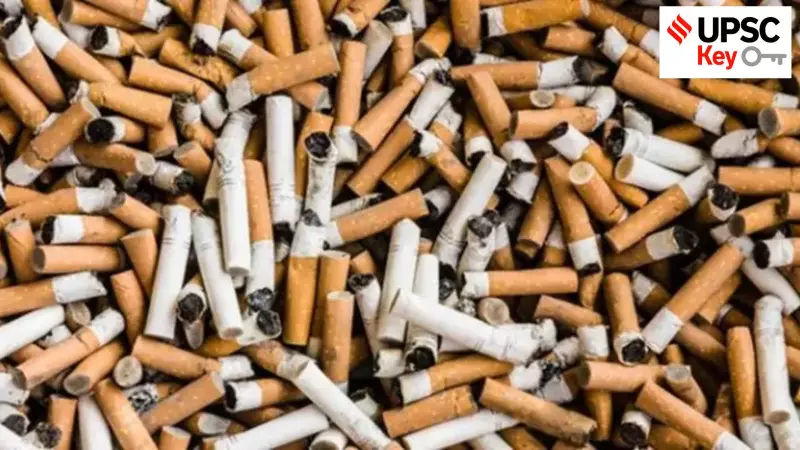
Smoking is set to become more expensive in India starting February 1, 2026, with steeper price increases for filter and longer cigarettes. The government notified the new duty rates for tobacco products, including cigarettes, and new cess rates for paan masala late on Wednesday night.
This topic is relevant for the UPSC Preliminary Examination under Current events of national and international importance and for the Mains under Government policies and interventions for development in various sectors.

Key points for aspirants to ponder include the distinction between a cess and other taxes, the purpose of the now-removed GST compensation cess, and the nature of the National Calamity Contingent Duty (NCCD). The new structure marks a shift from the original GST regime's compensation cess. Under the revised GST 2.0 framework, the compensation cess is eliminated and replaced by a higher GST rate of 40% and increased excise duties.
The stock market reacted sharply to the announcement, with shares of major cigarette makers ITC and Godfrey Phillips India falling nearly 10% and 17%, respectively. While manufacturers estimate a 20-30% increase in levies, investment analysts predict retail prices could rise by 15% to 40%.
In a related move, paan masala will also attract a 40% GST rate along with a newly introduced 'Health Security se National Security Cess'. The government cited the evasion-prone, machine-driven nature of these sectors as the reason for shifting to capacity-based levies for products like gutkha and chewing tobacco.
Government's Relief Package Paves Way for Potential Exit from Vodafone Idea
The Union Cabinet's approval of a relief package for debt-ridden Vodafone Idea (Vi) may set the stage for the government's eventual exit from the telecom operator. The package involves freezing the company's massive Adjusted Gross Revenue (AGR) dues of Rs 87,695 crore for five years.
This respite, which reschedules statutory dues over a ten-year period from FY32 to FY41, is seen as a crucial step to improve the company's viability and attract private investment. The government had acquired a 49% stake in Vi in February 2023 in lieu of interest dues. Officials indicate that bringing in a private investor and selling the government's stake at a profit is under active consideration, which could eventually lead to a new investor taking majority control.
This development is critical for understanding the challenges in India's telecom sector, including the long-standing AGR dispute. The AGR, used to calculate licence fees and spectrum charges, became a point of contention when the Department of Telecommunications (DoT) demanded payments based on a broader definition of revenue, a move upheld by the Supreme Court in 2019.
Gaganyaan's First Uncrewed Mission Now Targeted for Before March
India's ambitious human spaceflight programme, Gaganyaan, has faced another timeline revision. The first uncrewed mission, initially announced for 2021 and delayed multiple times, is now likely to lift off before March 2026.
This mission, designated HLVM3 G1/OM1, will use an unpressurised crew module to demonstrate the complete flight profile: launch by a human-rated vehicle, orbital insertion, re-entry, and safe splashdown and recovery. While the uncrewed mission is delayed, ISRO has completed several critical tests, including those for the Crew Escape System motors, the Crew Module Thermal Protection System, and the complex parachute system essential for astronaut safety.

The overall Gaganyaan programme has been expanded from three missions to eight, including two crewed flights. As per current projections, the first crewed mission is not expected before late 2027 or early 2028. India aims to join the elite club of the US, Russia, and China in conducting independent human spaceflight.
EU's Carbon Tax and the Scrutiny of the Paris Agreement
From January 1, 2026, Indian steel and aluminium exports to Europe face a new challenge: the European Union's Carbon Border Adjustment Mechanism (CBAM). This policy taxes imports based on the carbon emissions generated during their production, effectively extending the EU's domestic carbon pricing to foreign goods.
The tax could erode 16-22% of the price received by Indian exporters, forcing contract renegotiations and potentially weakening India's position in a market that absorbs about 22% of its steel and aluminium exports. The strain is already visible, with exports to the EU falling 24% in FY2025 due to compliance burdens during CBAM's transitional reporting phase.
Concurrently, the Paris Agreement, the global treaty on climate change, faces growing scrutiny as it completes a decade. Developing countries, including India, are expressing disillusionment, arguing that the pact places obligations on them without delivering the promised financial and technological support. This shift in narrative was evident at the COP30 climate conference in Belém, Brazil, where developing nations successfully asserted their demands.
India has criticized mechanisms like CBAM, arguing it is morally wrong to impose the same emission standards on developing and developed nations, a stance that touches on the core climate principle of common but differentiated responsibilities.
For UPSC aspirants, understanding the interplay between domestic economic policy (tobacco taxes, telecom relief), strategic scientific projects (Gaganyaan), and complex international frameworks (CBAM, Paris Agreement) is essential for a holistic grasp of contemporary governance and global issues.