As the UPSC Civil Services Examination (CSE) Prelims 2026 approaches, building a strong foundation in current affairs is paramount for aspirants. A dedicated weekly quiz serves as an essential tool to consolidate preparation, test knowledge, and bridge the gap between static syllabus and dynamic news. This week's edition covers a diverse range of topics from international geopolitics and cutting-edge technology to archaeological discoveries and economic trends, all crucial for the upcoming exam.
Key Themes and Questions from This Week's Quiz
The quiz for the week of January 04 to January 10, 2026, presented fifteen multiple-choice questions designed to evaluate an aspirant's grasp of relevant events. The questions are not merely fact-based but aim to test analytical understanding and the ability to connect different domains of knowledge.
International Relations and Strategic Affairs
One question focused on the North Atlantic Treaty Organization (NATO), testing fundamental knowledge about its establishment in 1949, its membership composition, and the strategic weight of the United States within the alliance. The explanation linked the static facts to a contemporary geopolitical scenario involving the United States, Greenland, and Denmark, highlighting how such questions evaluate the candidate's ability to apply knowledge to current situations.

Another question tested geographical awareness by asking which country does not share a border with Venezuela, a nation frequently in the headlines. The Monroe Doctrine, a historical US foreign policy, was also featured, connecting past principles to modern-day interpretations and their relevance in contemporary international politics.
Science, Technology, and Environment
The quiz included significant questions on emerging technologies. A question on Grok AI explored its nature as an open-source chatbot integrated with a social media platform and the subsequent regulatory and ethical challenges it poses, especially concerning content moderation and safe harbour protections under Indian IT laws.
In the realm of pure science, a question on Raman-Driven Spin Noise Spectroscopy (RDSNS) examined its application as a non-invasive technique to probe the density of cold atoms, a development with potential implications for quantum computing and sensing. Astronomy was represented by a query on 'vanishing stars', referring to massive stars that collapse directly into black holes without a supernova explosion.
Environmental policy was tested through a question on the Gadgil Panel Report, related to the ecology of the Western Ghats, reminding aspirants of the enduring relevance of key environmental debates and the figures associated with them.
Indian Heritage, Culture, and Current Developments
Archaeology and history featured prominently. A question on the Zehanpora site in Jammu and Kashmir tested knowledge of a recent discovery of ancient Buddhist stupas, linking it to the region's historical Buddhist legacy. Another query identified Thiruparankundram hill with its ancient rock-cut temple in Tamil Nadu, connecting it to a recent court ruling.
The Muziris heritage site in Kerala was the subject of a question that highlighted its historical significance as an ancient port and its contemporary relevance through the International Spice Routes Conference organized by the Muziris Heritage Project.
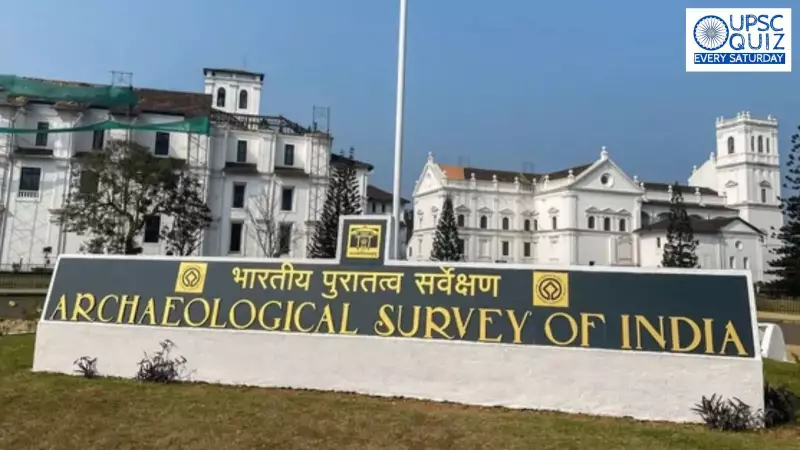
Questions on policy and infrastructure included one on the conservation of ancient monuments, clarifying the roles of the central and state governments and noting the recent opening of conservation work to the private sector. Another focused on India's progress in green transportation, asking about statements related to hydrogen-powered trains, including India's recent trial run.
In the health sector, a question identified the Ni-kshay platform as the government's system for monitoring and managing tuberculosis patients in India, specifically under the Nikshay Poshan Yojana for nutritional support.

Finally, an economics-based question analyzed the relationship between rising gold prices, inflows into gold Exchange-Traded Funds (ETFs), and the role of gold as a safe-haven asset during periods of economic uncertainty.
Why This Weekly Practice is Crucial for UPSC Aspirants
Regular engagement with such curated quizzes helps aspirants in multiple ways. It reinforces the habit of linking daily news to the static syllabus of History, Geography, Polity, Economy, Science, and Environment. The detailed explanations provided with each answer serve as concise, ready-to-revise notes, clarifying complex topics. This practice also improves answer selection skills and time management for the actual Prelims exam, where negative marking makes precision vital.
Consistently attempting these weekly assessments allows candidates to identify their strengths and weaknesses in current affairs, enabling targeted revision. As demonstrated by this week's questions, the UPSC Prelims increasingly blends current events with core concepts, making such an integrated preparation approach not just beneficial but essential for success.