Goa's 'ATAL Nirnay-Goa Codes 2026' Challenge: 700 School Teams Tackle Waste Crisis
In a significant educational initiative, close to 700 teams from schools across Goa have registered to compete in the 'ATAL Nirnay-Goa Codes 2026' challenge. This competition is specifically designed for students enrolled in the coding and robotics programme within schools, with the primary objective of finding innovative solutions to the state's persistent garbage issues.
Competition Structure and Objectives
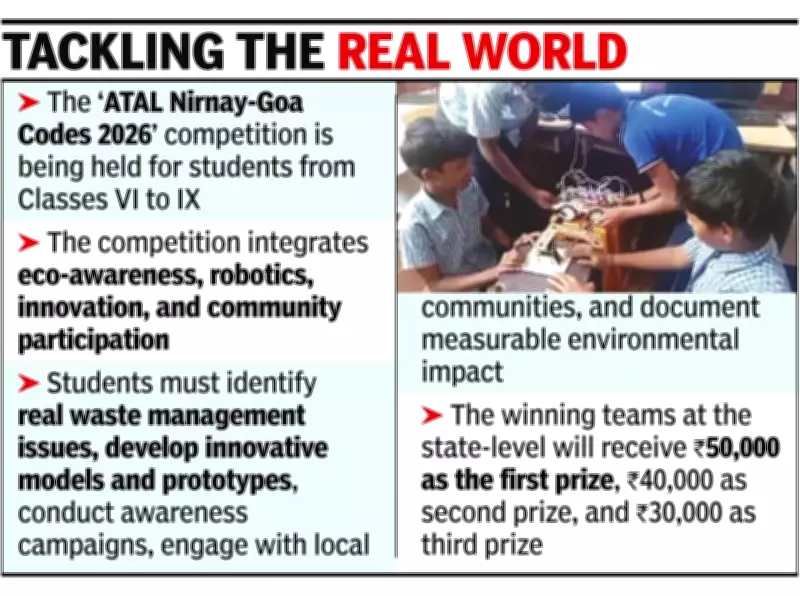
The competition targets students from Classes VI to IX and is structured as a comprehensive 28-day challenge. The first phase of selection was conducted in February, featuring statewide orientation sessions for heads of educational institutions. According to Vijay Borges, the project director of the special cell established at the directorate of technical education for implementing the CM-CARES (Coding and Robotics Education in Schools Scheme), the focus extends beyond mere activities.
"The competition is not merely about conducting activities; it aims to nurture lasting environmental values and habits," Borges emphasized. "It integrates eco-awareness, robotics, innovation, and community participation to create a holistic learning experience."

Key Events and Activities
As part of the competition, five distinct events will be held, each designed to engage students in practical problem-solving:
- Smart Waste Solution Challenge (Eco-Tech Advancement): Students identify real waste management issues and develop innovative models and prototypes.
- Garbage Awareness Campaign-From Home to Community: Teams conduct awareness campaigns to educate local communities about waste reduction.
- Clean Goa Action Drive: Hands-on activities involving community clean-up and waste collection efforts.
- Digital Awareness Campaign: Utilization of digital tools and platforms to spread environmental messages.
- Study and Documentation: Students document their projects and measure the environmental impact of their initiatives.
Borges further explained that these events encourage students to "engage with local communities and document measurable environmental impact," fostering a sense of responsibility and innovation.
Organizers and Prizes
The competition is jointly organized by the Project Management Unit (PMU) and the Goa Waste Management Corporation (GWMC). To motivate participants, substantial cash prizes have been announced:
- State-level winners: First prize of Rs 50,000, second prize of Rs 40,000, and third prize of Rs 30,000.
- Consolation prizes: Rs 10,000 each to recognize special efforts by teams that demonstrate exceptional creativity or impact.
- Taluka-level winners: Prizes of Rs 8,000 and Rs 6,000 for top performers at the local level.
This initiative not only promotes technical skills in coding and robotics but also addresses critical environmental challenges, positioning Goa's youth as active contributors to sustainable development. The competition underscores the state's commitment to integrating education with real-world problem-solving, potentially setting a benchmark for similar programmes nationwide.