Anant National University Hosts National Symposium on Sustainable Architecture Education in Delhi
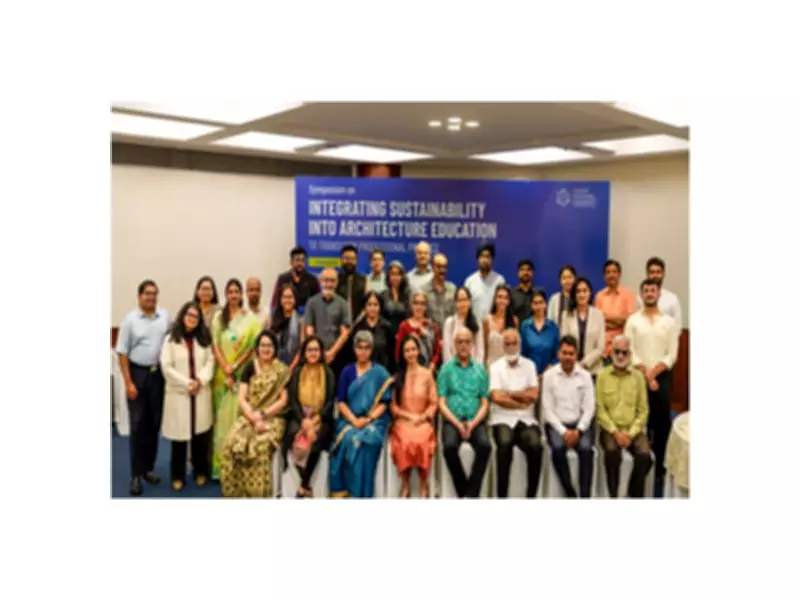
Anant National University's School of Architecture (SoA) and the Centre for Public Policy Research and Design (CPRD) organized a significant symposium titled 'Integrating Sustainability into Architecture Education to Transform Professional Practice' at the Magnolia Hall, India Habitat Centre, New Delhi. This event, held on March 25, 2026, gathered educators, policymakers, industry leaders, and students to explore how sustainability can be effectively embedded into architectural education and practice across India.
Addressing Contemporary Challenges Through Sustainability
The symposium emphasized that pressing issues such as urban expansion, climate change, urban flooding, and shortages of freshwater and quality housing make sustainability a central theme in architectural discourse. It served as a vital platform for dialogue aimed at strengthening sustainability within the curriculum and culture of architecture schools. Through in-depth discussions and expert insights, participants examined strategies to translate sustainability from academic frameworks into practical, real-world professional applications.
Key Panel Discussions and Expert Insights
The event featured three thematic panel discussions that delved into critical aspects of sustainability in architectural education. Topics included:

- Campuses as Living Laboratories: Exploring how university campuses can serve as real-world testing grounds for sustainable practices.
- Industry-Academia Collaboration: Strengthening partnerships to apply sustainability principles effectively in the built environment.
- Innovative Teaching and Curriculum Reforms: Developing new approaches to equip future architects with the skills needed to tackle environmental challenges.
Distinguished speakers included Manisha Agarwal of MO-OF Architects, Anurag Tamhankar from Biome Environmental Solutions, Dr. Benny Kuriakose of Benny Kuriakose and Architects, Gurneet Singh from Environmental Design Solutions, Prasad Vaidya of Solar Decathlon India, Dr. Vishal Garg from Plaksha University, Rahul Pachori from the Ministry of Education, Apporv Vij of the Green Building Council India, Habeeb Khan, former President of the Council of Architecture, Jabeen Zacharias of Jabeen Zacharias Architects, Dr. Sanjeev Vidyarthi, Provost of Anant National University, and Zeenat Niazi from Development Alternatives.
Core Themes and Collaborative Dialogue
Across the sessions, experts highlighted the urgent need to integrate sustainability as a core component of architectural education, rather than treating it as an optional add-on. Conversations underscored the importance of:
- Interdisciplinary Learning: Combining diverse fields to address complex environmental issues.
- Experiential Pedagogy: Using hands-on, practical methods to enhance student understanding.
- Engagement Among Stakeholders: Fostering stronger ties between academia, industry, and policymakers to prepare architects for real-world challenges.
By bringing together voices from various domains, the symposium promoted a collaborative dialogue on shaping the future of architectural education in India. It reinforced the necessity of designing curricula that respond to ecological realities while providing students with the tools to implement sustainability in professional practice.
Anant National University's Commitment to Sustainability
Through initiatives like this symposium, Anant National University continues to advance discussions at the intersection of design, policy, and sustainability. The university creates platforms where academic inquiry, professional practice, and public policy converge to address pressing challenges in the built environment.

Anant National University, recognized as a Centre of Excellence by the Government of Gujarat, employs the DesignX pedagogy, which integrates liberal arts, emerging technologies, and community experiences to train solutionaries—thinkers equipped to devise impactful solutions for global problems. Its programs in design, architecture, climate action, and visual arts blend traditional knowledge with cutting-edge technology, earning accolades such as a 5-Star Rating in Architecture and a 4-Star Rating in the University category under the Gujarat State Institutional Rating Framework (GSIRF) 2023-24.