Bihar Establishes New Language Academies for Prakrit and Pali
The Bihar state cabinet made a significant decision last month. They approved the creation of two new vernacular academies. These academies will focus on Prakrit and Pali languages. Their mission is to promote and preserve these ancient tongues.
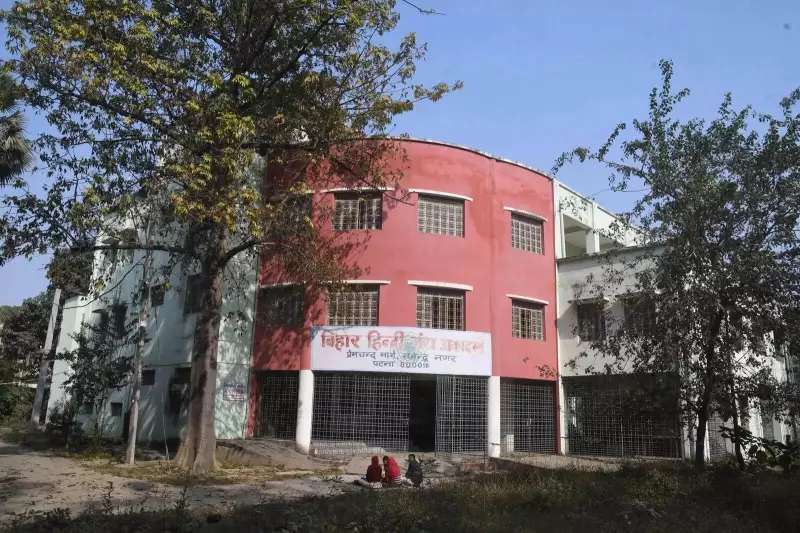
This move comes at an interesting time. Existing language academies in Bihar continue to face serious challenges. Many of them languish due to insufficient care and proper maintenance. The state has not provided them with adequate support.
Administrative Structure and Historical Significance
Both new academies will operate under a specific department. The newly created higher education department will have administrative control. The cabinet secretariat issued a formal notification about this arrangement.

Experts explain the importance of these languages. Prakrit and Pali both evolved from classical Sanskrit. Pali remains crucial for Buddhist traditions today. It serves as the canonical language in Sri Lanka and several Southeast Asian nations.
Prakrit languages showcase diverse cultural strands. Varieties like Sauraseni, Magadhi and Gandhari reflect Hindu and Buddhist traditions. They played major roles in ancient India's social and cultural life.
Expert Perspectives and Cultural Roots
Jayadeo Mishra shared his insights on this development. He formerly headed the ancient Indian history and archaeology department at Patna University. Mishra emphasized the deep cultural significance of these languages.
"Pali and Prakrit lie at the very roots of India's culture," Mishra stated. He believes the government's decision will have long-term impacts on higher education. This is particularly meaningful for Bihar. The state preserves the eternal legacy of Buddha and his teachings.
Prakrit languages developed from classical Sanskrit. They emerged before modern derivative languages appeared. Scholars often refer to them as Middle Indo-Aryan languages.
Skepticism About Implementation
Despite his appreciation for the decision, Mishra expressed skepticism. He doubts whether the government will implement it effectively. His concerns stem from recent history.
Around two years ago, the government announced similar plans. They promised to establish two new academies for local dialects. These were Surjapuri and Bajjika languages. Both dialects are spoken in politically influential regions of Bihar.
The Seemanchal region uses Surjapuri extensively. This area includes Purnia, Katihar, Kishanganj and Araria districts. Surjapuri represents a linguistic blend. It mixes Hindi, Maithili and Bangla elements.
Surjapuri Muslims form the primary speaking community. They constitute about seventy percent of Kishanganj district's population. The dialect traces its origin to the Surjapur Paragana. This historical region reportedly no longer exists.
Bajjika's Status and Recognition
Bajjika maintains close relations with Maithili. People in northwest Bihar speak this language regularly. It finds use in Vaishali, Muzaffarpur and parts of Sitamarhi, Sheohar and Samastipur districts.
Linguists consider Bajjika a blend of Hindi and Maithili. Bihar officially recognizes it as one of five state languages. Despite this recognition, Bajjika has not achieved prominence. It lags behind languages like Maithili and Bhojpuri in cultural standing.
Objectives and Existing Language Infrastructure
Badri Narayan Singh explained the government's primary objectives. The retired Hindi teacher from Patliputra University shared his observations. He said new academies aim to promote vanishing dialects.
These institutions should encourage deeper research in these languages. They must make them more popular among the wider public. Singh emphasized these goals during our discussion.
Bihar already maintains eight language academies. They cover Hindi, Bangla, Urdu, Bhojpuri, Maithili, Angika, Magahi and south Indian languages. Maithili and Bhojpuri have secured culturally rich positions among state languages.
Several other languages continue to struggle for recognition. Surjapuri and Bajjika remain far behind in development and promotion. The state's linguistic landscape presents both richness and challenges.

The establishment of Prakrit and Pali academies represents a bold step. It acknowledges Bihar's profound linguistic heritage. However, effective implementation remains uncertain. The state must address existing academies' neglect while launching new initiatives.