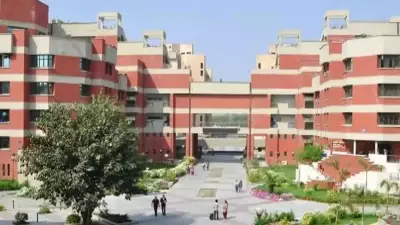
The landscape of professional education in India is undergoing a profound transformation. A powerful synergy between traditional campus-based learning and modern online platforms is emerging as the cornerstone for preparing the nation's future workforce. This blended approach is not just an alternative but a necessary evolution to meet the dynamic demands of the global economy and bridge the persistent skill gap.
The Evolving Paradigm of Professional Training
Gone are the days when a degree from a brick-and-mortar institution was the sole passport to a successful career. Today, the definition of a "professional" is expanding rapidly. Employers now seek candidates who possess a combination of core disciplinary knowledge, technical proficiency, and crucial soft skills like critical thinking and adaptability. The conventional campus model, while excellent for foundational learning and holistic development, often struggles to keep pace with the breakneck speed of technological change.
This is where online education steps in as a powerful complement. Digital learning platforms offer unprecedented flexibility, accessibility, and personalization. They allow learners to acquire niche, industry-relevant skills on-demand, update their knowledge base continuously, and learn at their own pace. For working professionals, this means the ability to upskill without career interruption. For students on campus, it provides access to global expertise and specialized courses beyond their university's curriculum.

Bridging the Gap Between Academia and Industry
The most significant impact of this blended model is its potential to narrow the chasm between academic theory and industry practice. Many online programs are developed in direct collaboration with corporate partners and tech giants, ensuring the curriculum is aligned with current market needs. Courses in data analytics, artificial intelligence, cybersecurity, and digital marketing are prime examples of domains where online certifications have become highly valued.
Simultaneously, physical campuses provide the irreplaceable environment for developing interpersonal skills, leadership qualities, and a sense of community. Group projects, seminars, cultural activities, and direct mentorship from professors foster emotional intelligence and teamwork—attributes that are difficult to replicate in a purely virtual setting. The future lies in integrating these strengths.
The Road Ahead: An Integrated Learning Ecosystem
The path forward for Indian higher education is clear: to create a seamless, integrated learning ecosystem. Universities are increasingly adopting a "phygital" (physical + digital) approach. This involves incorporating curated online modules into their degree programs, using learning management systems to enhance classroom teaching, and offering hybrid courses that combine campus immersion with remote learning periods.
This evolution addresses several critical challenges:
- Scalability and Reach: Online components can democratize quality education, reaching students in tier-2 and tier-3 cities.
- Cost-Effectiveness: It can reduce the overall cost of skill acquisition for learners.
- Lifelong Learning: It establishes a framework for continuous education throughout a professional's career.
Government initiatives like the National Education Policy (NEP) 2020 actively promote such flexible learning models, emphasizing credit transfer and the integration of online courses. Educational technology (EdTech) companies and traditional universities are now partners rather than competitors in this mission.
In conclusion, the future of professional readiness in India is not a choice between campus and online education. It is a strategic, purposeful blend of both. By leveraging the immersive, community-building power of campuses and the agile, skill-specific nature of online platforms, India can cultivate a generation of professionals who are not only knowledgeable but also resilient, innovative, and fully equipped to shape tomorrow.