Delhi's educational landscape is undergoing a profound transformation, driven increasingly by its women. Once lagging behind, female students and educators are now at the forefront, rewriting the capital's literacy narrative. However, this academic empowerment clashes with a harsh economic reality, creating a significant paradox for Delhi's educated women.
The Steady Climb of Literacy and Female Leadership
The capital's literacy journey is a story of remarkable progress. According to the Directorate of Economics and Statistics’ report, Women and Men in Delhi-2025, literacy in Delhi skyrocketed from a mere 38.36 percent in 1951 to 86.21 percent in 2011. Crucially, female literacy grew at a faster pace, reaching 80.76 percent compared to 90.94 percent for men, as per the Population Census 2011. This narrowing gender gap is evident in both rural and urban areas, signaling a deep social shift.
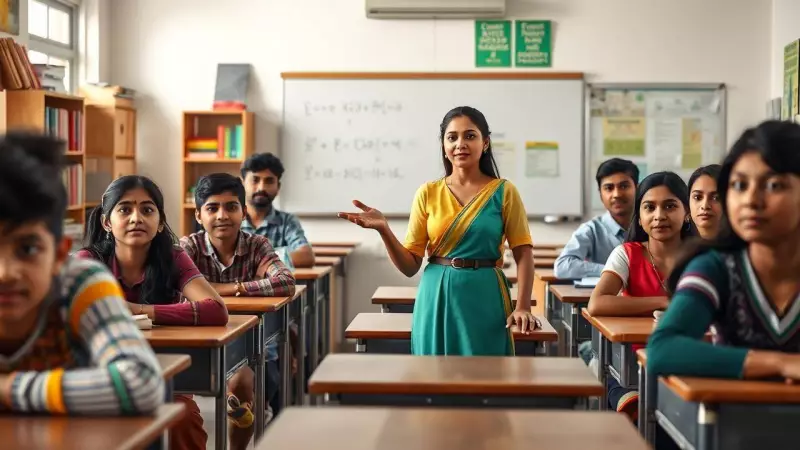
Women are not just participants but are shaping the very institutions of learning. Government data reveals their overwhelming presence in teaching roles. In 2024-25, there were 415 female teachers for every 100 male teachers at the primary level, a significant increase from 363 in 2012-13. Their representation at upper primary and higher secondary levels also saw substantial rises. Furthermore, female enrollment in higher education has decisively crossed the 50 percent mark, highlighting their growing influence on Delhi's intellectual future.

The Stark Workforce Paradox
Despite these towering educational achievements, women's entry into Delhi's formal economy remains alarmingly low. Data from the Periodic Labour Force Survey (PLFS) 2023-24 paints a concerning picture. The worker population ratio stood at 52.8 percent for men but only 14.2 percent for women. Similarly, the labor force participation rate was 54 percent for men versus a mere 14.5 percent for women. These figures are notably below the national averages, indicating a specific bottleneck in the capital.
This disparity exists despite low unemployment rates (2.2% for men, 1.5% for women), suggesting the core issue is a severe lack of opportunity, not a lack of qualification. Delhi has successfully created a generation of educated, ambitious women, yet the professional landscape remains largely male-dominated, leaving a vast reservoir of potential untapped.
Educational Choices and Persistent Patterns
Women in Delhi are making decisive inroads into fields traditionally dominated by men. For instance, in 2017-18, 76.8 percent of female students in Delhi enrolled in medicine, compared to 43 percent of male students. However, broader educational patterns still reflect enduring social influences. General education remains the dominant track for all students, with a slightly higher proportion of men (92%) pursuing it compared to women (88.1%). This indicates that while women are excelling academically, their paths continue to be shaped by complex social and cultural factors.
The progress in Delhi's classrooms is undeniable and commendable. Women are the architects of this educational revolution. Yet, the city now faces a critical next step: translating this academic capital into economic empowerment. Until societal norms and structural barriers in the workplace evolve, the full promise of Delhi's educated women risks being stifled, unable to reshape the city's economy and society to its true potential.