The Evolution of Fine Arts: From Instinct to Structured Discipline
Art has traditionally served as a profound medium for engaging with the world through meticulous observation. Before any painting, sculpture, or image reaches completion, it originates from a deep attention to fundamental elements: light, form, proportion, and visual balance. At its essence, fine arts transcends mere expression, embodying a rigorous discipline that involves interpreting visual stimuli and translating them into a coherent visual language.
The Shift Toward Structured Artistic Development
As creative fields increasingly intersect with technology, media, and broader cultural dynamics, the perception of art as a purely instinctive endeavor is being redefined. Today, contemporary artists are expected to engage intentionally with materials, techniques, historical context, and cultural narratives. This evolution necessitates a balance between creative intuition and technical proficiency, placing formal fine arts education at the forefront of artistic development.
Imagination is now refined through methodical approaches rather than left to chance, reflecting a broader trend in the creative industries. UNESCO estimates that the creative economy contributes over 3% to global GDP, highlighting the growing economic and cultural value of visual communication, design, and artistic production. This underscores the heightened demand for trained visual practitioners worldwide.

The Role of Bachelor of Fine Arts Programs in India
In India, the expansion of sectors like design, animation, and visual communication amplifies the need for visual thinkers who can merge conceptual understanding with technical skill. Structured learning through programs such as a Bachelor of Fine Arts (BFA) is pivotal in shaping artistic capability. These programs guide students through progressive exposure to various techniques, artistic movements, and mediums, emphasizing sustained practice, mentorship, and continuous progression over isolated talent.
AAFT Noida's Bachelor of Fine Arts program exemplifies this shift by treating art as an evolving practice shaped by continuity, reflection, and disciplined method. The program addresses a critical question for aspiring artists: how does one transition from basic skills like drawing or painting to understanding the deeper forms, communicative power, and cultural significance of art?
Program Highlights and Educational Approach
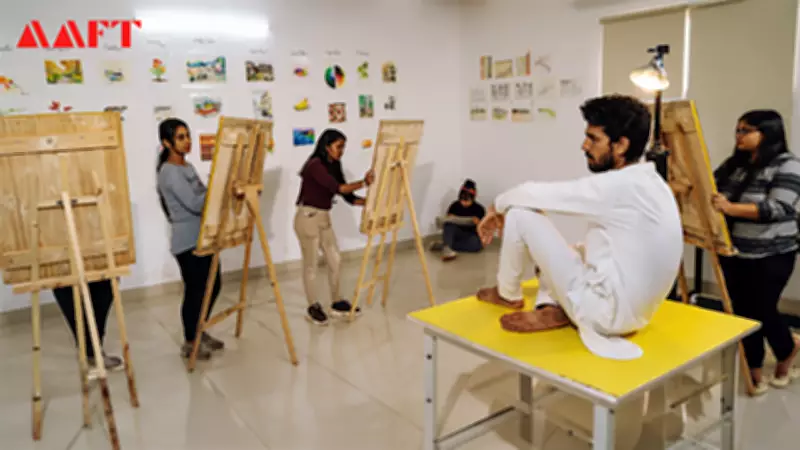
Students in the BFA program are introduced to fine arts as a comprehensive discipline involving observation, experimentation, critique, and refinement. Learning occurs across diverse environments including classrooms, studios, and specialized labs, ensuring that theoretical knowledge and practical application remain interconnected throughout the academic journey.
Key aspects of the program include:

- Flagship Specializations: Offering focused tracks in painting, sculpture, and applied arts.
- Understanding Visual Arts as a Discipline: Building strong observational skills to interpret visual forms, styles, and compositions for coherent artistic expression.
- From Materials to Mastery: Exploring tools, surfaces, techniques, and conservation practices to comprehend the creation and preservation of artworks.
- Art in Context: Studying artistic movements across periods to understand how cultural, historical, and social forces shape visual language.
- Personal Medium Identification: Exposure to diverse practices from traditional painting and sculpture to digital media and art history, helping students refine their artistic focus.
- Learning Through Making: Emphasizing hands-on studio work and experimentation in both physical and digital spaces.
- Guidance and Mentorship: Ongoing critique from experienced faculty and practicing artists to foster critical thinking and confident portfolio development.
This structured approach encourages students to develop patience, visual sensitivity, and critical self-reflection. Rather than pursuing immediate results, they learn to value the artistic process, recognizing that growth unfolds gradually through repetition, feedback, and thoughtful practice. These habits often endure beyond formal education, shaping lifelong engagement with creativity.
Pathways Beyond Education: From Learning to Lifelong Practice
A formal education in fine arts serves as a foundation for continuous growth rather than an endpoint. A Bachelor of Fine Arts equips students with technical skills, visual awareness, and creative breadth, preparing them for diverse roles in art, design, media, and cultural sectors. For those seeking deeper engagement, a Master of Fine Arts (MFA) offers advanced conceptual exploration, independent research, and sustained studio practice, often leading to leadership, teaching, or professional artistic careers.
Together, these educational pathways reflect the evolving nature of artistic development, emphasizing that fine arts education teaches individuals how to observe, interpret, and respond with intention. Through structured learning, experimentation, and reflection, artists cultivate not only professional readiness but also a lasting, meaningful relationship with creative practice.
Choosing the Right Fine Arts Course
Selecting an appropriate fine arts course depends on one's creative thinking, engagement with artistic practice, and specific interests, whether in hands-on creation, visual communication, spatial work, or conceptual exploration.
Available programs include:
- Bachelor of Fine Arts (Painting) – 4 Years: Ideal for students exploring ideas through color, form, and composition, with career paths in painting, visual art practice, art education, illustration, mural work, gallery settings, and independent practice.
- Bachelor of Fine Arts (Sculpture) – 4 Years: Suited for those drawn to materials, space, and three-dimensional work, leading to roles in sculpture, installation art, public art projects, exhibition and set work, fabrication, and creative consultancy.
- Bachelor of Fine Arts (Applied Arts) – 4 Years: Designed for individuals combining creative thinking with communication and design processes, opening opportunities in graphic design, advertising art direction, illustration, branding, creative strategy, and design consultancy.
- Master of Fine Arts (MFA) – 2 Years: Tailored for students pursuing deeper artistic inquiry, conceptual clarity, research engagement, and portfolio development, supporting advanced roles in visual arts practice, creative leadership, illustration, multimedia work, curation, teaching, and independent practice.
Each program offers a distinct approach to artistic development, with the best choice aligning with one's creative strengths, long-term interests, and desired practice.
Key Programme Details
Programme Commencement Date: August 2026
Programme Fee: 6,03,100
Course Mode: 5 days/week
Duration: 4 years for BFA; 2 years for MFA
Eligibility Criteria: For the Bachelor of Fine Arts programme, completion of 10+2 from a recognised board such as CBSE, ICSE, IGCSE, IB, or State Board is required.
Conclusion: Structured Learning as a Framework for Lifelong Creativity
Formal fine arts education is less about reaching a fixed destination and more about establishing a framework for ongoing exploration and growth. A Bachelor of Fine Arts program helps develop foundational skills, visual awareness, and conceptual understanding, while further study or independent practice allows artists to refine their direction over time. These pathways illustrate the dynamic nature of artistic development, shaped by experience, reflection, and cultural engagement.
In this context, institutions like AAFT position fine arts education as a structured process, providing artists with the space and guidance to experiment, reflect, and mature—one idea, one medium, and one deliberate stroke at a time.