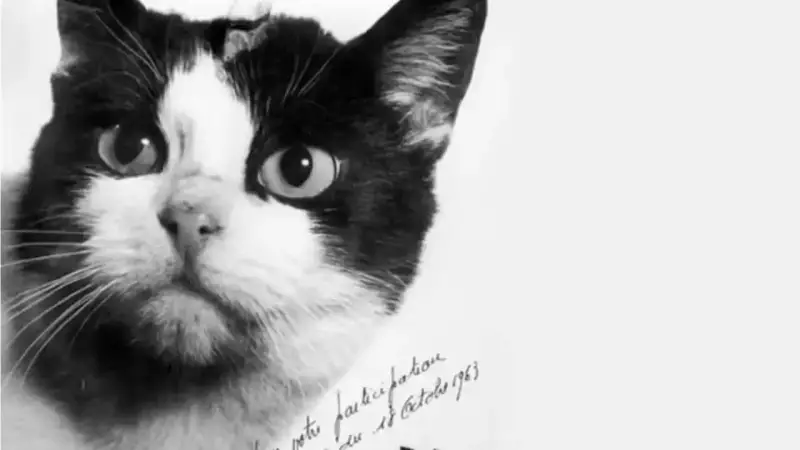
While the world remembers Laika, the Soviet dog, as the first animal to orbit Earth, another pioneering creature made history just a few years later. According to NASA, on October 18, 1963, France successfully launched the first cat, Félicette, into space, marking a significant milestone in the annals of space exploration.
Pioneers of the Final Frontier: Early Animal Astronauts
The use of animals in space missions began long before humans ventured beyond our atmosphere. The journey started in 1947 with fruit flies, sent to high altitudes to study radiation effects. In 1949, Albert II, a rhesus monkey, became the first primate in space, though he tragically died during re-entry. The subsequent decade saw numerous dogs and primates follow, including the famous Laika in 1957. Inspired by these programs, France established its national space programme in 1961, becoming the third country to launch animals into space. Initial French tests used rats, like Hector, before progressing to larger mammals such as cats.
The Making of an Astro-Cat: Félicette's Rigorous Training
In 1963, the Centre d’Enseignement et de Recherches de Médecine Aéronautique (CERMA) acquired 14 female cats for its space mission, selecting them for their calmer temperaments. The cats were not given names initially to prevent scientists from forming emotional attachments. These feline candidates underwent intense preparation, which included confinement in capsules, exposure to simulated rocket noises, and sessions in a high-G centrifuge to mimic launch conditions. Permanent electrodes were surgically implanted in their brains to monitor neurological signals.

By mid-October, six cats were shortlisted. A calm tuxedo cat, designated C 341, was chosen for her ideal weight and steady temperament. For the mission, electrodes were attached to her legs to track cardiac activity, and a chest-mounted microphone recorded her breathing, ensuring a comprehensive collection of physiological data during her flight.
A Historic 13-Minute Flight and a Lasting Legacy
On October 18, 1963, C 341 was launched aboard the Véronique AGI 47 sounding rocket from Vernon, Haute-Normandie. Her suborbital flight lasted for 13 minutes, reaching an altitude of 152 kilometers and experiencing five minutes of weightlessness. The mission was a complete success; the cat was safely recovered and was later officially named Félicette.
Tragically, Félicette was euthanized two months later for a necropsy to study the effects of spaceflight on her brain. A second cat launched on October 24 died due to a rocket malfunction. While Félicette's story did not garner the same global attention as Laika's, partly due to public discomfort with the implanted electrodes, her contribution was immense. Her journey established France as a key player in early space exploration and provided invaluable data on neurological responses in zero gravity.
In a fitting tribute, a campaign led by Matthew Serge Guy resulted in a 1.5-meter bronze statue of Félicette being unveiled at the International Space University in France on December 18, 2019. The statue depicts her perched atop Earth, gazing skyward, a permanent memorial to the first cat to venture into space.