Gadchiroli Students Redefine Educational Landscape at National Science Exhibition
In a remarkable display of intellectual prowess, students hailing from Gadchiroli, including those from remote and tribal regions, captured widespread attention at the prestigious National Young Scientists Exhibition. The event, hosted at Shivaji Science College in Nagpur, served as a powerful platform for these young minds to challenge the long-standing perception of their district as educationally backward.
Showcasing Gadchiroli's Emerging Educational Hub
The enthusiastic participation of these students has effectively highlighted Gadchiroli's growing potential as an emerging hub for education, innovation, and youthful scientific talent. Their presence at this national-level event underscores a significant shift in the educational narrative of the region, demonstrating that talent and creativity know no geographical boundaries.
Innovative Models Addressing Real-World Challenges
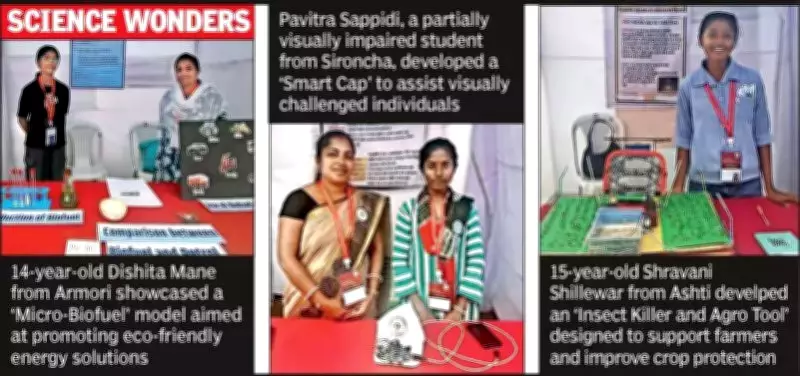
Among the many inspiring presentations, one standout contribution came from 14-year-old Dishita Mane from Armori. She showcased a groundbreaking 'Micro-Biofuel' model designed to promote sustainable and eco-friendly energy solutions. Speaking about her project, Dishita explained that her model demonstrates the process of biofuel production using algae.

"Algae release oxygen during photosynthesis, so we utilise this to make our biofuel. The algae's biomass is then compressed to extract oil, which, after thorough chemical refinement, can be used as fuel in vehicles," she elaborated. Her model effectively highlights the immense potential of renewable energy sources in reducing dependence on conventional fossil fuels. Additionally, she noted that the leftover algae can be repurposed as a natural fertiliser, adding another layer of sustainability to her innovation.
Assistive Technology for Visually Impaired Individuals
Another remarkable innovation came from Pavitra Sappidi, a partially visually impaired student from Sironcha. She developed a 'Smart Cap' specifically designed to assist visually challenged individuals in navigating their surroundings safely and independently. The model incorporates sensors fitted on the cap to detect nearby obstacles and potential hazards.
When an object comes within a predetermined distance, the sensor activates either a buzzer or a voice alert, providing timely warnings to the user. This thoughtful creation exemplifies how technology can be harnessed to enhance accessibility and improve the quality of life for individuals with disabilities.
Agricultural Innovation Supporting Farming Communities
Adding to the diversity of ideas presented at the exhibition, 15-year-old Shravani Shillewar from Ashti introduced an "Insect Killer and Agro Tool" specifically designed to support farmers. This model focuses on improving crop protection while simultaneously enhancing agricultural efficiency, offering a practical solution to challenges faced by rural farming communities.
"I have made a mega-racquet-like figurine, which will be basically a large net with huge lights on it. The lights will attract the bugs who will be electrocuted upon contact with the net," Shravani explained. Her invention demonstrates a keen understanding of agricultural needs and presents an innovative approach to pest control that could benefit countless farmers.
Reflecting Scientific Curiosity and Local Understanding
Several other students from tribal and interior areas also displayed creative and problem-solving models addressing real-life issues related to:
- Safety
- Agriculture
- Health
- Sustainability
Their collective innovations reflect not only a profound scientific curiosity but also a strong understanding of local needs and challenges. By tackling issues relevant to their communities, these students have demonstrated that innovation is most impactful when it addresses real-world problems.
The participation of Gadchiroli students in this national exhibition marks a significant milestone in the district's educational journey. It serves as a powerful testament to the untapped potential residing in regions often overlooked, inspiring future generations to pursue scientific inquiry and technological innovation.