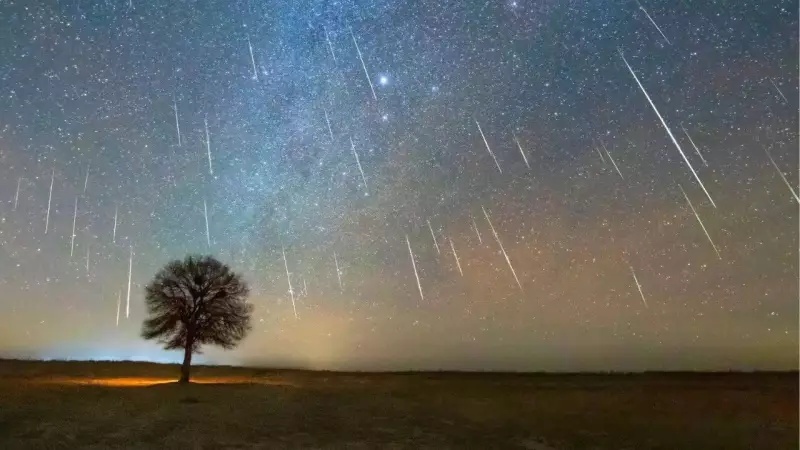
Stargazers across India and the globe are in for a celestial treat this December. The Geminids meteor shower, one of the most brilliant and reliable annual sky events, is set to peak in 2025 under near-perfect viewing conditions. This dazzling display transforms the night into a canvas of streaking lights, offering a breathtaking spectacle for everyone from casual observers to seasoned astronomers.
Geminids 2025: Peak Dates and Prime Viewing Window
The climax of the Geminids meteor shower will unfold on the nights of 13 December and 14 December 2025. This year's timing is exceptionally favourable for watchers. The moon will be in its waning crescent phase, having passed its last quarter on 11 December. This means minimal moonlight will interfere, resulting in darker skies and significantly enhanced visibility for the meteors.
During the peak, observers situated in dark, unpolluted locations can anticipate an impressive rate of 60 to 120 meteors per hour. The shower is known for its steady activity, so even those watching for a short period have a high chance of witnessing multiple shooting stars.

How and Where to Watch the Celestial Fireworks
The Geminids are visible worldwide but are most prominent for viewers in the Northern Hemisphere, which includes all of India. The meteors appear to originate from the Gemini constellation, making them relatively easy to locate.
To find the radiant point, follow these steps:
- Look towards the northeast and find the easily recognisable Orion constellation.
- Search for the Gemini constellation, situated between Taurus and Cancer.
- Focus on the two brightest stars in Gemini, Castor and Pollux, which mark the heads of the celestial twins.
The radiant becomes visible in the mid-evening, allowing for viewing from dusk until dawn on the peak nights. No special equipment is required; in fact, meteor showers are best enjoyed with the naked eye to take in the widest possible view of the sky.
Maximising Your Meteor Shower Experience
To fully appreciate the Geminids, a little preparation goes a long way. Here are key tips for the best viewing experience:
Seek Darkness: Escape city lights. Find a secluded spot like a park, rural area, or hilltop with a clear, unobstructed view of the sky.
Be Patient: Allow your eyes at least 30 minutes to adjust to the darkness. This dramatically improves your ability to spot fainter meteors.
Protect Your Night Vision: Avoid using white-light flashlights or checking your smartphone. If you need light, use a red-filtered torch, which minimally disrupts your dark-adapted eyesight.
Dress Warmly: December nights can be chilly. Ensure you are comfortably warm so you can enjoy the show for longer periods.
The Unique Science Behind the Spectacle
What sets the Geminids apart from other major showers is its origin. While most meteor showers are born from icy comets, the Geminids originate from a rocky body—an asteroid named 3200 Phaethon. This unusual blue space rock behaves like a comet, shedding a stream of dust and particles during its 1.4-year orbit around the Sun.
Scientists theorise that a major collision in Phaethon's distant past created a vast trail of cosmic debris. Every December, Earth's orbit carries us through this cloud of "asteroid crumbs." When these particles, some no larger than grains of sand, collide with our atmosphere at high speed, they burn up due to friction, creating the brilliant streaks of light we admire as meteors.
A Rich History of Stargazing
The Geminids have a recorded history stretching back nearly two centuries. The first documented observation dates to 1833 from a riverboat on the Mississippi River. Since then, the shower has gained a formidable reputation for its consistency and intensity, rarely disappointing observers. This reliability has made it a favourite subject for both amateur sky-watchers and professional astronomers, contributing valuable data to our understanding of solar system debris and meteoroid streams.

Mark your calendars for mid-December 2025. The Geminids meteor shower promises a rare and accessible opportunity to connect with the cosmos, offering a stunning reminder of the dynamic beauty of our universe, right from your backyard or a nearby dark sky site in India.