Gujarat's Strategic Push to Become a Biotechnology Leader
Ahmedabad: Often celebrated as the 'pharmacy of India' due to its robust pharmaceutical ecosystem encompassing both education and industry, Gujarat is now setting its sights on a more ambitious goal: transforming into a biotechnology powerhouse. This vision is detailed in a comprehensive report by the Gujarat Rajya Institution for Transformation (GRIT), a government think tank.
Charting a Course for Bioeconomy 2030
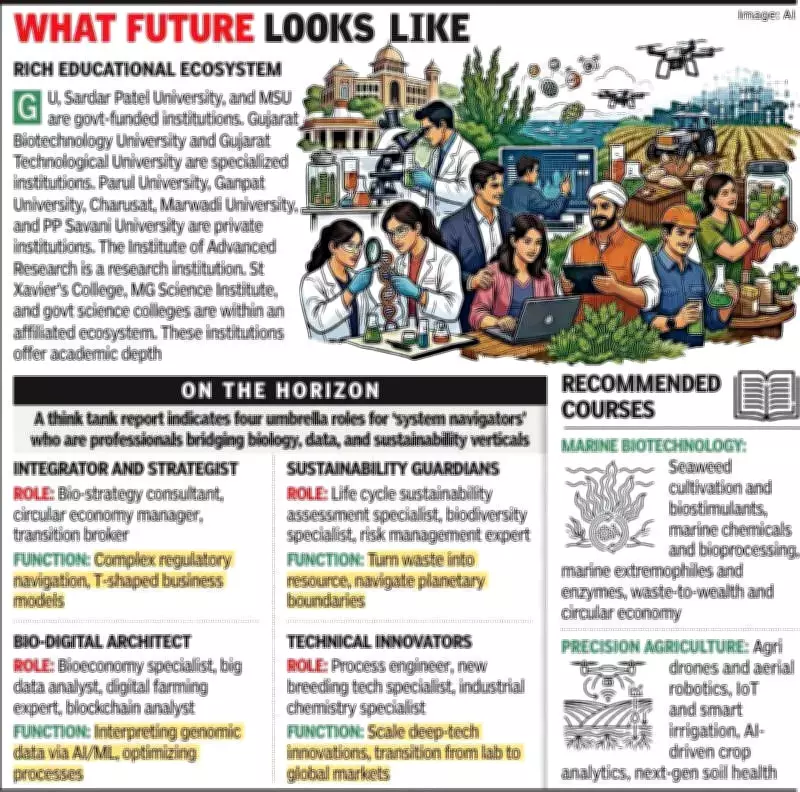
The recently unveiled report, titled 'Gujarat Bioeconomy 2030: Strategic Skill Architecture and Workforce Development', provides a strategic roadmap for the future of the state's bioeconomy. It emphasizes that a significant overhaul of the educational system is essential to achieve this transformative objective.
Based on an exhaustive analysis of 23 biotechnology institutes within Gujarat, comparative benchmarking with other states, and a thorough assessment of global industry trends, the document identifies a critical misalignment between academic output and industrial requirements.

Addressing the Institutional Gap
The report highlights a significant structural deficiency. Unlike biotechnology hubs such as Hyderabad or Bangalore, which are anchored by autonomous institutes funded by the Department of Biotechnology (DBT) that drive innovation and high-level skilling, Gujarat lacks a central, federally funded node for biotechnology research excellence.
Experts cited in the report have called for the establishment of a DBT institution within the state. They have also advocated for elevating the status of existing entities, such as the Gujarat Biotechnology University (GBU) or the Gujarat Biotechnology Research Centre (GBRC), to institutions of national importance to provide a substantial impetus to the sector.
Bridging the Curriculum-Industry Divide
This institutional gap has a cascading effect on education. The report notes that syllabi at many institutions remain overly theoretical and are slanted towards classical microbiology and biochemistry. Meanwhile, the global biotechnology industry is rapidly pivoting towards advanced fields like synthetic biology, metabolic engineering, and AI-driven drug discovery.
The primary focus of the GRIT report is on actionable strategies for systemic overhaul. The proposed interventions are multi-faceted:
- Curriculum Modernization: Introducing specialized BTech and MTech modules focused on cutting-edge areas such as synthetic biology, bioprocess engineering, and computational biology.
- Institutional Alignment: Creating a state-backed Centre of Excellence (COE) to bridge the critical gap between research and practical training.
- Vocational Momentum: Leveraging frameworks from the Life Sciences Sector Skill Development Council (LSSSDC) to launch industrial 'finishing schools.' These programs would function as essential bridges, preparing graduates for the specific demands of the factory floor and R&D labs.
By addressing these foundational issues, the GRIT report envisions a future where Gujarat's renowned pharmaceutical infrastructure serves as a springboard for dominance in the high-value biotechnology sector, securing its position as a true bioeconomy leader by 2030.