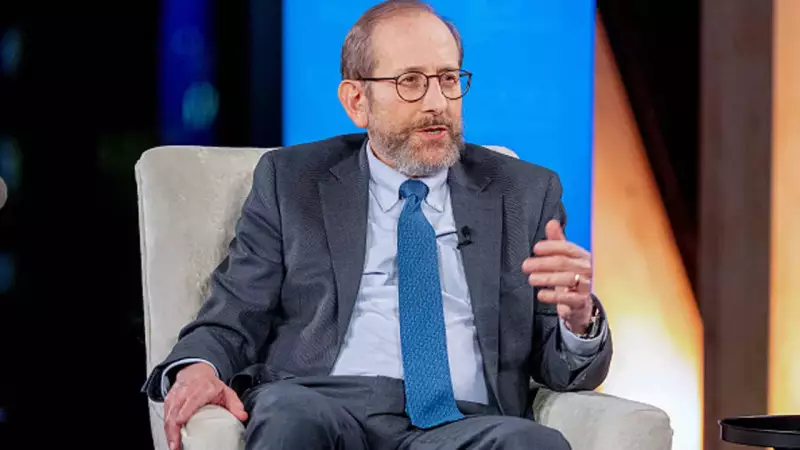
In a remarkably candid assessment, Harvard University President Alan M. Garber has stated that the prestigious institution "went wrong" by permitting professors to introduce their personal political views into the classroom. He argued that this trend of faculty activism has significantly hampered the possibility of open and safe debate for students on campus.
Garber's Direct Critique on Classroom Culture
Speaking on a podcast this week, Garber directly linked a decline in tolerance for dissent within higher education to teaching environments that allow, and sometimes encourage, instructors to merge scholarship with advocacy. "How many students would actually be willing to go toe-to-toe against a professor who’s expressed a firm view about a controversial issue?" he questioned, as reported by The Harvard Crimson.
He emphasized that when instructors foreground their own stances on contested topics, the classroom ceases to feel like a sanctuary for safe disagreement. This public acknowledgment marks the clearest admission from Garber that faculty practices have contributed to the erosion of open discourse at Harvard. However, he also signalled a deliberate shift, stating, "I’m pleased to say that I think there is real movement to restore balance in teaching and to bring back the idea that you really need to be objective in the classroom."

Navigating Free Speech Tensions and Policy Shifts
Garber assumed the presidency amidst intense controversy over speech and protest, inheriting a campus deeply divided after the October 7, 2023 attack on Israel. Facing criticism over the university's handling of subsequent protests, he moved early to limit official institutional positions.
Under his leadership, Harvard adopted an institutional voice policy that commits the university and its senior leaders to refrain from taking stances on public policy matters. Garber has framed this policy as a mechanism to alleviate pressure on students and faculty holding minority viewpoints. While he has personally condemned certain actions, like a Palestine Solidarity Committee post, his overarching emphasis has been on institutional restraint, particularly within academic settings.
His comments align with a prior Faculty of Arts and Sciences report, which affirmed professors' rights as citizens to speak publicly but warned they must actively invite disagreement in class to prevent students from withdrawing.
Addressing Broader Campus Climate and Policy Response
Garber provided specific examples, noting the rise of anti-Israel sentiment among some faculty after October 7 and acknowledging that "It did happen in classrooms that professors would push this." He connected this to a chilling effect on student expression.
Beyond formal protests, he addressed antisemitism, describing "social shunning" as a pervasive and difficult-to-regulate problem. He cited reports from Israeli students whose conversations ended abruptly upon revealing their nationality.
Rather than relying solely on punishment, Garber highlighted proactive measures:
- Revised orientation programs with new modules on discussing controversial topics.
- Reports from task forces examining bias against Jewish, Israeli, Muslim, Arab, and Palestinian community members.
- Clearer protest and speech rules to protect both free expression and daily operations.
"It’s about learning how to listen and how to speak in an empathetic way," he stated, outlining the educational approach.
External Pressure and the Principle of Neutrality
This renewed focus on classroom neutrality comes as Harvard faces external political pressure over faculty activism. In April, the Trump administration demanded governance changes to reduce the influence of those "more committed to activism than scholarship."
While not directly addressing those demands, Garber reiterated a core academic principle: "We’re not about the activism. We’re not about pushing particular points of view." He asserted that teaching must remain "logical, firmly grounded in the evidence and rigorous."

Garber's perspective represents an effort to recalibrate boundaries rather than silence speech. The success of this recalibration in restoring classroom trust and shaping the ongoing debate on academic freedom will likely define campus life long after his tenure.