The Council of Indian Institutes of Technology (IIT Council) has sounded the alarm over the steep and continuous decline in students opting for MTech degrees in India. In a decisive move, the council has set a strict 12-month timeline to implement sweeping reforms aimed at making postgraduate engineering education more relevant and attractive.
Core Problems: Outdated Courses and Missing Industry Links
The council's diagnosis, based on detailed discussions in its August meeting, pinpoints two critical structural flaws. The first is the limited availability of contemporary and relevant specialisations. Many MTech programmes continue to operate within narrow, traditional disciplinary silos, failing to reflect the interdisciplinary skills that modern industries now demand.
The second major issue is the severe lack of meaningful internship opportunities. Unlike global postgraduate models where industry exposure is integral, Indian MTech students often graduate with minimal hands-on experience. The council emphasised that this gap directly weakens employability and diminishes the perceived value of the degree. To fix this, it has been stressed that industry internships must become a compulsory part of all IIT MTech programmes.

The Stark Numbers Behind the Decline
The council's concerns are backed by hard data. According to AICTE figures, MTech admissions have plummeted to a seven-year low of around 45,000 students in the last two academic years. This is despite a consistent rise in BTech enrolments.
A deeper look at the enrolment trends reveals a worrying pattern. Postgraduate engineering intake peaked at over 1.85 lakh seats in 2017-18 but has since steadily declined to about 1.24 lakh by 2023-24. Actual enrolments tell an even sharper story, dropping from nearly 66,900 in 2018-19 to approximately 45,000 in 2023-24. Experts attribute this exodus to the limited value addition of an MTech degree, a curriculum disconnected from industry needs, and the absence of a significant salary advantage.
The 12-Month Reform Blueprint: Dual Tracks and New Committees
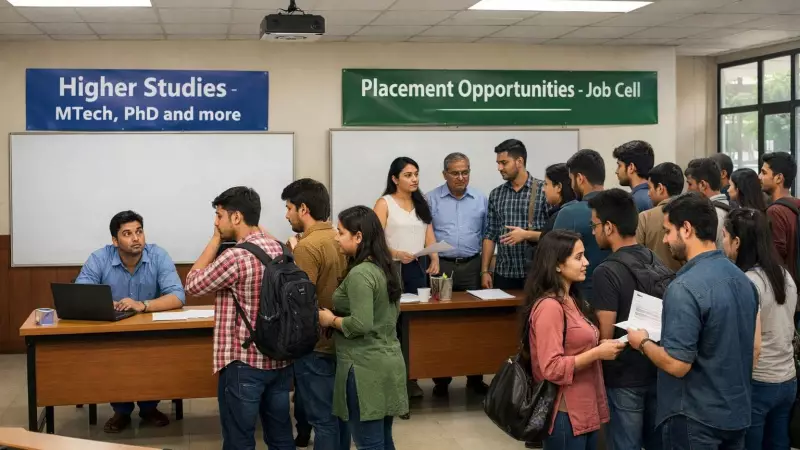
To reverse this trend, the IIT Council has charted a comprehensive reform path. A key proposal is the introduction of a dual-track MTech model. One track would be industry-oriented, focusing heavily on applied projects and mandatory internships. The other would be research-intensive, designed to feed directly into PhD programmes. This structure aims to cater to both private sector demands and national research objectives.
The council has also discussed launching multidisciplinary and blended-mode programmes to keep pace with technological convergence and widen access. Formally, all IITs have been directed to revamp their MTech curricula based on their institutional strengths.
To guide this massive overhaul, the Standing Committee of the IIT Council will constitute four to five broad, discipline-based committees dominated by industry experts. These committees will oversee the redesign process and report progress back to the council, all within the proposed 12-month deadline.
Broader Challenges: Funding and Faculty
The discussions also highlighted broader systemic issues affecting postgraduate education. Council members noted that limited research grants and inadequate overheads are putting severe financial strain on IITs. This restricts their ability to maintain modern laboratories, foster industry collaboration, and support high-quality postgraduate training.
The issue of faculty recruitment was also raised, with a call to equitably recognise both academic and industry experience. This is seen as crucial for improving applied learning and mentorship at the MTech level.
The council's vision extends beyond MTech, viewing its reform as part of a larger reset of higher education to align with national priorities like AI, quantum technologies, cybersecurity, and semiconductors. Improving MTech participation, the minutes noted, will require reshaping how postgraduate education, research, and industry engagement intersect within the IIT ecosystem.

To this end, the council recommended engaging with funding agencies like the proposed National Research Foundation. It also called for new mechanisms to assess research impact beyond publications, including industry-linked projects, patents, and technology development. Strengthening the IIT Council secretariat and creating a common Management Information System (MIS) to track outcomes were also discussed as vital steps to reinforce the research backbone supporting postgraduate education across all IITs.