Indian Student's EU Scholarship Video Ignites Fierce Online Backlash in Europe
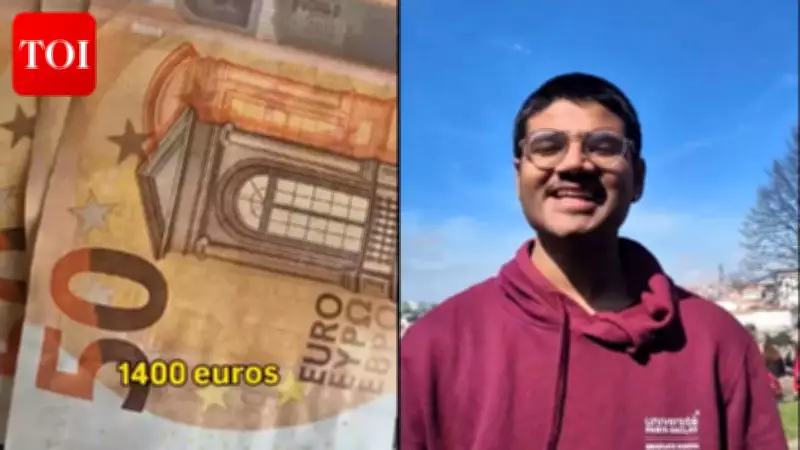
A viral video shared by an Indian student pursuing studies in Europe has triggered a massive wave of online criticism and debate. European residents have expressed strong frustration, accusing students of Indian origin of exploiting the education system by allegedly receiving monthly payments of 1400 euros.
Video Details and Student's Claims
In the widely circulated video on social media platform X, the Indian student revealed that the European Union provides him with a stipend of 1400 euros each month to support his education in Europe. "This covers all my rent, travel, and meal expenses completely, leaving me with zero student debt," the young man stated confidently. He further explained that beyond covering his costs, he manages to save an additional 600 euros monthly, which translates to approximately 60,000 Indian rupees.
The student outlined what he termed the "elite scholarship secrets" for achieving a similar lifestyle, listing three key requirements:

- A bachelor's degree
- A valid passport
- Proficiency in the English language
He notably mentioned that standardized tests like IELTS are "not always mandatory" for such opportunities, adding to the controversy.
European Backlash and Accusations
The video prompted numerous Europeans to voice their anger on X, formerly Twitter, criticizing the EU for funding international students while native students face financial hardships. One user wrote passionately, "Europe is literally paying Indians 1400 euros per month to 'study' here while our own students struggle to afford rent and drown in debt. This individual is bragging about gaming the system with a degree that holds less value than a Western high school diploma. It's a total subversion of our education system, and taxpayers are footing the bill—peak comedy."
Another comment highlighted broader immigration concerns, stating, "Indian immigration to Europe and the USA is becoming problematic. They often fail to integrate properly. While a few Indians here and there are acceptable, the current scale is overwhelming." A third user condemned the situation, remarking, "This is an outrageous scenario. It's astonishing how some are manipulating the system in this manner!"
Counterarguments and Economic Perspectives
Despite the backlash, many observers pointed out potential economic benefits. They argued that highly skilled Indian students who secure well-paying technical jobs in countries like Finland contribute significantly through lifetime tax payments, far exceeding the scholarship amounts. "If these students are competent and land high-paying roles, their tax contributions will vastly outweigh the bursary. The real issue is talent selection and retention, not the benefits themselves," one comment noted.
Another perspective linked the need for immigrants to Europe's demographic challenges, citing low birth rates. "Europe requires these young individuals because Europeans have been discouraged from having children. Educated immigrants are particularly valuable to the continent. This argument would only hold weight if there were a growing European youth population," they claimed.
Scholarship Context and Broader Implications
The scholarship referenced by the Indian student appears to be the Erasmus Mundus program, a fully-funded EU initiative for international students to attend top European universities. It covers tuition, travel, and monthly living expenses for Joint Master's Programs across multiple countries. However, data shows limited numbers: only 161 Indian students qualified in 2022, with a slight decrease to 146 in 2024.
The online outcry reflects a larger trend of anti-immigration sentiment targeting Indian students in Europe and America. In November 2025, UK Indo-Pacific Minister Seema Malhotra highlighted a rise in student asylum claims, labeling them as "visa abuse." Concurrently, Indian student migration to the UK dropped by 11% in 2025 compared to 2024, attributed to stricter immigration regulations.

This incident underscores ongoing tensions between educational opportunities, immigration policies, and economic realities, sparking a heated dialogue on fairness and integration in global education systems.