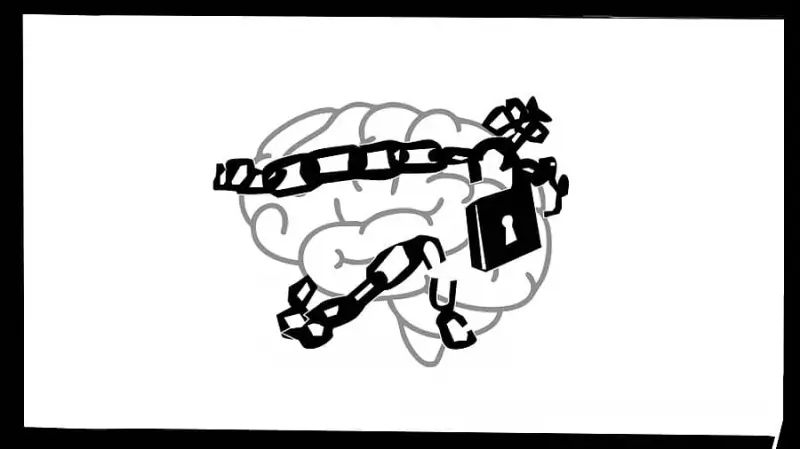
In a thought-provoking opinion piece, author Gurucharan Gollerkeri presents a nuanced argument about India's complex relationship with its colonial-era education framework. He contends that the nation's path forward lies not in wiping the slate clean but in consciously outgrowing the system introduced by Thomas Babington Macaulay in 1835.
The Distinctive Impact of the 1835 Macaulay System
Gollerkeri emphasizes that India's experience with the Macaulay system is unique. Its introduction was far more consequential than a simple shift in the language used for teaching. The move fundamentally altered the intellectual and administrative fabric of the country, creating a class that served as a bridge between the British rulers and the Indian populace. This system, as the author notes, did much more than change the medium of instruction; it reshaped aspirations, career paths, and the very definition of knowledge for generations.
Moving Beyond a Binary Debate
The discourse around Macaulay's legacy often falls into a trap of outright glorification or complete condemnation. Gollerkeri's perspective offers a middle path. He suggests that attempting to simply erase this deeply embedded system is neither practical nor entirely desirable. Instead, he advocates for a mature evolution—a process of outgrowing its limitations while acknowledging the complex reality it created. This involves building upon the existing foundation with indigenous knowledge systems and contemporary global pedagogies, rather than starting from zero.

The Path Forward for Indian Education
The core of the argument rests on constructive evolution. For India to forge a truly modern and self-confident identity in the 21st century, its educational transformation must be additive and integrative. The goal should be to transcend the colonial mindset inherent in the old system by enriching it with India's vast linguistic diversity, philosophical traditions, and scientific heritage. This is not an act of erasure but one of confident expansion and reclamation, creating a synthesis that is both globally competent and rooted in local context.
The opinion, last updated on 04 December 2025, at 21:35 IST, challenges readers to think beyond simplistic solutions. It calls for a sophisticated national conversation on how to honour the past while decisively moving towards an educational future that is authentically India's own.