ISI Kolkata Academic Council Voices Strong Opposition to Proposed 2025 Bill
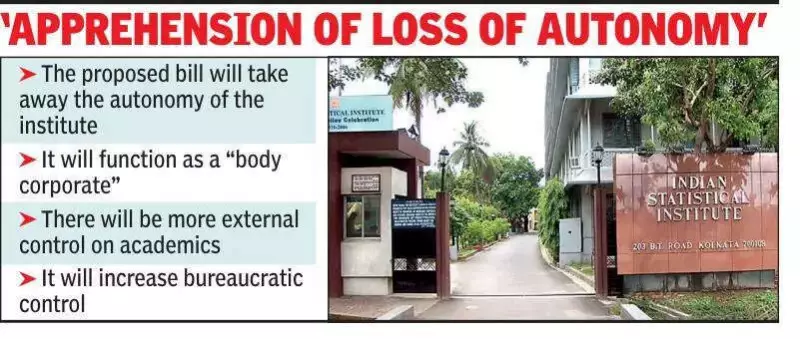
The academic council of the prestigious Indian Statistical Institute in Kolkata convened a crucial meeting on Tuesday, where members unanimously expressed strong opposition to the proposed Indian Statistical Institute Bill, 2025. Faculty representatives raised significant concerns that the legislation would grant excessive control to the management council, potentially undermining the institute's academic independence.
Increased Government Representation Sparks Faculty Apprehension
According to faculty members present at the meeting, the proposed bill substantially increases the number of government officials and bureaucrats within both the management council and the board of governors. Many of these positions would be filled by individuals with no direct connection to the institute, creating what faculty describe as "outsider dominance" in key decision-making bodies.
A senior faculty member explained, "The expanded representation of government officials would inevitably translate into greater powers to influence and modify academic course structures. This represents a fundamental shift from our current governance model."

Academic Control and Course Design Under Threat
During the council meeting, a majority of members highlighted how the proposed legislation establishes both direct and indirect mechanisms for controlling academic courses and their design. Some participants went further, questioning the very necessity of discussing the bill at an academic council meeting, suggesting it represented an inappropriate intrusion into academic matters.
The initial draft of the bill granted the board of governors comprehensive authority to establish departments, faculties, schools of studies, and initiate new academic programs. While a revised version requires the board to seek recommendations from the management council before taking such actions, faculty members remain unconvinced this provides adequate safeguards.
From Self-Governance to Government Control?
ISI faculty have expressed longstanding concerns about the establishment of a board of governors dominated by government nominees. They fear this could transform the institute from a self-governed academic society into what they describe as a "government-controlled corporate body."
Faculty representatives emphasized that the existing ISI Act of 1959 carefully vests authority in a council with proper academic representation and includes procedural safeguards against potential government overreach. The proposed changes, they argue, would dismantle these protective mechanisms.
Controversial Clauses and Their Removal
An official close to the Ministry of Statistics and Programme Implementation revealed that the first draft contained a particularly contentious clause stating the institute's objective included generating and managing resources "effectively, with the aim of becoming financially self-sustaining to the extent possible."
This provision raised numerous questions about its underlying intent, with ISI faculty and staff members alleging it could be discriminatory against economically disadvantaged students. Following substantial criticism, this clause was completely removed from the revised draft, which now emphasizes the institute's role in promoting practical knowledge application for public interest.
The ongoing debate at ISI Kolkata reflects broader tensions between academic autonomy and government oversight in India's premier educational institutions, with faculty determined to protect the institute's independent academic character against what they perceive as increasing bureaucratic control.