Jamia Millia Islamia Commemorates National Science Day with Diverse Academic Events
Jamia Millia Islamia (JMI) celebrated National Science Day on March 5 with a vibrant array of activities organized across multiple faculties and departments, honoring this significant occasion. National Science Day is observed annually on February 28 to commemorate the discovery of the Raman Effect by the renowned Indian physicist C.V. Raman. This day serves as a powerful reminder of India's rich scientific legacy and underscores the critical importance of cultivating a scientific mindset throughout society.
Faculty of Life Sciences Hosts Lecture on Science Communication
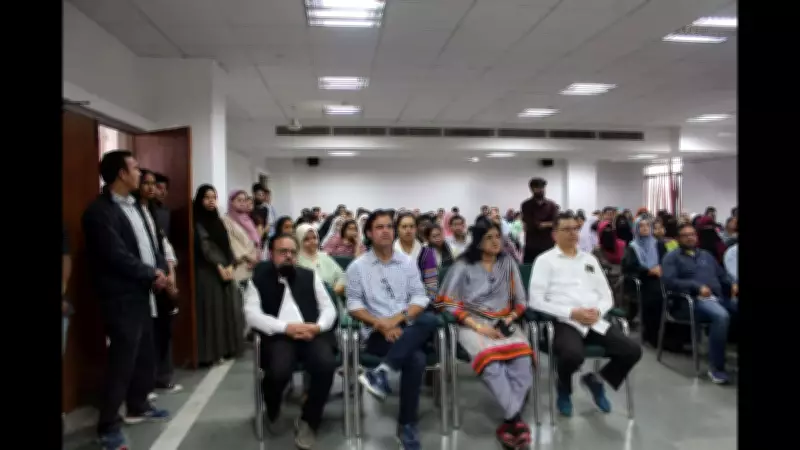
The Faculty of Life Sciences at the university orchestrated a National Science Day Lecture centered on the theme "Authentic & Credible Science Communication – A National Responsibility". This event was held at the Srinivasa Ramanujan Block and attracted over 200 enthusiastic science aficionados. The keynote address was delivered by Dr. Hasan Jawaid Khan, Former Editor of Science Reporter at CSIR-National Institute of Science Communication and Policy Research (CSIR-NIScPR).
In his thought-provoking presentation, Dr. Khan stressed the urgent necessity for responsible science communication in today's digital age, characterized by swift information exchange and the pervasive spread of misinformation. He elaborated on the pivotal roles that scientists, media professionals, and academic institutions must play in building public trust through precise, evidence-based communication and ethical reporting practices.

Engaging Activities and Focus on Women in Science
A documentary screening was conducted to showcase landmark achievements in Indian science, providing historical context and inspiration. Additionally, an interactive quiz competition energized attendees and fostered active student involvement. Aligning with this year's National Science Day theme, "Women in Science: Catalyzing Viksit Bharat", students delivered concise presentations highlighting the contributions of trailblazing women scientists. These presentations emphasized their crucial roles in advancing scientific research and motivating the next generation, especially young women, to embark on careers in science and innovation.
Through these initiatives, Prof. Zahid Ashraf, Dean of the Faculty of Life Sciences, reaffirmed the faculty's dedication to promoting scientific awareness and the responsible dissemination of knowledge.
Department of Geography Lecture on Sustainability and Climate Change
In a separate event, the Department of Geography within the Faculty of Sciences, as part of the Government of India's Viksit Bharat initiative, organized a lecture titled "Global Changes and Sustainability of Farmers Adaptation Practices in South Asia". This lecture took place on February 26 and was delivered by Prof. Suresh Chand Rai, Senior Professor and Former Head of the Department of Geography at Delhi School of Economics (DSE), University of Delhi.
The lecture provided a substantial learning experience for research scholars and students, all gathered to honor the institution's longstanding commitment to education, research, and community service. Prof. Atiqur Rahman, Head of the Department of Geography, extended a warm welcome to the guest speaker, faculty members, and all students in attendance.
Prof. S. C. Rai commenced by explaining the concepts and interconnections of Global Change, which could result in increased global consumption patterns. He cautioned that if current production and consumption trends persist, humanity might require the equivalent of two planets by 2050 for survival. Prof. Rai advocated for an integrated approach encompassing society, economy, and environment to achieve sustainable development.
He also highlighted the regional vulnerabilities in South Asia, noting that climate change is severely impacting the trans-Himalayan region, thereby jeopardizing the livelihoods of small-scale farmers. Prof. Rai underscored the importance of collective responsibility, where gender roles are particularly significant. In his concluding remarks, he emphasized the need for regional collaboration through sharing information on micro-agro climates and implementing Disaster Risk Reduction (DRR) strategies.

Distinguished Attendees and Academic Participation
This enriching event was graced by the presence of esteemed faculty members including Prof. Masood Ahsan Siddiqui, Prof. Mary Tahir, Prof. Haroon Sajjad, Prof. Lubna Siddiqui, Dr. Aruna Paarcha, Dr. Mohd. Afsar Alam, Dr. Asif, Dr. Ghazal Salahuddin, Dr. Ismail Haque, along with contractual and guest faculty members, researchers, and students from the Department of Geography.