Maharashtra Government Announces Major AI Education Initiative for 80,000 Schools
The education landscape in Maharashtra is poised for a significant technological transformation as the state government unveils plans to introduce artificial intelligence-enabled classrooms across nearly 80,000 government schools. This ambitious initiative represents a substantial commitment to modernizing public education infrastructure and enhancing learning outcomes for millions of students.
Substantial Investment in Educational Technology
To support this groundbreaking shift toward technology-based learning, the Maharashtra government has allocated Rs 42 crore specifically for expanding the application of artificial intelligence in school education. This financial commitment underscores the administration's dedication to bridging educational gaps and providing equitable learning opportunities throughout the state.
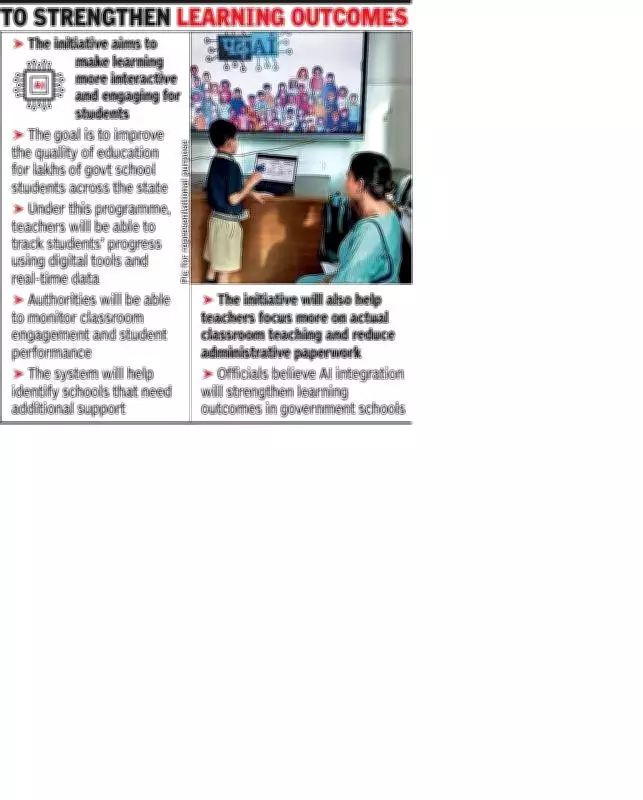
The comprehensive program is being implemented through a strategic collaboration between the Maharashtra government and the Sampark Foundation, a prominent educational organization. The primary objective of this partnership is to dramatically improve the quality of education for lakhs of students enrolled in government schools across Maharashtra's diverse regions.

State-Level Dialogue on AI in Education
The initiative was formally discussed during a significant state-level dialogue titled "AI for Education Impact," which took place at the prestigious Yashwantrao Chavan Centre in Mumbai. The event was inaugurated by Ranjit Singh Deol, Principal Secretary of the School Education and Sports Department, who emphasized the transformative potential of this educational technology integration.
"Education officials, teachers, technology specialists, and policy experts from across the country participated in extensive discussions about how artificial intelligence can contribute to better learning outcomes in classrooms," Deol stated during the event. This gathering brought together diverse stakeholders to collaboratively shape the implementation strategy for AI in Maharashtra's educational ecosystem.
AI as a Teaching Support System
During the dialogue, Vineet Nayar, Founder and President of Sampark Foundation, articulated a crucial perspective on the role of artificial intelligence in education. "Every child studying in a government school should have access to high-quality learning opportunities," Nayar emphasized. "Artificial intelligence is not meant to replace teachers but to support them with tools that can make teaching more effective and improve student learning outcomes."
This philosophy guides the entire initiative, positioning AI as an enhancement to traditional teaching methods rather than a replacement for human educators. The technology aims to make lessons more interactive, enhance students' conceptual understanding, and help teachers monitor student progress more efficiently through sophisticated digital tools and real-time data analytics.
Real-Time Classroom Monitoring System
One of the most innovative aspects of the initiative will be an AI-driven real-time classroom observation and administration system. This advanced technological framework will enable education authorities at district, block, and school levels to monitor classroom engagement metrics and track students' academic performance with unprecedented precision.
"This system will help identify schools that are lagging behind and send timely alerts so that corrective measures can be implemented promptly," explained Deol. The proactive monitoring capability represents a significant advancement in educational administration, allowing for targeted interventions where they are most needed.
Addressing Teacher Workload Challenges
Experts participating in the dialogue highlighted a critical challenge facing government primary schools: teachers currently spend approximately 81% of their time on administrative responsibilities, leaving only about 19% for actual classroom teaching. This disproportionate allocation of time significantly impacts teaching quality and student engagement.

AI-based tools are specifically designed to alleviate this administrative burden by automating essential tasks such as lesson planning, preparation of teaching materials, and report writing. By streamlining these processes, educators can redirect their focus toward interactive teaching and personalized student support.
Expected Educational Outcomes
Education department officials express strong confidence that integrating artificial intelligence into classrooms will yield multiple benefits:
- Improved learning outcomes through personalized educational approaches
- Enhanced overall quality of education in government schools throughout Maharashtra
- Greater teacher efficiency and reduced administrative workload
- More equitable access to quality educational resources across urban and rural areas
- Development of technological literacy among students from diverse backgrounds
This comprehensive AI-enabled classroom initiative represents one of the largest educational technology deployments in India's public school system. As Maharashtra moves forward with this ambitious program, it sets a precedent for other states to follow in leveraging cutting-edge technology to transform public education and create more equitable learning opportunities for all students.