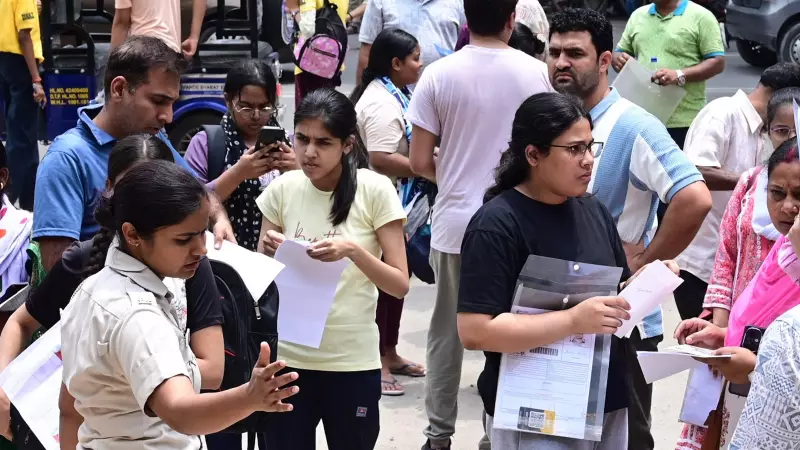
The recent decision to slash NEET-PG cut-offs has ignited a fierce debate across India. Scores dropping to as low as minus forty marks have triggered widespread concern. Many people express shock at these numbers. However, the real issue extends far beyond simple outrage over percentages.
A Flawed System Under Scrutiny
Critics argue that lowering cut-offs risks admitting students with weak foundational knowledge into postgraduate programs. They point out that numerous vacancies exist in private medical colleges. A zero percentile would theoretically allow every exam-taker to qualify. This scenario makes mere appearance the only requirement for specialization.
Television debates and social media amplify public anxiety. Rhetoric about doctors operating with negative scores circulates widely. Such discussions often oversimplify a complex situation. The controversy highlights deeper problems within medical education itself.

The Craft of Medicine Versus Exam Recall
One experienced surgery professor famously described doctors as "glorified masons." This remark contains an essential truth. Medicine combines scientific knowledge with practical craft. Current assessment methods struggle to evaluate clinical competence effectively.
University exams typically feature ten to twenty marker questions. NEET-PG relies heavily on recall-based multiple-choice questions. Can these tests truly judge who will become a competent doctor? Experience, observation, and supervised practice build medical expertise over years.
This perspective does not argue against knowledge assessment. It also does not endorse recent cut-off relaxations. If merit protection requires screening, perhaps only candidates above the fiftieth percentile should qualify.
Broader Chaos in NEET-PG Administration
The current controversy unfolds against a backdrop of administrative confusion. Constantly changing counselling schedules create uncertainty. New schemes appear abruptly without proper preparation. Poor accountability undermines confidence in the entire system.
Many medical professionals question NEET-PG's fundamental validity. When patients should remain central to medical education, why do MCQs dominate so completely? The same divide once seen at undergraduate levels now affects postgraduate preparation.
Students face impossible choices between university exams and NEET preparation. The two systems differ dramatically in pattern and emphasis. Coaching platforms like Marrow and Prepladder exploit this division effectively.
The Practical Consequences
Students increasingly ignore institutional coursework. They recognize that internal marks hold little practical value. This creates a striking irony within medical education.
We now produce candidates who excel at complex MCQs yet struggle with basic clinical tasks. Recent interns sometimes cannot differentiate between upper and lower respiratory infections. Some hesitate when prescribing simple paracetamol syrup to infants.
Potential Solutions and Reforms
The proposed NEXT examination offers promising possibilities. Its success depends entirely on sincere implementation with clear vision. A model closer to the USMLE could transform medical assessment.
Key elements might include:
- Longitudinal evaluation across training periods
- Practical examinations testing hands-on skills
- Objective Structured Clinical Examinations (OSCEs)
- Assessment of clinical reasoning abilities
A comprehensive framework where each undergraduate phase contributes meaningfully could create a more balanced merit system. The increase in postgraduate seats represents positive development. However, this expansion must accompany quality assurance reforms.
Addressing Structural Deficiencies
Many medical institutions face serious challenges. Faculty shortages persist across the country. Poor infrastructure compromises training quality. Weak regulation enables these problems to continue.
Stronger oversight and stricter provisions remain urgently needed. Simultaneously, numerous postgraduate seats remain vacant each year. These vacancies concentrate in specific disciplines.
Non-clinical and paraclinical branches face particular neglect:

- Anatomy and Physiology
- Biochemistry and Pharmacology
- Microbiology and Pathology
These foundational specialties suffer from chronic infrastructure gaps. Limited laboratory facilities hinder practical work. Inadequate research funding restricts academic progress. Unclear career pathways discourage student interest.
Recent National Medical Commission efforts to integrate research into undergraduate curricula represent welcome steps. Such initiatives require sustained support and proper implementation.
Moving Beyond Outrage
The present controversy should catalyze deeper examination. We must question what our medical systems truly value. Current assessment methods require serious reevaluation.
Do these systems best serve patients needing quality care? Do they support students pursuing medical excellence? Do they strengthen the medical profession overall? These questions demand thoughtful answers beyond immediate outrage.
Comprehensive reform requires coordinated effort across multiple stakeholders. Medical educators, policymakers, institutions, and professionals must collaborate. The goal remains clear: developing assessment systems that identify truly competent future doctors.
India's medical education stands at a critical juncture. The NEET-PG cut-off controversy exposes systemic flaws. Addressing these issues thoughtfully could transform healthcare delivery for generations.