Patna University Vice-Chancellor Advocates for Education System Transformation
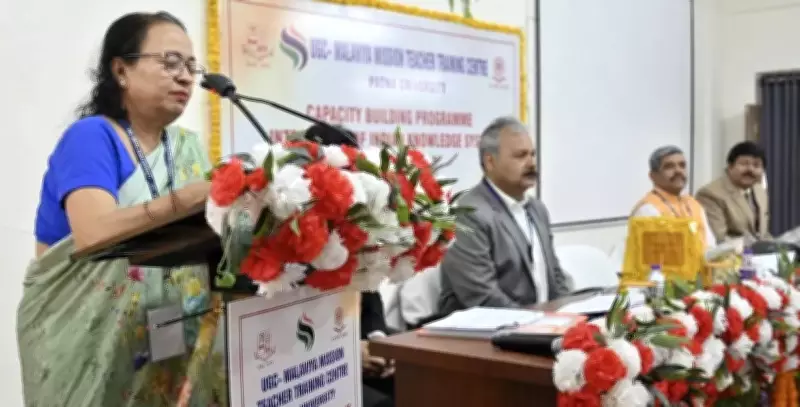
Patna University Vice-Chancellor Namita Singh has issued a compelling call for a comprehensive overhaul of the education system. Speaking on Monday, she emphasized the urgent need to equip the youth with essential skills to tackle both national and global challenges effectively.
Focus on Critical Thinking and Ethical Reasoning
Namita Singh stressed that modern education must prioritize developing critical thinking, ethical reasoning, and robust problem-solving abilities among students. She highlighted that these competencies are crucial for creating a workforce capable of navigating complex contemporary issues.
The Vice-Chancellor made these remarks while inaugurating a five-day capacity-building programme titled "Integration of Indian Knowledge System (IKS) in Curriculum." This significant event is organized by the UGC-MMTTC of Patna University.

National Education Policy 2020 and Indian Knowledge System
Singh pointed out that the National Education Policy (NEP) 2020 strategically integrates the Indian Knowledge System to promote holistic and value-based education. This initiative aims to build capacity by leveraging ancient wisdom, fostering multidisciplinary learning, and implementing experiential approaches.
She elaborated that the policy seeks to blend traditional knowledge—including disciplines such as yoga, Ayurveda, and mathematics—with modern skills. This fusion is designed to cultivate an ethical and highly competent workforce prepared for diverse professional environments.
Benefits of Integrating Traditional Knowledge
The Vice-Chancellor detailed several advantages of incorporating IKS into educational frameworks. She noted that IKS encourages value-based and experiential learning, which can significantly reduce student stress and enhance cognitive abilities. This approach not only enriches academic experiences but also supports mental well-being.
Singh advocated for embedding IKS into the National Curriculum Framework for both school and higher education sectors. She emphasized the importance of focusing on traditional knowledge, promoting Indian languages, and developing culturally grounded local education systems.
Recognition and Participation in the Programme
UGC-nominated observer Kumar Bhatt, who also serves as the Vice-Chancellor of Central Sanskrit University, acknowledged Patna University's selection by the UGC to organize this course. He mentioned that PU is among the few universities in the country chosen for this prestigious initiative.
Earlier in the event, MMTTC director Atul Aditya Pandey introduced the programme's theme, setting the stage for discussions and workshops. The event has attracted a total of 80 teachers and research scholars, reflecting strong engagement from the academic community.
Event Coordination and Acknowledgements
Course coordinator Bhavuk Sharma extended a warm welcome to all guests, facilitating a collaborative atmosphere. MMTTC assistant director G B Chand proposed the vote of thanks, concluding the inaugural session on a positive note.
This capacity-building programme represents a significant step toward realizing the goals of NEP 2020 and enhancing the quality of education through the integration of India's rich knowledge heritage.