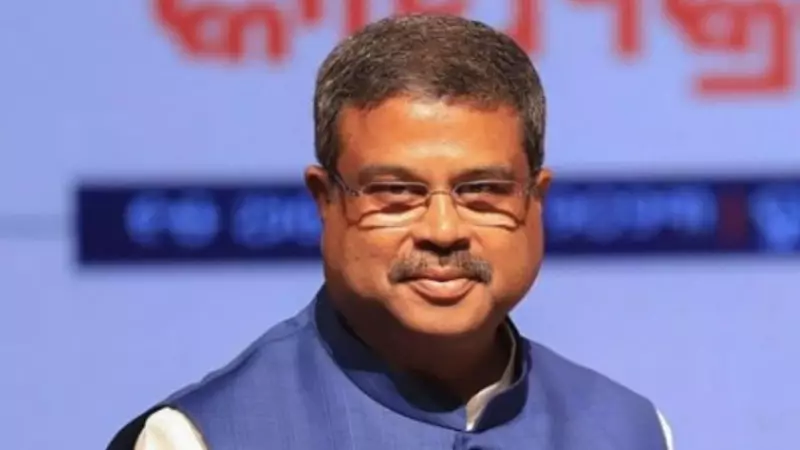
Union Education Minister Dharmendra Pradhan on Tuesday strongly defended the proposed new higher education regulator, the Viksit Bharat Shiksha Adhishthan Bill, 2025, emphasising that it will for the first time ensure state participation in the central regulatory framework. This marks a significant shift from the existing bodies like the University Grants Commission (UGC), which he said had no role for states.
Addressing Centralisation Concerns
The Bill, introduced in the Lok Sabha on Monday, December 16, 2025, aims to create an umbrella body with three councils for regulation, standard-setting, and accreditation. It proposes to dissolve the UGC, the All India Council for Technical Education (AICTE), and the National Council for Teacher Education (NCTE). Opposition MPs criticised the move, calling it an "excessive centralisation of higher education" and also objected to its Sanskritised name.
In response, Pradhan asserted, "We are bringing in state participation in the central forum. In the UGC, AICTE, NCTE, there was no state participation. In the Adhishthan, states will play a role." He moved a motion to refer the Bill to a House panel for further scrutiny.

Structure and State Representation
The proposed structure includes a commission and three councils. The commission will have two professors from state higher education institutions. The regulatory and standards councils will each include one nominee from states and union territories on a rotation basis. Furthermore, the accreditation council will feature two academicians from state institutions.
Clarifying concerns about federalism, Pradhan referenced the Constitution's Union List, which assigns standard-setting to the central government. "State universities will remain as they are," he assured, addressing fears about the autonomy of state universities under the new system.
Autonomy of Premier Institutes and Funding Mechanism
On the Bill's applicability to Institutes of National Importance (INIs) like the IITs and IIMs, Pradhan stated their basic autonomy would continue. However, they would need to share certain data with the regulator and participate in setting benchmarks. "When such quality institutions are also part of a common framework...a higher benchmark will be set for other institutions," he explained.
A key departure from the UGC is the removal of grant-disbursing powers from the new regulator. The Bill specifies that funding will be managed through mechanisms devised by the Education Ministry. Pradhan noted that while the National Education Policy (NEP) recommended a separate grants council, it was "left out for now" acknowledging multiple funding sources. Ministry sources indicated that an institution's performance rating from the regulatory council would influence fund allocation.
Defending the 'Bharatiya' Name
Pradhan firmly ruled out changing the Bill's name, describing "Adhishthan" as a "bharatiya" (Indian) name. He stressed the need to move beyond a "colonial mindset," even though the NEP had referred to a similar body as the Higher Education Commission of India (HECI). This stance sets the stage for a broader ideological debate on the framing of new national institutions.