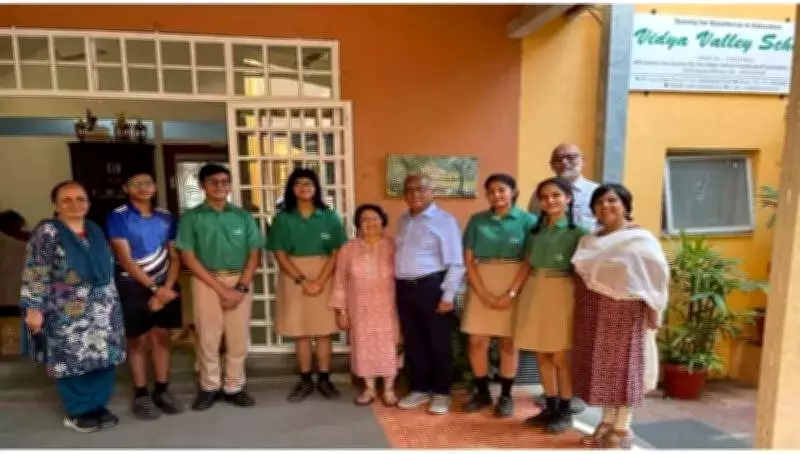
Pune Students Triumph at International Space Contest with Innovative Farming Model
Students from Pune's Vidya Valley School have achieved a remarkable victory, securing first place in the Ninth Grade Small Group Category at the prestigious 2025 Live Healthy in Space International Contest. This global competition, organized by the National Space Society, attracted an impressive 2,627 project submissions from 14,636 students representing 12 different countries.
Kosmosagri: A Vision for Space Agriculture
The winning project, titled Kosmosagri – A Self-Sustaining Agricultural Settlement for Healthy Living in Space, presents a comprehensive model for sustainable food production beyond Earth's atmosphere. The innovative concept strategically positions the settlement at the Sun–Mars L1 Lagrange Point, ensuring continuous and reliable access to solar energy essential for both agriculture and life-support systems.
The talented team behind this groundbreaking project consists of Krishiv Jethwani, Aadya Veshvikar, Aarya Kadam, Aarini Dubey, and Rudra Nagarkar. Their efforts were expertly guided by mentor Vandana Suryawanshi, who provided crucial direction throughout the development process.

Advanced Agricultural Systems and Technology Integration
The Kosmosagri design incorporates interconnected agricultural torii that support multiple advanced farming techniques, including aeroponics, aquaponics, hydroponics, fogponics, and vertical farming. According to mentor Vandana Suryawanshi, "Environmental conditions such as temperature, humidity, light, and nutrients are meticulously monitored through Arduino-based automated systems. Sophisticated sensors collect real-time data and regulate misting, cooling, and lighting to maintain optimal plant-growth conditions."
The project demonstrates particular innovation through its integration of the Four Sisters polyculture farming method, where complementary crops grow together to maintain ecological balance and sustainability. Suryawanshi elaborated, "The model creatively combines this system with aquaponics, creating a symbiotic relationship where fish provide essential nutrients for plants while the plants naturally help purify the water for the aquatic life."
Sustainable Energy and Resource Management
Energy generation for the proposed settlement relies primarily on solar panels, while agricultural waste undergoes conversion into valuable biofuels, creating a closed-loop system. Ipsita Rodricks, director of Vidya Valley School, explained the comprehensive water management approach: "Water is efficiently recycled through multi-stage purification systems, ensuring maximum resource utilization. Additionally, automated harvesting and distribution systems are proposed to support long-term human habitation in space environments."
School principal Nalini Sengupta expressed immense pride in the students' achievement, offering heartfelt congratulations for their dedication, creativity, and scientific rigor. This victory not only highlights the exceptional talent emerging from Pune's educational institutions but also contributes significantly to global discussions about sustainable living beyond Earth.