The Global Transformation of Education Through Technology
The educational landscape worldwide is undergoing a profound and rapid evolution. In this digital era, technology-infused learning models are fundamentally altering how students acquire knowledge and develop skills. Conventional teaching techniques are increasingly being enhanced by sophisticated methodologies that incorporate cutting-edge technologies like artificial intelligence (AI), robotics, and the Internet of Things (IoT).
Building a Future-Ready Educational Framework
The contemporary educational structure is meticulously crafted to prepare learners not merely to comprehend technology but to actively create, innovate, and address tangible global challenges. A prime example of this integration is the STEAM education model—a dynamic fusion of Science, Technology, Engineering, Arts, and Mathematics. With a clear mission to arm young intellects with the essential tools for success in a modern, competitive environment, this approach is systematically implemented within a structured, forward-thinking learning ecosystem.
A system centered on STEAM enables students to cultivate a comprehensive worldview, motivating them to engage with learning through curiosity and a solution-oriented mindset instead of perceiving subjects in isolation. STEAM advances technological literacy and empowers learners to comprehend how foundational principles can evolve into sophisticated applications.

Structured Implementation and Progressive Pathways
This deliberately engineered, technology-centric program is woven into the academic fabric to establish a thorough framework with well-defined progression routes. Such a strategy guarantees that students embark on an organized educational journey where their competencies are nurtured progressively and purposefully.
The infusion of technology into curricula readies learners for demanding, tech-intensive careers. As the world navigates evolving educational hurdles, students gain the capability to apply concepts from science, mathematics, engineering, arts, and technology in real-time projects and prototypes.
Hands-On Learning with Robotics and Advanced Projects
Robotics initiatives, for instance, spark immense enthusiasm among students. While engaging and enjoyable, these projects necessitate a solid grasp of scientific theories, mathematical computations, engineering design, and programming proficiencies. Learners actively construct, test, and experiment, allowing them to understand technology and its implementation through direct involvement rather than passive instruction.
Activities like designing automated systems, programming robots, assembling electronic circuits, and developing basic software applications assist students in grasping intricate ideas more effectively. A robust focus on experiential learning permits students to foster creativity, collaboration, and problem-solving aptitudes.
State-of-the-Art Facilities and Collaborative Environments
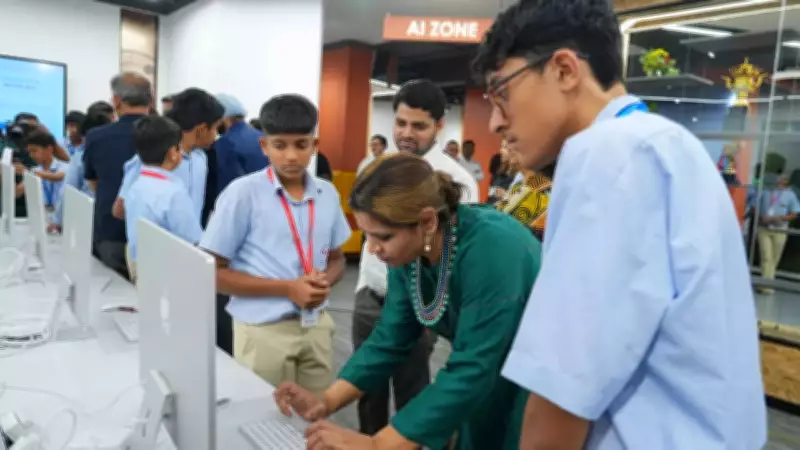
The learning atmosphere across classrooms mirrors a deep dedication to innovation and technology-driven education. Students have access to advanced technologies, electronic workstations, and high-performance computing systems that facilitate complex tasks.
Cutting-edge facilities—including 3D printers, laser cutters, fabrication equipment, and digital workspaces—enable learners to convert ideas into physical prototypes. For example, students can design a product using computer-aided design (CAD) software like Blender or Tinkercad and then materialize their vision via a 3D printer. Fabrication tools further allow them to assemble components and construct functional models.
Projects can also be enriched using Artificial Intelligence, Robotics, Augmented and Virtual Reality (AR/VR), and Sound Engineering. A dedicated sound studio offers opportunities to explore audio production, podcasting, and digital storytelling. Through systematic, project-based learning, students consistently gain practical experience with emerging technologies.
Collaborative work is strongly promoted, enabling learners to hone communication skills and appreciate the significance of teamwork, project management, critical thinking, and problem-solving.

Innovative Assessment and Future Preparation
The student evaluation process also reflects this progressive philosophy. Assessment encompasses project evaluations, coding challenges, digital portfolios, and collaborative assignments rather than depending exclusively on theoretical exams and passive classroom recall.
Integrating STEAM education within a structured academic framework is vital for equipping students for the future. At The Knowledge Habitat, this vision materializes through a technology-rich learning environment bolstered by modern facilities and innovative programs. By nurturing creativity and establishing a strong foundation in technological skills, the institution empowers students to become confident innovators who will contribute meaningfully to tomorrow's world.
Disclaimer: This article has been produced on behalf of 3E Education Trust by Times Internet’s Spotlight team.