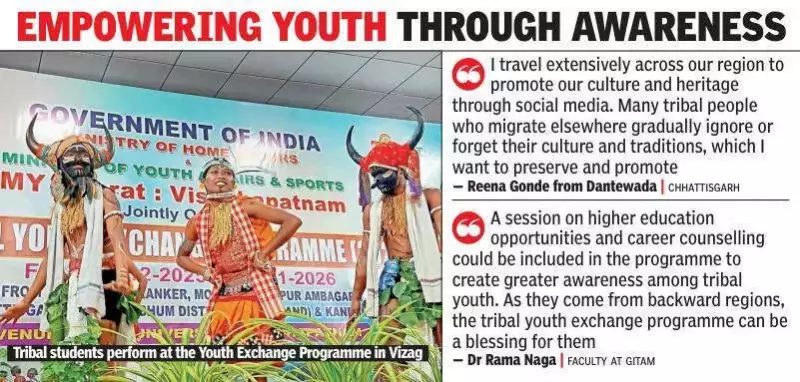
In a powerful display of ambition and resilience, nearly 200 tribal college students from some of India's most backward regions have converged in Visakhapatnam, determined to become the architects of change in their home districts. The week-long Tribal Youth Exchange Programme, a Union government initiative hosted at GITAM Deemed to be University, has brought together youth from six aspirational districts, including Dantewada, Kandhamal, and Sukma, spotlighting their diverse dreams against a backdrop of systemic challenges.
Voices from the Ground: Aspirations Amidst Adversity
Interacting with the Times of India on Sunday, the participants painted a vivid picture of the persistent gaps in education, healthcare, and infrastructure that mark their daily lives. Yet, their aspirations shone brightly, ranging from politics and defence services to arts, music, and advanced agriculture. Rakesh Kumar Dugga, a BSc first-year student, and Kumari Mamita Usare, a BA final-year student, both from the Mohla-Manpur–Ambagarh Chowki district in Chhattisgarh, spoke candidly about the poor infrastructure. "We want not only our families but our entire area to be developed," they expressed, with Dugga aiming to become a mathematics teacher and Usare setting her sights on a career in law.
The hurdles are significant. Students highlighted long travel times to college, inadequate access to healthcare, and a dire shortage of quality educational institutions and teachers. Ramesh Samad from Jharkhand pointed to critical medical challenges, citing ambulance shortages and the need to buy most medicines from private shops. Undeterred, he nurtures a passion for poetry and story writing, having already authored over 50 works.

Building Futures to Curb Migration and Preserve Culture
A recurring theme among the youth is the desire to stem the tide of migration from their regions by creating local opportunities. Mayank Kumar Korram from Kanker district, Chhattisgarh, is a prime example. He aims to practice advanced agriculture using modern tools and technologies. "Our youth are migrating to cities such as Mumbai and Pune, and even to Sri Lanka, for employment. I want to change this by adopting profitable agricultural practices and creating local employment. I am already working in this direction," Korram stated.
Others are focusing on cultural preservation and social reform. Reena Gonde from Dantewada is already working as a model to promote tribal culture, language, and heritage. "I travel extensively across our region to promote our culture and heritage through social media. Many tribal people who migrate elsewhere gradually ignore or forget their culture and traditions, which I want to preserve and promote," she explained. Meanwhile, Monica Potai from Chhattisgarh, a BA Fine Arts student, wants to become a teacher to address the high dropout rates fueled by poverty and societal norms.
A Call for Guidance and a Path Forward
Despite their clear vision, a significant lack of awareness about higher education opportunities persists among these determined youth. Recognising this gap, Dr. Rama Naga, a faculty member in political science at GITAM, who interacted with and guided the students, suggested a crucial intervention. He told TOI that a dedicated session on higher education opportunities and career counselling could be included in the programme to create greater awareness. "As they come from backward regions, the tribal youth exchange programme can be a blessing for them," Dr. Naga remarked.
The gathering also featured powerful individual goals aimed at systemic change. Barun Mallick from Kandhamal district, Odisha, frustrated by the lack of basic facilities, declared his ambition to enter politics to serve his people and lift his region out of backwardness. Prateema Kanhar from Odisha aspires to serve in the Border Security Force, while Moni Tapey, pursuing a BA in a tribal language, dreams of becoming a singer and dancer while advocating for disciplined education and healthcare in her area.

This initiative in Visakhapatnam stands as a testament to the untapped potential within India's aspirational districts. It underscores a collective yearning for development and a firm resolve among tribal youth to not just dream of a better future for their communities, but to actively build it.