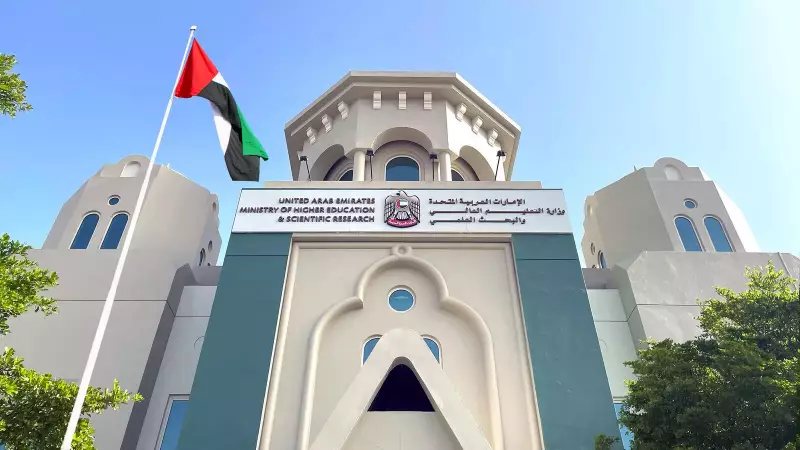
The United Arab Emirates has ushered in a transformative era for its academic sector with the enactment of a comprehensive federal decree law on higher education and scientific research. This landmark legislation, issued under the federal government's authority and overseen by the Ministry of Higher Education and Scientific Research (MoHESR), introduces sweeping changes to the governance of universities, colleges, and research institutions across the nation.
A Unified Framework for National Excellence
The law establishes a single, unified national governance framework that applies to all institutions offering higher education, technical, and vocational training within the UAE. Its primary objectives are to elevate academic quality, ensure learning outcomes meet labour market demands, boost national competitiveness, and promote lifelong learning. Crucially, the legislation integrates scientific research as a structured pillar of the country's development strategy.
Under the new decree, no higher education provider can operate or advertise programs without securing an institutional licence from MoHESR. This requirement extends to institutions within free zones, which must now obtain both federal licences and local permits under a coordinated oversight mechanism. The Ministry now regulates every type of higher education institution in the country through this unified system.

Key Changes: Employability, Research, and Strict Penalties
The law places a massive emphasis on graduate employability and practical skills. A mandated "Practical Training System" requires universities to formalize agreements with public and private sector partners to provide integrated internships. Academic programs are being redesigned to align with the skills needed for the "We the UAE 2031" vision, with a strong push to integrate Artificial Intelligence (AI) and digital literacy across all fields of study.
Scientific research receives dedicated focus, with the law creating a framework to encourage, fund, and protect university research aimed at solving real-world problems in sectors like health, renewable energy, and technology. Furthermore, a new "Recognition System" for international qualifications will ensure credentials from abroad, including those from top global universities, are accurately verified and valued.
Accountability and Enforcement
To protect students and uphold standards, the law introduces a robust system of accountability with significant penalties. Practicing educational activities without a licence can lead to fines of up to AED 1,000,000. Other operational fines include penalties for appointing unqualified lecturers (AED 3,000) or failing to pay staff salaries (AED 5,000). The Ministry has also been granted "judicial seizure" powers for continuous monitoring and audits of institutions.
As noted by Dr. Abdulrahman Al Awar, Acting Minister of Higher Education and Scientific Research, the partnerships between federal and local entities aim to create an integrated environment aligned with national aspirations. This legislative shift is designed to cement the UAE's position as a premier global education destination. With the Ministry rolling out these changes through 2025, the nation is building a stable, flexible, and world-competitive educational legacy for the future.